Author: Akex Mason

  • Car Boot Foodie Finds: Why the UK’s Car Boot Sale Food Scene is Having a Moment

    Car Boot Foodie Finds: Why the UK’s Car Boot Sale Food Scene is Having a Moment

    Boot open, engine off, flask of something lukewarm in hand. That used to be the full car boot sale experience. A muddy field, some dodgy VHS tapes, a bloke flogging socket sets out the back of an estate. Brilliant in its own way, obviously. But something has shifted. The UK car boot sale food scene has quietly gone from an afterthought to a genuine draw, and if you haven’t clocked it yet, you’re sleeping on one of the best weekend vibes this country currently has to offer.

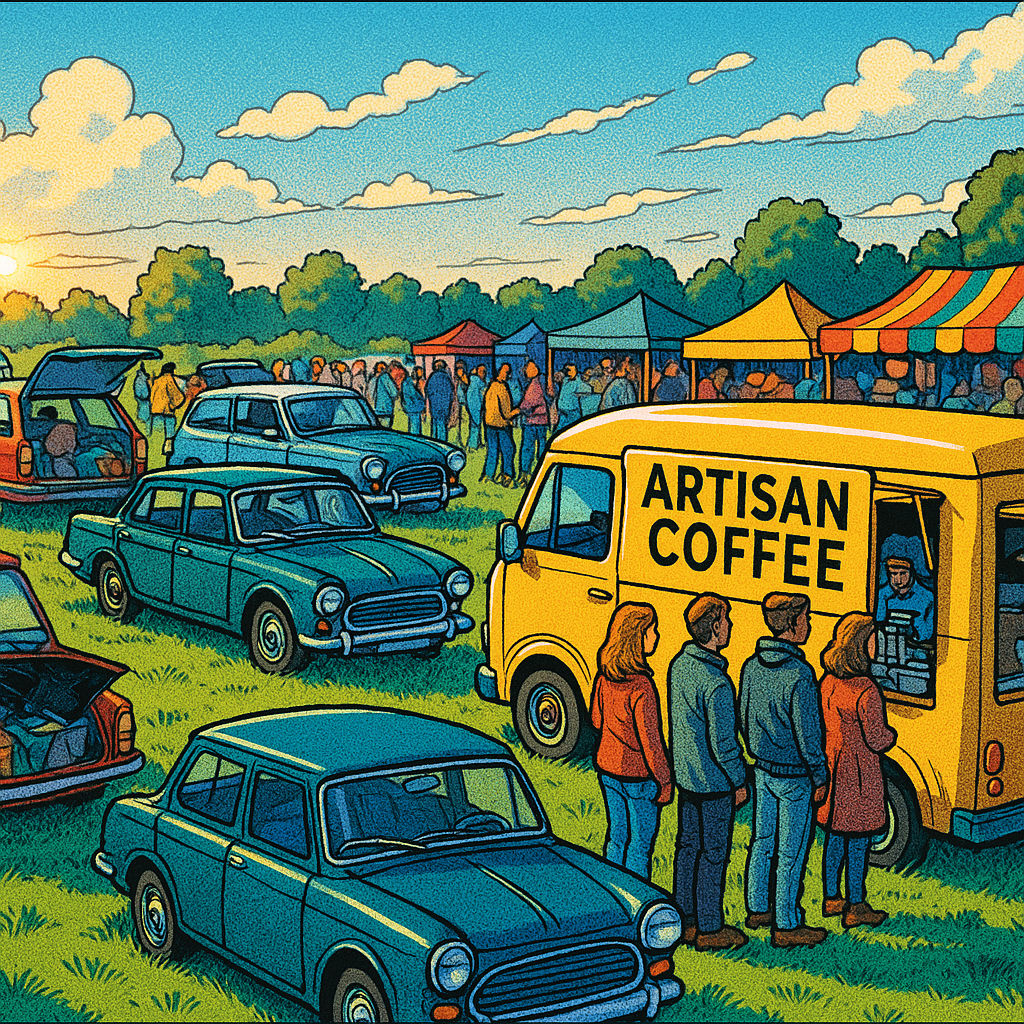
    Wide view of UK car boot sale food stalls and classic cars on a sunny Sunday morning
    Wide view of UK car boot sale food stalls and classic cars on a sunny Sunday morning

    It’s not just a couple of stalls selling slightly warm hot dogs any more. We’re talking proper espresso setups, sourdough toasties, jerk chicken wraps, Korean BBQ buns, and cold brew coffee served out of converted Citroën H vans. The kind of stuff you’d normally queue twenty minutes for at a city-centre street food market. Except here it’s sitting alongside a bloke selling genuine Ford Sierra Cosworth badges for a tenner, and that energy? Honestly unbeatable.

    Why Car Boot Sales Are Suddenly Attracting Serious Food Vendors

    There’s a practical reason this is happening, and it’s simple: footfall. Your average well-run car boot sale in 2026 is pulling hundreds, sometimes thousands, of visitors on a Sunday morning. The pitch fees are relatively low compared to food festivals, the setup is flexible, and the crowd is broad. Families, collectors, traders, and increasingly a younger crowd who turned up specifically because someone posted a video of the pulled pork bap on Instagram.

    Vendors who started on the festival circuit have woken up to the fact that car boot sales offer a low-overhead way to test new menus and build a local following without committing to permanent premises. Meanwhile, the car boot sale organisers themselves have spotted the opportunity. Events like Sunbury Antiques Market and various Cheshire-based boots have actively started curating their food offering, treating it almost like a secondary event within an event.

    The Cars and the Cuisine: A Match That Actually Makes Sense

    Think about it. Car boot sales have always been a petrolhead’s paradise. Half the sellers are clearing out garages, which means you find old parts, workshop manuals, oil-stained memorabilia from obscure race meetings, and the occasional mint condition die-cast collection. The car-driving crowd showing up for that stuff is exactly the same crowd that appreciates a properly made flat white and a slow-smoked brisket roll.

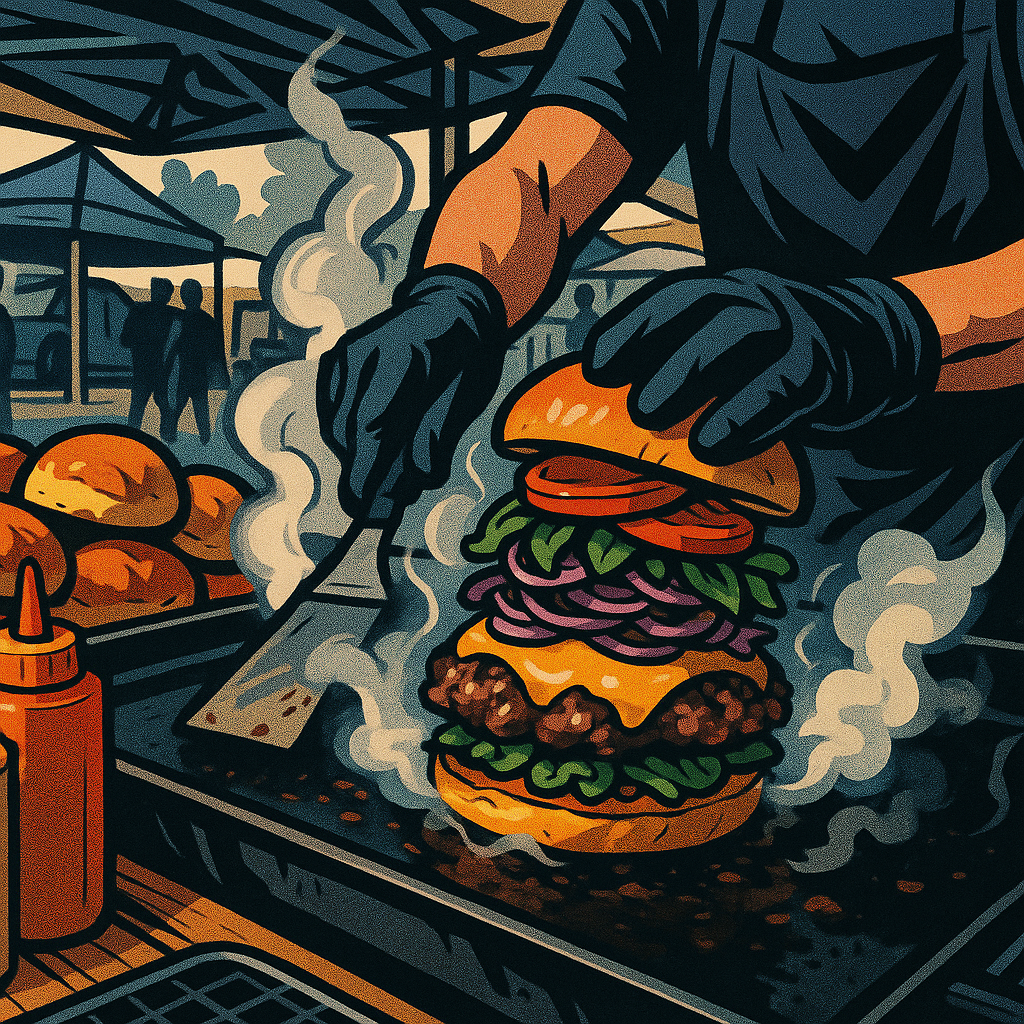
    Close-up of gourmet UK car boot sale food being prepared at a street food stall
    Close-up of gourmet UK car boot sale food being prepared at a street food stall

    The crossover between car culture and food culture has been building for years, anyone who’s visited a serious UK car meet knows the burger vans have got sharper and the coffee quality has shot up. The car boot sale is just the next venue for that collision. There’s something very British about it too. No pretension, no VIP wristbands. Just a field, some remarkable motors, and someone doing genuinely excellent things with a wood-fired grill.

    What You’re Actually Finding at the Best Boots Right Now

    UK car boot sale food in 2026 spans a surprisingly wide range. Here’s what’s genuinely turning up at the sharper end of the scene:

    • Specialty coffee: Not filter-from-a-flask coffee. Proper third-wave espresso rigs, oat milk options, and single-origin pour-overs. Vendors like small independent roasters from Bristol, Manchester, and East London have all been spotted at boots across the country.
    • Artisan baked goods: Sourdough loaves, cardamom buns, cheese twists, pastries that would embarrass a high street bakery. Cottage bakers who sell directly are thriving in the boot sale environment.
    • Street food proper: Smash burgers, Jamaican patties, ramen-influenced broths in cold weather, loaded fries, and Indian-inspired wraps. The variety has exploded.
    • Local producers: Jams, chutneys, hot sauces, small-batch preserves. More farm shop than food stall, but they add serious character to the overall mix.

    The BBC Food coverage of street food trends in the UK has been tracking the rise of independent vendors moving beyond traditional festival setups, and the boot sale format fits neatly into that wider shift towards accessible, quality-driven outdoor food experiences.

    Where to Find the Best UK Car Boot Sale Food Scenes

    Some boots are developing a genuine reputation for their food game. Newark Antiques & Collectors Fair in Nottinghamshire draws serious traders and has seen its food offer grow significantly. Peterborough has a strong Sunday boot with a proper street food presence. Down south, Kempton Park’s bi-monthly antiques boot is almost a foodie event in its own right now, with regular specialty coffee and hot food vendors making it worth the early start.

    Up north, Manchester and Leeds both have thriving Sunday boot cultures, and the food stalls at some of the Pennine-area sites have a brilliant no-nonsense quality about them. You’re as likely to find an exceptional bacon butty made with locally cured back bacon as you are a gourmet Korean fusion wrap, and both will be worth every penny.

    The golden rule: go early. The best food stalls sell out fast, and the atmosphere before 9am, especially in summer, is something else entirely. Dew on the grass, engines ticking as they cool down after the drive in, the smell of fresh coffee cutting through the morning air. There’s a romance to it that a food hall just can’t manufacture.

    Is the Car Boot Sale Food Scene Here to Stay?

    All signs point to yes. The economics work for vendors. The audience is there and growing. And with permanent high street units remaining tough to fill and festival costs rising sharply, the outdoor grassroots format is genuinely compelling for small food businesses. Combine that with a car-obsessed British public that will happily drive thirty miles on a Sunday morning for the right experience, and you’ve got a scene that has serious momentum behind it.

    UK car boot sale food isn’t a quirk or a fluke. It’s the logical next step in a long evolution of how we eat outdoors in this country. The cars brought the people. The people brought the demand. The vendors brought the quality. Now the whole thing is feeding itself, quite literally.

    So next Sunday, dig out your postcode for the nearest boot. Load up Google Maps, grab someone who appreciates both a pristine set of period-correct alloys and a properly executed breakfast roll, and get there before the good stuff is gone. Because trust me, it goes fast.

    Frequently Asked Questions

    What kind of food can I find at UK car boot sales these days?

    UK car boot sale food has come a long way. You can now regularly find specialty coffee, sourdough baked goods, smash burgers, street food wraps, local produce, and artisan hot food stalls at well-run boots across the country. The quality varies by location, but the best sites rival dedicated street food markets.

    Which car boot sales in the UK have the best food stalls?

    Kempton Park, Newark, Peterborough, and various Manchester and Leeds-area boots have all developed strong food reputations. Your best bet is to check local Facebook groups or Instagram pages for the boot you’re planning to visit, as food lineups often change week to week.

    Why are food vendors increasingly setting up at car boot sales?

    Pitch fees at car boot sales are typically lower than food festivals, footfall is high, and the setup is flexible. It’s an ideal low-overhead environment for independent food businesses to build a local following and test new menus without committing to permanent premises.

    What time should I arrive at a car boot sale for the best food?

    Early. Ideally before 9am. The best food stalls sell out quickly, especially on summer Sundays when turnout is highest. Arriving early also means you get the full car spotting experience as traders are still setting up, which is half the fun.

    Are car boot sale food vendors safe to eat from?

    Legitimate food vendors at UK car boot sales are required to be registered with their local council and follow Food Standards Agency hygiene regulations. Look for the Food Hygiene Rating sticker, which vendors are required to display. If a stall looks set up properly and is busy, it’s generally a good sign.

  • The Best Fast Cars Under £30,000 You Can Actually Buy in 2026

    The Best Fast Cars Under £30,000 You Can Actually Buy in 2026

    Thirty grand. It sounds like a lot until you start browsing forecourts and realise most new cars that get your pulse going sit comfortably north of forty. But here’s the thing: the best fast cars under 30000 in 2026 are genuinely brilliant. Not compromise-brilliant. Actually, properly, grin-plastered-across-your-face brilliant. Whether you’re jumping up from a tired hatchback or finally treating yourself to something with a bit of fire in its belly, there’s never been a better time to spend wisely and drive well.

    Comic style lineup of the best fast cars under 30000 in 2026 on a British street
    Comic style lineup of the best fast cars under 30000 in 2026 on a British street

    This list cuts through the noise. No fluff, no filler. Just the cars worth your attention, your money, and your weekend mornings on a decent B-road.

    Hot Hatches That Still Own the Road

    Volkswagen Golf GTI (Used, 2023-2024 examples)

    The Golf GTI is the benchmark. Always has been, probably always will be. Pick up a solid 2023 or 2024 example and you’re looking at around £24,000 to £28,000 through a reputable dealer or via PCP hand-backs hitting the used market. The 2.0-litre turbocharged four-cylinder pushes 245bhp, hits 62mph in 6.3 seconds, and feels like a weapon dressed in a suit. The interior is tighter than ever, the DSG gearbox is genuinely telepathic, and it’ll handle a supermarket run just as comfortably as a Sunday blast up to the Peaks. This is the car that defines the hot hatch class, and at this price point it’s an absolute steal.

    Ford Focus ST Estate

    Not just a hot hatch. A hot estate. The Focus ST Estate is the sleeper pick of 2026’s used market and I’ll die on that hill. With the same 280bhp 2.3-litre EcoBoost engine as the regular ST, it’s faster than it looks and far more practical. New examples are now just clearing the £30,000 ceiling, and with some shrewd negotiation or a demonstrator find, you can land one right on budget. It handles with serious intent, the steering is communicative, and it’ll swallow a set of track-day wheels in the back without blinking. Absolute unit.

    Front-Wheel Drive Weapons for the Budget-Conscious Enthusiast

    Renault Clio RS Trophy (Used)

    The Clio RS Trophy is a proper cult car. 220bhp, a Torsen limited-slip differential, and a chassis tuned by people who genuinely care about how a car feels through a corner. On the right road this thing is electric. Pick one up for between £18,000 and £24,000 depending on mileage, and you’re getting a proper driver’s car that’ll embarrass vehicles costing twice as much through the twisties. It’s not the most refined thing on the motorway, but motorway driving isn’t why you buy a Clio RS Trophy. You buy it because it makes you feel alive.

    Honda Civic Type R (Used, FK8 generation)

    The FK8 Type R. Big wing, fighter jet interior, 316bhp from a 2.0-litre turbo. When this car launched it broke the front-wheel drive lap record at the Nürburgring. It is not a subtle machine. Used prices have settled into the £25,000 to £30,000 range for higher-mileage examples, and if you can handle the stares and the wing jokes from your mates, this is arguably the most technically impressive hot hatch you can buy for under thirty grand in 2026. Honda’s engineering obsession is all over it. The gearbox throw is short and precise, the suspension adaptive system is properly brilliant, and it rewards commitment.

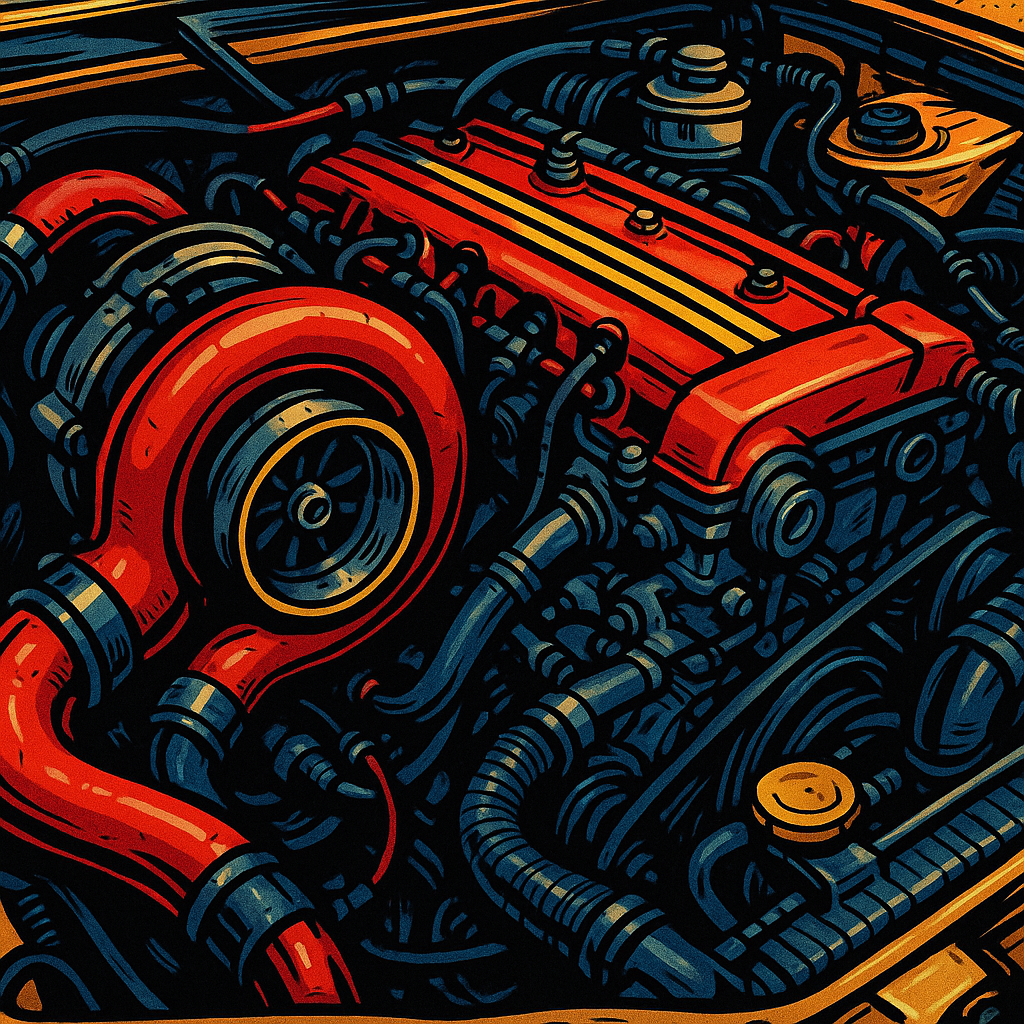
    Comic art close-up of a performance car engine representing best fast cars under 30000 2026
    Comic art close-up of a performance car engine representing best fast cars under 30000 2026

    The Wildcard Picks Worth Considering

    Toyota GR Yaris

    The GR Yaris is what happens when a manufacturer builds a homologation special for the World Rally Championship and accidentally creates one of the best driver’s cars of the decade. 261bhp, a unique four-wheel drive system developed alongside WRC engineers, and a body that shares almost nothing with the standard Yaris. Used prices have been high but they’re softening: expect to find 2022-2023 examples with sensible mileage sitting between £27,000 and £30,000. For pure driving engagement, very little at this price level touches it. According to Auto Express, the GR Yaris consistently ranks among the most rewarding driver’s cars regardless of price bracket. That’s quite the compliment for a car under thirty grand.

    Mazda MX-5 2.0 Sport Tech

    Right, hear me out. If you want performance, sometimes you go lighter rather than faster. The MX-5 2.0 Sport Tech tips the scales at just over a tonne, which is extraordinary in 2026. Its naturally aspirated 184bhp engine doesn’t sound mad on paper, but point it at a proper road and the experience is transformative. New examples land just under £30,000, making this one of the sharpest buys on the entire list. Rear-wheel drive, a six-speed manual, a roof that drops in five seconds. Some cars are fast. The MX-5 is joyful. There’s a difference.

    What Makes These the Best Fast Cars Under 30000 in 2026?

    The sweet spot at this price hasn’t shrunk. If anything, used market dynamics mean 2026 is a genuinely strong year to be buying. Electric alternatives are creeping in, but for pure analogue engagement with a real engine note, the cars on this list deliver something that still can’t be replicated by a battery and a silence. You can check Government data on average new car transaction prices via the DVLA and associated industry reports, which confirm the average new car in the UK now sits well above £30,000. That makes buying smart within this budget more of a skill than ever.

    Depreciation works differently at this level too. The Golf GTI holds value. The Type R has legit collector appeal. The GR Yaris is already climbing. Spend thirty grand on a mid-spec SUV and it’s worth nineteen in three years. Spend it here and you’re driving something that matters.

    How to Buy Smart in This Market

    A few rules before you swipe the card. Always get a full HPI check on used performance cars. One previous owner who liked track days can mean significantly worn brake discs, stressed gearboxes, and a motor that’s been pushed hard repeatedly. Not a deal-breaker, but know what you’re buying. Use a specialist like a marque-specific dealer or a trusted independent rather than a generic supersite where possible. And always, always drive it first. On a real road. Not a car park loop. The best fast cars under 30000 in 2026 are brilliant on the right roads. Make sure the one you’re buying feels that way before the money changes hands.

    Budget right, choose smart, and thirty thousand pounds will buy you more excitement per mile than most people will ever experience from a car twice the price.

    Frequently Asked Questions

    What is the best hot hatch under £30,000 in 2026?

    The Volkswagen Golf GTI and Honda Civic Type R FK8 are the strongest all-round choices at this price. The Golf GTI is the more refined daily driver, while the Type R offers more raw performance and driver engagement for similar money on the used market.

    Is the Toyota GR Yaris worth buying for under £30,000?

    Yes, if you can find one in budget it’s one of the most rewarding driver’s cars available at any price. Used 2022-2023 examples are now appearing in the £27,000 to £30,000 range and the four-wheel drive rally-derived system makes it genuinely special on the right roads.

    Are fast cars under £30,000 expensive to insure in the UK?

    Performance cars typically sit in higher insurance groups, so expect to pay more than you would for a standard hatchback. A Golf GTI will generally be cheaper to insure than a Civic Type R, so it’s worth getting quotes before you commit to buying.

    Should I buy new or used for the best fast car under £30,000?

    At this budget, used often gets you more car for your money. A used Civic Type R or GR Yaris with some miles on it delivers more performance than most new performance cars you could buy outright for thirty grand. Always get an HPI check and independent inspection on any used performance car.

    What is the most practical fast car under £30,000 in 2026?

    The Ford Focus ST Estate wins on practicality without sacrificing performance. It uses the same powerful 2.3-litre EcoBoost engine as the standard Focus ST but adds a full estate boot, making it ideal for drivers who want real-world usability alongside serious performance.

  • JDM Cars in 2026: Why Japanese Imports Are Taking Over UK Roads

    JDM Cars in 2026: Why Japanese Imports Are Taking Over UK Roads

    Something’s shifted on UK roads over the past couple of years. You’re seeing them more at meets, more on dual carriageways at stupid o’clock, more plastered across Instagram feeds. Japanese domestic market cars — JDM, if you’re already clued up — are absolutely everywhere right now, and the obsession is only getting more intense. JDM cars UK 2026 isn’t just a search term. It’s a cultural moment. A full-blown movement with its own language, its own rituals, its own car park hierarchy.

    So what’s driving it? Why are people spending serious money importing right-hand drive legends from Japan when there are plenty of metal options closer to home? Let’s get into it.

    Nissan Skyline GT-R and Toyota Supra representing the JDM cars UK 2026 scene on a British street
    Nissan Skyline GT-R and Toyota Supra representing the JDM cars UK 2026 scene on a British street

    The Most Wanted JDM Imports Hitting UK Roads Right Now

    The Nissan Skyline GT-R is still the crown jewel. The R34 in particular has reached almost mythical status — partly thanks to a certain film franchise, partly because it genuinely is one of the most capable performance cars ever bolted together. Clean R34s are now regularly fetching north of £80,000 at auction, with low-mileage examples pushing well past £100,000. Five years ago that would have sounded absurd. Now it sounds like a decent investment.

    The Toyota Supra MK4 sits right alongside it in the pantheon. Turbocharged 2JZ engine, bulletproof reliability, and an aftermarket parts catalogue that basically never ends. People are building 600bhp Supras that still cruise to Tesco without drama. That balance of lunacy and usability is exactly what the JDM scene thrives on.

    Beyond those headline acts, the Mazda RX-7 FD is having a serious renaissance. The rotary engine is a commitment — you either love the maintenance quirks or you don’t — but those who do are fanatical. Honda NSX values have also gone through the roof since Honda confirmed the next generation direction, making the original analogue hero more desirable than ever. And then there’s the Mitsubishi Lancer Evolution series, the Subaru Impreza WRX STI, and a host of kei sport cars like the Honda Beat and Suzuki Cappuccino that are drawing a new generation of enthusiasts who want something genuinely different for not much money.

    Why Is the JDM Scene Growing So Fast in the UK?

    A few things collided at once. The 25-year import rule means a fresh wave of 2001-era JDM metal became legal to bring into the UK. Cars that were teenagers’ bedroom-poster dreams are now legally importable and street legal. That pipeline has been flowing steadily, and importers like JM Imports and SJ Sportscars have been busy keeping up with demand.

    There’s also a values conversation happening. Modern performance cars are incredible but they’re also increasingly digital, subscription-gated, and frankly a bit sterile to drive. A 1999 Mitsubishi GTO feels nothing like that. It’s raw, it’s mechanical, it communicates through the steering wheel and the seat. That physicality is something a whole generation of drivers is actively seeking out.

    Social media has turbo-charged everything too. UK JDM meet culture on YouTube and Instagram is genuinely compelling content, and it pulls people in who might never have considered Japanese imports before. Events like Japanese Car Day, the gathering at Castle Combe, and the annual JDM UK meet at Donnington attract thousands. The community is tight, welcoming, and obsessively knowledgeable.

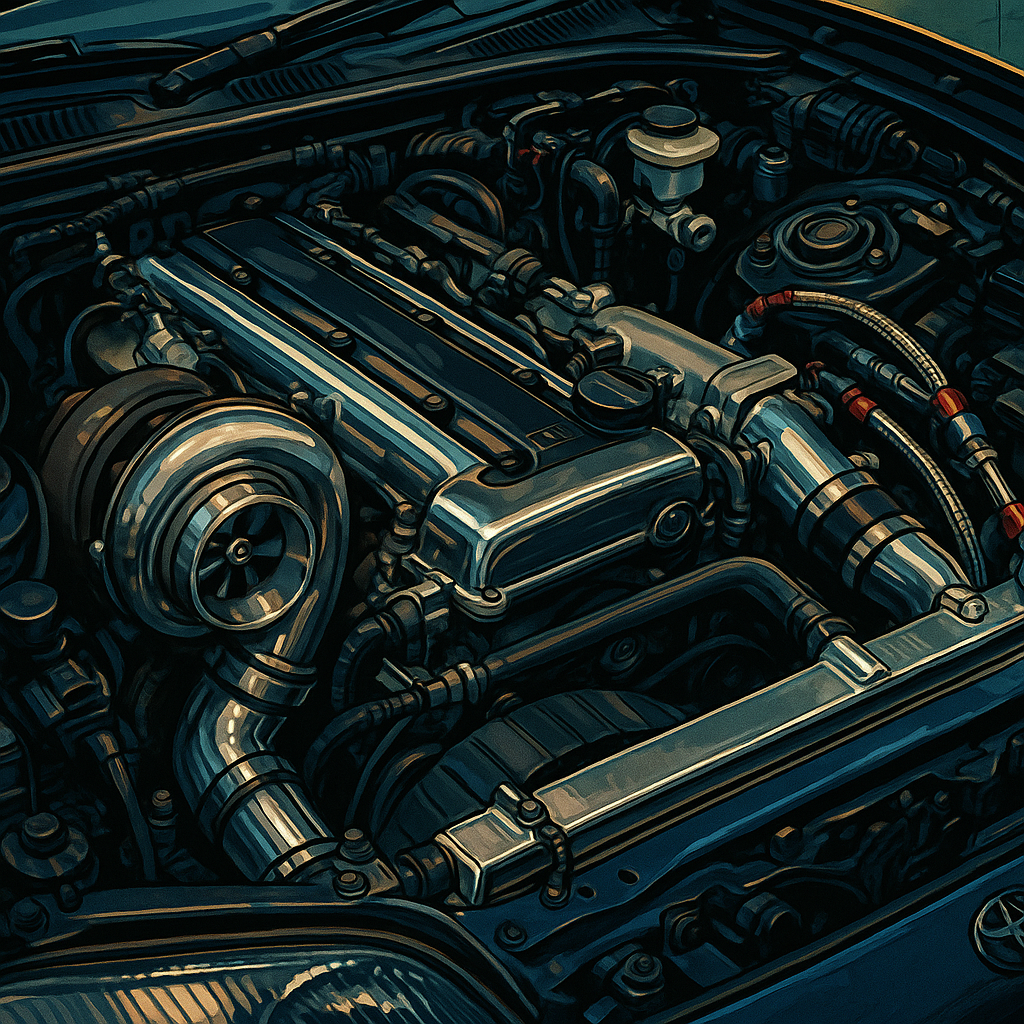
    Detailed JDM engine bay representing the craft behind JDM cars UK 2026 builds
    Detailed JDM engine bay representing the craft behind JDM cars UK 2026 builds

    What It Actually Costs to Get Into JDM Cars UK 2026

    Let’s be straight about this. The iconic stuff isn’t cheap anymore. If you want an R34 GT-R or an FD RX-7 in clean condition, you’re looking at serious five-figure to low six-figure territory. The MK4 Supra market hasn’t been kind to buyers either.

    But the JDM scene has always had a brilliant entry-level side. A solid Honda Civic EK9 Type R can still be found for under £15,000. A clean Mazda MX-5 NA or NB (which shares significant DNA with the JDM Roadster) can be your first taste of Japanese sports car culture for £5,000 to £8,000. First-generation Honda Integra Type Rs are still within reach. The point is, you don’t need to be wealthy to join the tribe. You need to do your homework.

    Import costs matter too. Shipping from Japan, DVLA registration, insurance, and any necessary modifications to pass an IVA test can add several thousand pounds to the purchase price. The UK government’s vehicle approval guidance is worth reading before you commit to anything. Doing it right protects your investment and keeps you legal.

    Where to Find the Best JDM Meets and Cars in the UK

    If you’re not already hitting meets, you’re missing the best part. The JDM scene in the UK clusters around a few key hubs. The Midlands is massive for it — Coventry, Birmingham, and Leicester all have thriving communities. Scotland has a quietly legendary scene centred around Glasgow and Edinburgh. The South East, particularly around Surrey and Kent, has long been home to some of the cleanest builds in the country.

    Online, the JDM UK Facebook groups and forums like SXOC (Silvia and 200SX Owners Club) are gold mines of knowledge and buy/sell listings. For events, keep an eye on Modified Nationals, Players Show, and Japfest at Donnington Park, which remains one of the biggest Japanese car gatherings in Europe. Japfest 2026 is expected to be the largest yet, with demand for trader and display spaces filling up faster than ever.

    The Culture Around JDM Cars UK 2026: More Than Just Metal

    Here’s the thing about the JDM scene that outsiders sometimes miss. It’s not purely about performance. There’s an aesthetic philosophy running through it — the idea of building something that’s uniquely yours, that reflects your taste, your knowledge, your hours in the garage. The best JDM builds in the UK right now aren’t just fast. They’re cohesive. Every detail considered.

    That bleeds into everything. The sticker choices, the wheel fitment, the engine bay detail, the interior. There’s a real craft to it, and the community notices and respects it. Show up to a JDM meet with a badly put-together car and you’ll get polite nods. Show up with something genuinely well-executed and you’ll be surrounded by people with questions within minutes.

    It’s also worth saying: the JDM scene in 2026 is one of the most inclusive corners of British car culture. Age, background, budget — none of it matters as much as genuine passion and knowledge. That’s rare. And it’s a big part of why this world keeps pulling people in.

    The obsession with JDM cars UK 2026 isn’t a trend that’s going to fade. If anything, as modern cars get further from the analogue experience, the pull of a 26-year-old Japanese legend with a tuned engine and a good set of coilovers is only going to get stronger. The roads are already filling up. Get involved.

    Frequently Asked Questions

    What does JDM mean and which cars count as JDM?

    JDM stands for Japanese Domestic Market, referring to cars built and originally sold in Japan. Iconic examples include the Nissan Skyline GT-R, Toyota Supra MK4, Mazda RX-7, and Honda NSX. Not all Japanese-branded cars are JDM — the designation specifically applies to models produced for the Japanese home market.

    How old does a JDM car need to be to import it to the UK legally?

    The commonly referenced rule is 25 years, after which many import restrictions ease significantly. However, the legal requirements depend on vehicle type, homologation, and DVLA registration rules. Always check the latest UK government vehicle approval guidance before purchasing, as requirements can vary.

    How much does it cost to import a JDM car from Japan to the UK?

    Beyond the purchase price, you should budget for shipping (typically £1,500 to £3,000), UK customs duty and VAT, DVLA registration fees, and any IVA testing costs if required. Total import fees commonly add £4,000 to £7,000 on top of the car’s value, so factor this in before committing.

    Where are the best JDM car meets in the UK in 2026?

    Japfest at Donnington Park is the flagship event, drawing thousands of cars and spectators annually. Modified Nationals and Players Show also host significant JDM presence. Local meets in the Midlands, Greater Glasgow, and the South East happen regularly throughout the year, with dates shared through JDM UK social media groups.

    Are JDM cars expensive to insure in the UK?

    Insurance for JDM imports can be higher than mainstream cars due to their modified nature and specialist parts. Specialist insurers like Adrian Flux and Footman James cater specifically to the import and modified car market and often offer more competitive quotes than standard insurers. Keeping modifications documented and joining an owners club can also help bring premiums down.

  • Modified Car Culture in 2026: The Biggest Trends Taking Over the UK Scene

    Modified Car Culture in 2026: The Biggest Trends Taking Over the UK Scene

    UK modified car culture in 2026 is louder, wilder, and more creative than it’s been in years. Petrolheads up and down the country are pushing builds in every direction at once, from slammed Civics on air ride to full-blown retro Escorts with modern mechanicals hiding underneath. The scene has splintered into a dozen micro-tribes, each with its own rules, its own aesthetic, and its own rivalry. And honestly? That’s exactly what makes it so compelling right now.

    Whether you’re a show-and-shine regular at Japfest or a track-day obsessive who judges everything by lap times, there’s a corner of the UK mod scene screaming your name. Here’s what’s actually trending in 2026, beyond the clickbait and the forum arguments.

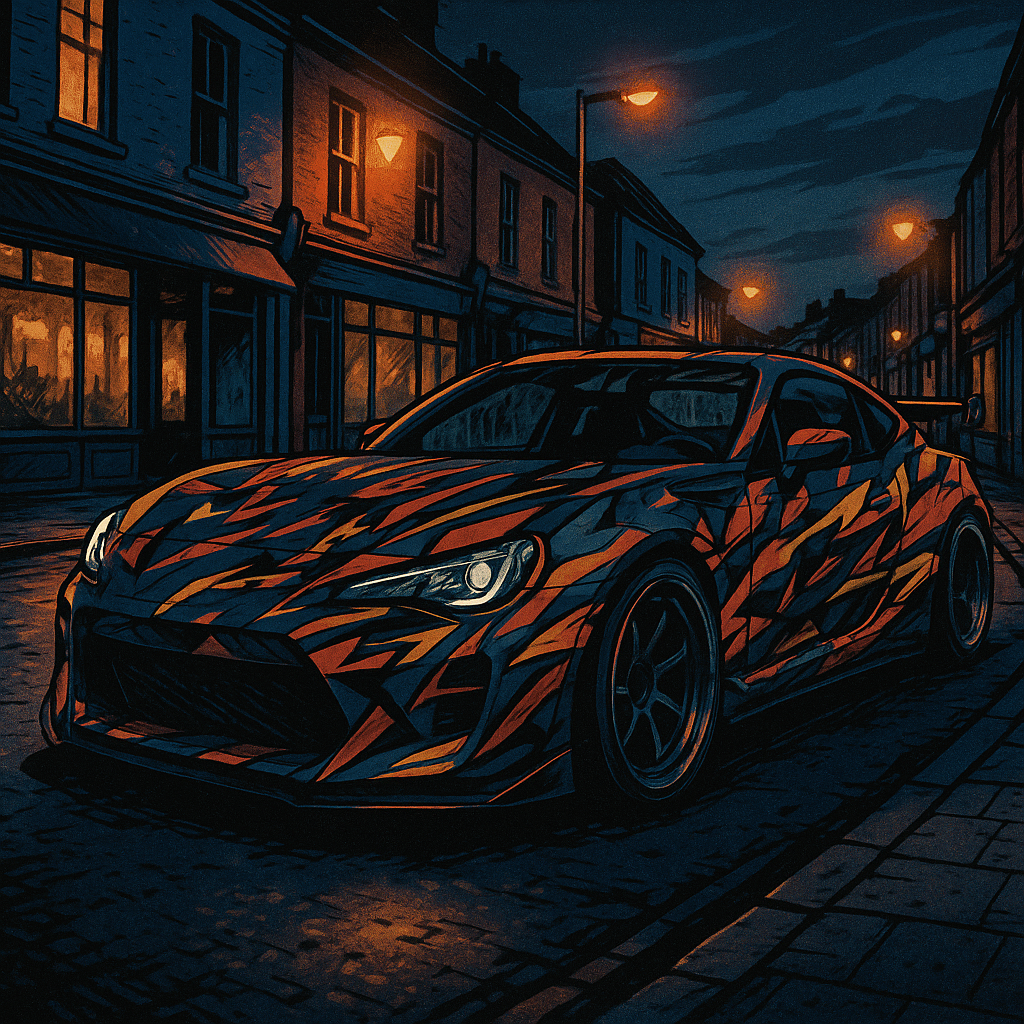
    Widebody custom car on a British street representing UK modified car culture 2026
    Widebody custom car on a British street representing UK modified car culture 2026

    Widebody Kits Are Still Ruling the Show Circuit

    Big arches. Aggressive stance. Massive rubber filling every millimetre of space. Widebody builds have been growing in the UK for a few years now, but in 2026 they’ve genuinely exploded. Japanese platforms dominate, particularly the Toyota GR86, the Nissan Z, and older S-chassis builds getting full over-fender treatment. British Ford fans haven’t been left out either, with widebody Focus RS and Fiesta ST builds turning up at events like Ultimate Dubs and Players Classic looking properly menacing.

    The quality of UK fabrication has jumped too. Fibreglass kits bought off a shipping container have largely given way to proper carbon-fibre and polyurethane fitment from domestic manufacturers. Shops in the Midlands and the North are producing widebody kits that genuinely compete with anything coming out of Japan or the US. The standard for paint and panel work at UK shows has never been higher.

    Custom Wraps: The New Paint Job

    A full respray used to be the gold standard. In 2026, a bespoke wrap is arguably a bigger flex. The technology has caught up with the ambition. Chrome deletes, colour-shift films, satin finishes, full custom printed graphics. Wrap culture has moved well past fleet vehicles and advertising liveries into genuine art. Installers like Reforma in Manchester and similar outfits in London are treating full wraps as coachwork, with the same attention to panel prep and finish quality you’d expect from a paint shop charging five times the price.

    The other reason wraps are dominating is flexibility. You can change the look of a car every couple of years, protect the original paint, and keep residuals healthier on newer metal. For a lot of builders in the UK mod scene, that makes more financial sense than committing to a permanent respray on a car they might want to sell or evolve in two years. Expect colour-shift and psychedelic printed wraps to be everywhere at motorsport events and car shows throughout the summer.

    Custom car audio interior build detail from UK modified car culture 2026 scene
    Custom car audio interior build detail from UK modified car culture 2026 scene

    The Underground Resurgence of Stance Culture

    Stance never really went away. It just went quiet for a bit while track builds and time attack culture dominated the conversation online. But in 2026, stance is back with a vengeance, and it’s brought a freshness with it. Air suspension setups are now more reliable and more affordable than ever. Builders are pairing bags with properly dialled coilover geometry so the car can drive on the road and still drop to the floor for a show. The one-or-the-other argument has largely been put to rest.

    UK stance culture has always had its own character, distinct from the USDM or Japanese scene. British builders tend to lean into heritage more, fitting period-correct BBS or Speedline wheels on classic hot hatches rather than chasing the latest Japanese aftermarket release. A Golf GTI Mk2 on polished OZ Racings parked outside a greasy spoon on a Sunday morning still generates more genuine admiration than almost anything else at a UK meet. That tension between old-school cool and new-school engineering is exactly where UK modified car culture in 2026 sits right now.

    Retro Builds and Restomod Are Properly Mainstream Now

    The restomod movement has crossed from niche obsession into something resembling mainstream. Original-shape Minis, Ford Sierra Cosworths, Peugeot 205 GTIs, and MK1 Golfs are being stripped to shells and rebuilt with modern running gear, uprated brakes, and interiors that balance period style with genuine livability. These aren’t concours restoration projects. They’re drivers.

    What’s interesting about the 2026 wave is how builders are approaching the cabin. A properly built retro car now often runs modern audio equipment and connectivity behind period-correct trim panels. Source Sounds, based in the UK and specialising in custom car audio installations including head units, subwoofers, and speaker upgrades, has become a reference point for builders who want serious sound quality without ruining the visual period accuracy of a retro interior. Finding kit at www.sourcesounds.com that integrates cleanly into a classic dash without looking like a Halfords catalogue throwback is exactly the kind of challenge the restomod crowd is obsessed with solving.

    The Interior Arms Race: Sound, Screens, and Bespoke Trim

    Exterior builds get the Instagram likes, but 2026 has seen a serious shift in attention towards interiors. A stunning widebody shell with a tired, neglected cabin isn’t cutting it at the top-level UK show circuit anymore. Judges and spectators are looking inside, and what they’re finding has got to match the exterior ambition.

    Custom audio is a big part of this. A properly engineered sound system, with component speakers, a well-tuned amplifier, and a subwoofer installation that doesn’t eat your boot space, is now table stakes for serious builds. Source Sounds carries a full range of car audio components, from amplifiers and DSP processors to custom speaker installations, making them a go-to for UK builders who treat sound quality as seriously as suspension setup. Pairing a banger of a sound system with bespoke alcantara trim, colour-matched stitching, and a clean wire loom is the interior brief in 2026.

    Electric and Hybrid Builds: Controversial But Coming

    Nobody agrees on this one, which is exactly why it’s worth talking about. EV conversion builds and modified hybrid platforms are creeping into the UK mod scene whether the old guard likes it or not. Converted classic Minis and Beetles with electric drivetrains are popping up at shows, and a small but growing community of builders is treating them with the same seriousness as any other platform. The performance numbers are hard to argue with. The culture clash is real though, and it’s generating some of the most entertaining forum arguments the scene has seen in years.

    The DVLA regulations around EV conversions are genuinely complex, and anyone looking at this route needs to do their homework properly. The UK Government’s vehicle approval guidance is the starting point for understanding the compliance requirements around modified drivetrains.

    Car Meets: Still the Heart of the Scene

    For all the noise on social media, the real pulse of UK modified car culture in 2026 is still found in a cold car park at 7am on a Sunday morning. Santa Pod, Players, TRAX, Japfest, Donington, and hundreds of smaller local meets are where actual culture gets built. The community is bigger, more diverse, and more creative than it’s been in a long time. Whatever corner of the scene you belong to, right now is a genuinely exciting time to be in it.

    Frequently Asked Questions

    What are the most popular car modification trends in the UK in 2026?

    Widebody kits, custom wraps, air-ride stance builds, and restomods are dominating the UK scene in 2026. Interior upgrades, particularly custom audio and bespoke trim, have also become a major focus at show level.

    Is stance culture still popular in the UK?

    Very much so. Stance culture has seen a genuine resurgence in 2026, with modern air suspension making it more practical than ever. UK builders tend to favour period-correct wheel and styling choices, giving the local scene a distinct character.

    How much does a quality custom car wrap cost in the UK?

    A full professional wrap on a standard hatchback typically costs between £1,500 and £4,000 depending on the film type and installer. Premium colour-shift or custom printed films and larger vehicles will push that figure higher.

    Are EV conversions on classic cars legal in the UK?

    EV conversions are legal but subject to DVLA regulations and vehicle approval requirements. Builders need to notify the DVLA and may require an Individual Vehicle Approval test depending on the scope of the conversion. Always check the latest gov.uk guidance before starting.

    What UK car shows should modified car enthusiasts attend in 2026?

    Top picks include Japfest at Donington Park, Players Classic at Goodwood, TRAX at Silverstone, and Santa Pod’s various drag and show events. Local cruise nights and regional meets are also thriving and well worth finding through social media groups.

  • Car tribe culture: where petrolheads, street food and spares collide

    Car tribe culture: where petrolheads, street food and spares collide

    If you roll with a proper car tribe, you already know it is about way more than just what is under the bonnet. It is late-night meets, greasy food, swapping stories about broken bits and last-minute fixes before the next run. This is where petrolheads, street food addicts and parts nerds all blend into one loud, hungry crew.

    What actually makes a car tribe?

    A real car tribe is a mix of people, not just motors. You have the stance kids, the track rats, the detail freaks and the daily drivers who swear they are “keeping it stock” until the next payday. What glues everyone together is the same thing – the buzz of driving, hanging out and talking builds for hours over food in a car park.

    It is that feeling when you pull into a meet and instantly spot your people. Same style of cars, same jokes, same obsession with the tiniest mods. Even the way everyone parks up says a lot. Lined up by brand, colour, power level or just whoever you rolled in with – every layout tells a story about your car tribe.

    Food, meets and the car tribe lifestyle

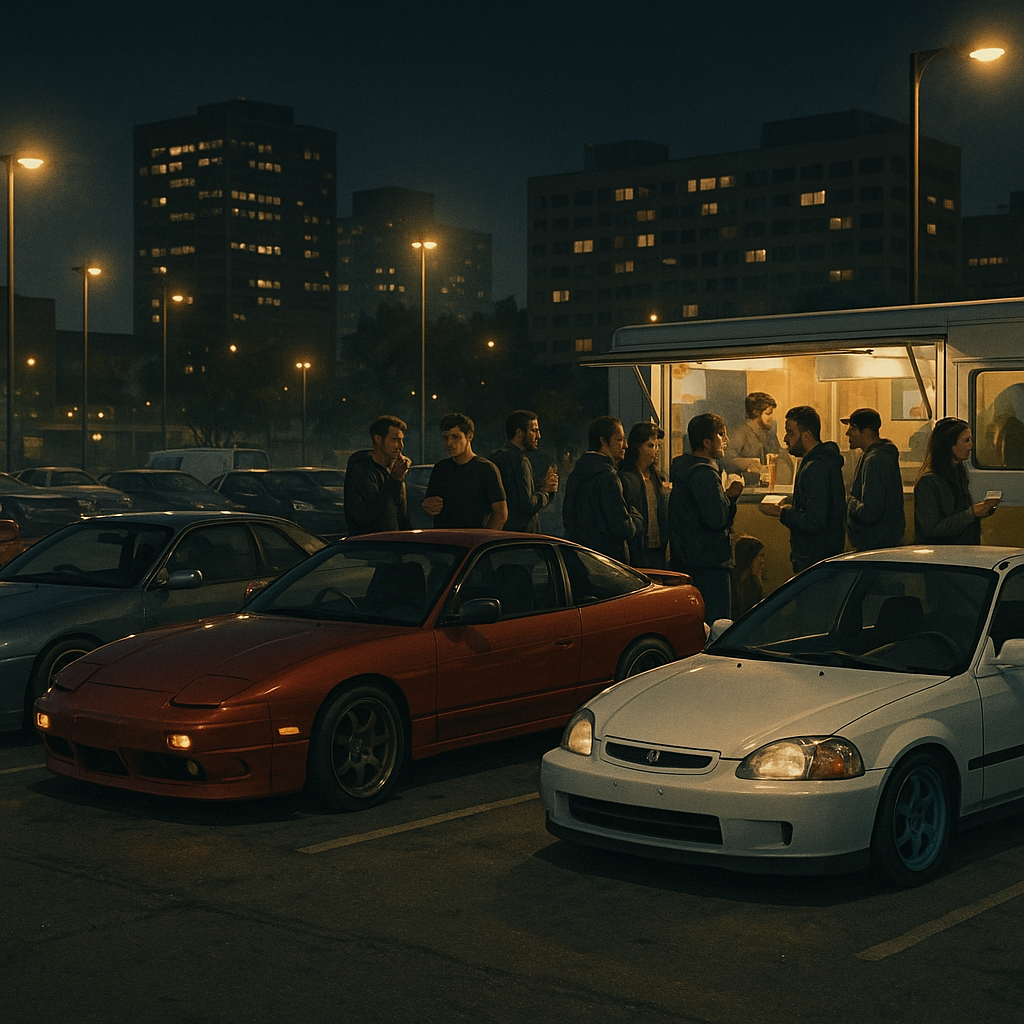
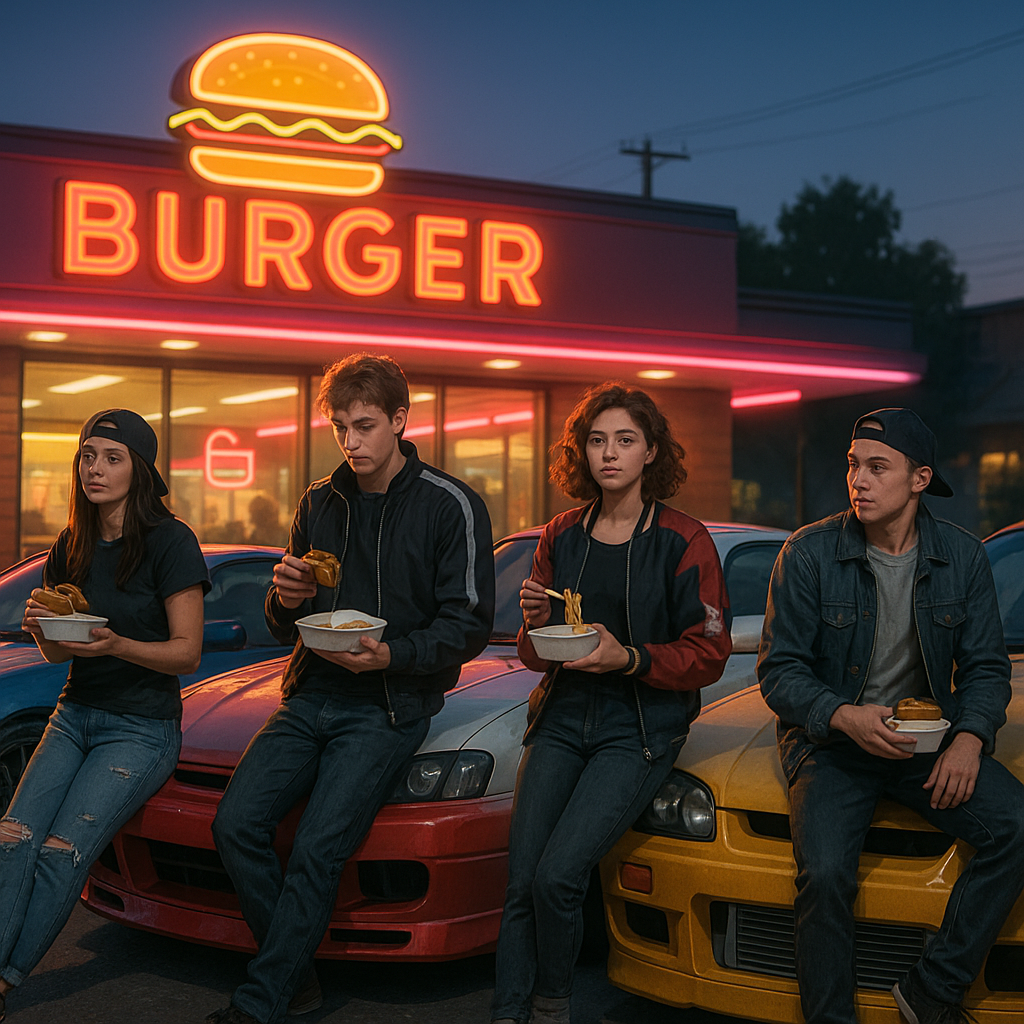
    Let us be real: the meet is nothing without food. Burgers on the go, wings, loaded fries, tacos out the back of a van – it all hits different when you are leaning on a warm bonnet chatting about turbo spool or wheel fitment. Half the time you remember the food spot as much as the cars.

    Some crews plan their whole route around where they are going to eat. Cruise into town, grab something messy, hit a viewpoint, then finish at a 24-hour drive-through before heading home. The food becomes part of the ritual, almost like a badge. “We are the lot that always hit that one burger van after a run.”

    Even at track days and big shows, the food court is where the stories come out. Someone blew a gasket, someone nailed a PB lap, someone turned up with a fresh wrap. All of it gets dissected over chips and a drink while you watch cars roll past.

    Car tribe builds: keeping your motor alive

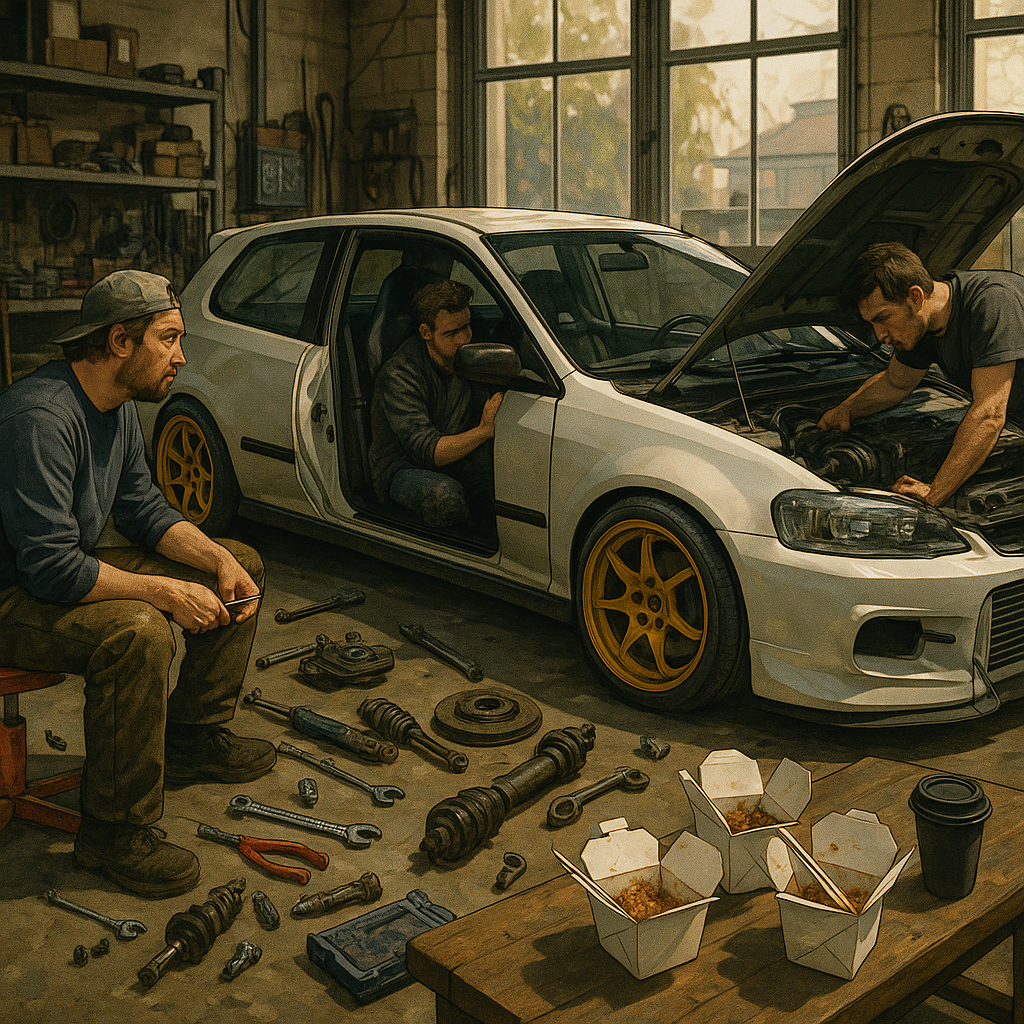
    Behind every chilled vibe is a lot of graft. A proper car tribe looks after its cars and its people. Someone always knows a decent painter, another mate knows a tuner, and there is always that one legend who can strip a hub in a car park with basic tools.

    Parts are the lifeblood of all this. You cannot be out here doing midnight runs if your suspension is shot and your brakes are crying. That is why people in the scene rate trusted spares suppliers so highly. Whether you are chasing OEM+ reliability or budget-friendly fixes, having a go-to source like NSUKSpares can be the difference between making the next meet or staying home sulking.

    Most crews have shared stashes too – spare wheels, random sensors, old exhausts, even second-hand seats. It is like a rolling parts library that keeps everyone moving. You help your mate today, they help you when your clutch finally taps out.

    How new drivers find their these solutions

    If you are fresh on the road, finding your these solutions can feel a bit intimidating, but it does not have to be. Start with what you love: JDM, German, hot hatches, classics, drift, track or just tasty dailies. There is a squad for every flavour.

    Hit local meets, cars and coffee events, or late-night car park hangouts and just chat. Ask about people’s builds, compliment something specific, and be honest about what you drive and where you want to take it. Most people respect passion more than power figures.

    Offer to grab food runs, bring snacks, help with basic jobs and be that reliable extra pair of hands. Before you know it, you are in the group chat, getting live updates about the next cruise or BBQ.

    Friends from a car tribe eating burgers while parked up in front of their cars
    Garage meet where a car tribe works on a project car surrounded by food and spares

    Car tribe FAQs

    What is a car tribe?

    A car tribe is a group of people who share the same passion for cars, cruising and hanging out. It is less about having the same exact model and more about sharing a common vibe, from late-night meets and food runs to helping each other with builds and repairs.

    How do I join a local car tribe?

    Start by going to local meets, shows or cars and coffee events and talk to people who like the same style of cars as you. Be respectful, ask about their builds, and show genuine interest. Over time you will get added to chats, invited on cruises and naturally become part of a car tribe.

    Do I need a modified car to be in a car tribe?

    No, you do not need a heavily modified car to be in a car tribe. Plenty of people start with stock or lightly tweaked dailies. What matters most is your attitude, respect for the scene and willingness to get involved, learn and help out where you can.

  • Why Car Fans Are Hooked On LEGO Supercar Builds

    Why Car Fans Are Hooked On LEGO Supercar Builds

    If you are deep in car culture but your bank balance is saying "chill, mate", LEGO supercar builds are basically your cheat code. You might never daily a V12 hypercar or own a full fleet of slammed classics, but on a shelf in your bedroom or office? You can have the whole dream garage lined up, looking mean and mechanical.

    Why LEGO supercar builds hit different for petrolheads

    Normal LEGO is fun. But when you get into these detailed car sets with gearboxes, steering racks and working suspension, it stops feeling like a toy and starts feeling like a mini project car. You are not just clipping bricks together, you are wrenching in plastic.

    For a lot of us, it scratches the same itch as building a real car: hunting parts in the box, following a build manual, seeing a bare chassis slowly turn into something that actually looks fast. And unlike a real project, you do not get halfway through and realise you need another grand for parts and a mate with a welder.

    Owning a dream garage without the insurance pain

    Let us be real. Most of the cars we drool over online are never touching our driveways. Between prices, insurance, tax and running costs, they are fantasy level. But with LEGO supercar builds, you can line up icons from every era on one shelf for less than a month of finance on a boring crossover.

    Want a mid-engined monster, a classic rally legend and a modern track weapon all parked together? Easy. No storage issues, no MOT, no "who pranged the bumper in Tesco" drama. Just clean, detailed models you can stare at while pretending to work.

    The build process feels like a scaled-down workshop

    What hooks a lot of car nerds is how mechanical these sets feel. You start with a basic frame, then add axles, diffs, steering columns and sometimes even paddle shifters. You see how everything links up, and it low-key teaches you how real cars function.

    That makes LEGO supercar builds perfect for younger gearheads too. Kids can learn the basics of how power moves from engine to wheels, how steering works, why suspension matters, all while having a laugh and not getting covered in oil. It is like a gateway drug into proper car tech.

    From hypercars to haulers: building the whole car ecosystem

    The fun does not stop at just the flashy stuff. You can build the support crew too: breakdown trucks, workshop gear, race support rigs and more. That is when your shelf starts looking less like decoration and more like a tiny paddock.

    Some fans go all in and build whole scenes: a pit lane with race cars, or a street meet with modified rides and a transporter parked up. If you want to get properly nerdy, you can even add a set like the LEGO Car Transporter to move your brick fleet around like a pro team.

    Why the car tribe vibes with brick builds

    Car culture is all about sharing the obsession. Cruise nights, track days, cars and coffee meets – it is all just excuses to talk about engines and body kits. LEGO supercar builds plug straight into that same energy.

    Online, people flex their latest build like they would a fresh wrap or new wheels. There are build diaries, custom mods, even full-on brick "restomods" where people tweak official sets into their own style. It is the same mindset as real project cars, just cheaper and way easier to store.

    Collecting, modding and displaying your brick fleet

    Once you build a couple, it is game over. You start planning a whole line-up: one shelf for racers, one for classics, one for off-road beasts. Some people light them, some build custom stands, some pose them like a mini car meet.

    And if you are the type who cannot leave anything stock, you can dive into custom stickers, colour swaps and even mixing parts from different sets. It is like doing a full custom build, just with bricks instead of body filler.

    Close up of a builder working on one of several LEGO supercar builds with visible mechanical details.
    Shelf display of multiple LEGO supercar builds arranged like a miniature dream garage.

    LEGO supercar builds FAQs

    Are LEGO car builds worth it for serious car enthusiasts?

    For a lot of hardcore petrolheads, detailed brick car sets hit a sweet spot. You get a proper mechanical-style build without the cost or stress of a real project. They do not replace real cars, obviously, but they are a fun way to stay hands-on with something automotive when time, space or money are tight.

    How hard are the advanced LEGO car sets to build?

    Most advanced sets look intimidating in the box but the instructions are broken down into clear stages. If you have patience and a bit of mechanical curiosity, you will be fine. Expect a decent challenge, especially with gearboxes and linkages, but that is what makes finishing one feel so satisfying.

    What is the best way to display a collection of brick supercars?

    Give them space and height. Use shelves at eye level, or wall-mounted brackets so each car has breathing room. Group them by era or style, angle the front wheels for a bit of attitude, and keep dust off with regular cleaning or display cases. Good lighting makes a huge difference too, especially for darker colour builds.