Author: Ethan Miller

  • The UK’s Best Roadside Greasy Spoons Near Famous Driving Roads: A Petrolhead’s Breakfast Bible

    The UK’s Best Roadside Greasy Spoons Near Famous Driving Roads: A Petrolhead’s Breakfast Bible

    There’s a ritual that proper petrolheads understand instinctively. You don’t just turn up to a legendary B-road cold, roll down the window and floor it. You fuel up first. Not with premium unleaded, though obviously yes that too, but with a full English that could anchor a small boat. Tea so strong it strips the enamel. Toast so thick it counts as structural. The best greasy spoons near UK driving roads aren’t just breakfast stops; they’re part of the experience. The pre-drive ceremony. The calm before the apex.

    I’ve spent more time than is probably healthy seeking these places out, and I’m not embarrassed about it. What follows is my honest guide to the no-frills, full-English-serving cafés that sit within striking distance of the roads that matter.

    Classic British greasy spoon café exterior near a famous driving road, petrolhead breakfast stop
    Photo by Chevanon Photography on Pexels

    The Cat and Fiddle run: where to eat before you tackle the A537

    The A537 between Macclesfield and Buxton is one of the most talked-about driving roads in England, and it earns that reputation. Tight bends, proper elevation change, and a surface that keeps you honest. Before you hit it from the Macclesfield side, the Macclesfield area has a handful of solid transport cafés that have been feeding truckers and bikers for decades. The Lakeside Kitchen near Macclesfield does a full English that is genuinely unflappable in its scale. Proper back bacon, black pudding, beans that haven’t been watered down into soup. Cash welcome, card accepted, no nonsense.

    If you’re approaching from Buxton, the Buxton end of things is a bit more touristy, but the town itself still has working-class greasy spoons tucked behind the market that haven’t been gentrified yet. Seek them out. The ones with handwritten menus in the window are almost always better than the ones with a printed laminated board and a logo.

    Snake Pass and Woodhead: the Peak District’s eating-before-driving problem (and how to solve it)

    The A57 Snake Pass and the A628 Woodhead Pass are the kind of roads that demand respect and a full stomach. Both cut through dramatic moorland, both have bends that will catch you out if you’re half asleep, and both are surrounded by cafés that range from outstanding to genuinely grim.

    My personal pick for the Snake Pass crew is the cluster of transport cafés just outside Sheffield on the western edge. There’s a reason bikers and van drivers have been stopping at these spots since the 1980s. You’re getting a plate of food that actually weighs something, made by someone who’s been cooking it the same way for thirty years. That consistency matters. Sausages from a local butcher, fried bread done properly, a mug that requires two hands. You don’t need Instagram to tell you it’s good.

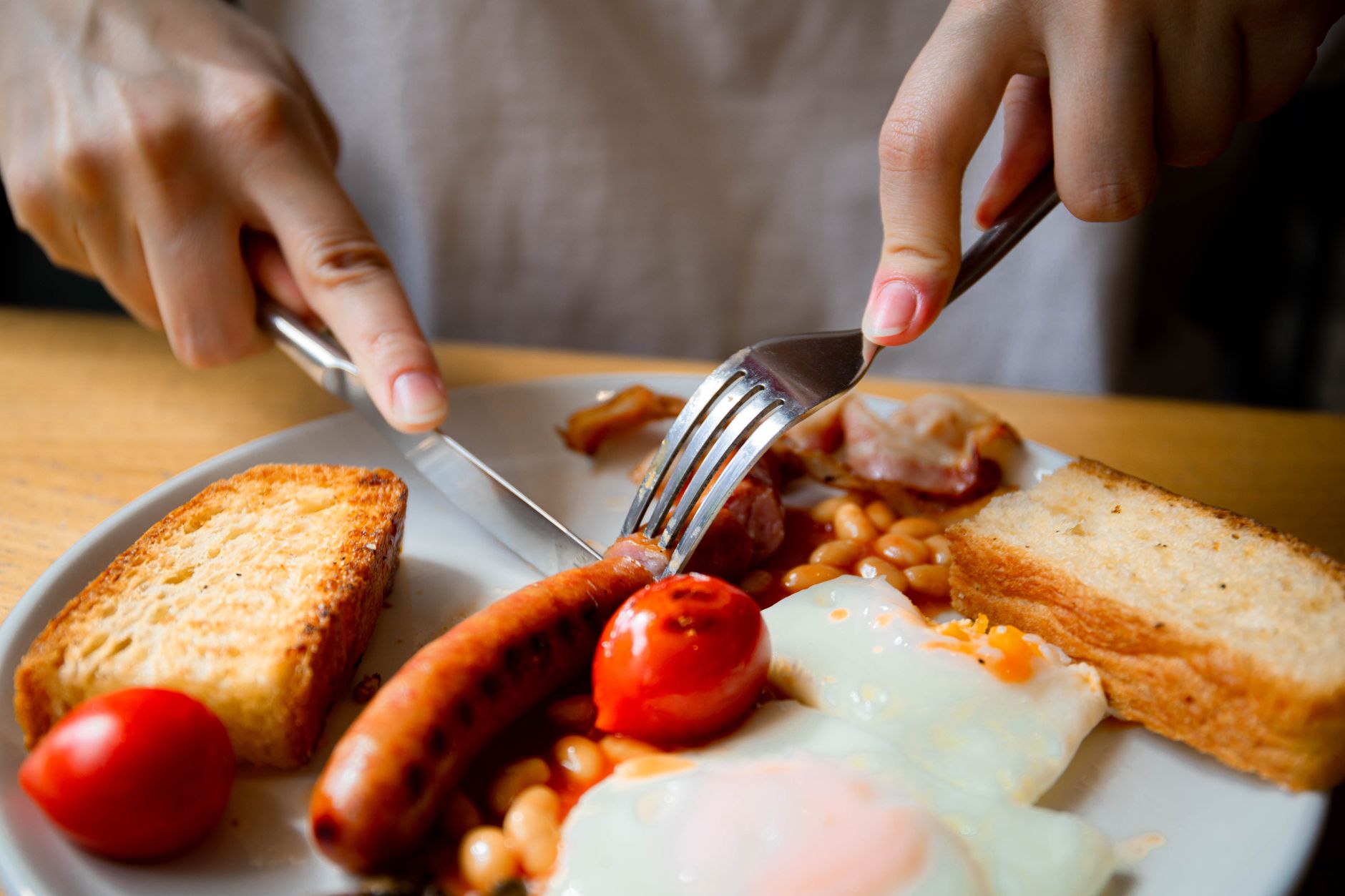
    Full English breakfast at a greasy spoon near UK driving roads, a petrolhead's pre-drive meal
    Photo by Sergey Meshkov on Pexels

    The Devil’s Staircase and Scotland’s A82: eat in Glencoe before you drive it

    The Devil’s Staircase isn’t a road, technically, it’s a section of the West Highland Way walking route, but the driving equivalent is the A82 through Glencoe, which is arguably the most dramatic stretch of tarmac in the whole of the UK. Mountains closing in, lochs flashing past, and a road that narrows without much warning. You want to drive this one alert, fed, and properly caffeinated.

    Glencoe village itself and the surrounding area towards Ballachulish have small local cafés that do a Scottish breakfast rather than an English one, which means you’re getting Lorne sausage (the square kind, don’t argue with it), tattie scones, and haggis alongside your eggs. The Real Food Café in Tyndrum, just north on the A82, is one of the most well-known stops in Scotland for drivers and is worth the praise. It’s a step above greasy spoon territory but the portions are enormous and the food is genuinely excellent. I’d call it a posh greasy spoon and mean that as a compliment.

    If you want something more traditional and rough-around-the-edges, Fort William has working cafés in the town centre that serve builders and farmers their breakfast at 6am without fuss. That’s your spot.

    The B3212 on Dartmoor: Devon’s quiet favourite needs a proper send-off

    Dartmoor’s B3212 between Moretonhampstead and Princetown is underrated outside the south west, but locals know it. Open moorland, wild ponies wandering into your path, and a road surface that’s been worked over by winter for centuries. Exeter and the surrounding Devon towns do proper greasy spoons better than most people expect. There are a handful near the Exeter industrial estate that open at 5:30am and don’t close until the lunchtime rush dies. Massive plates, proper mugs, no avocado anywhere near the menu.

    I’d also point you towards the cafés on the edge of Moretonhampstead itself. Small market towns in Devon have a habit of hiding excellent breakfast spots behind unassuming frontages. Look for the van in the car park and eat whatever the van driver’s eating.

    The A4069 Black Mountain Pass: Wales delivers the full Welsh breakfast

    The Black Mountain Pass in the Brecon Beacons is everything you want from a Welsh driving road. Sweeping views, a surface that rewards smoothness, and absolute solitude if you time it right. Llandovery and Llandeilo, the towns bracketing this road, both have cafés that serve proper Welsh breakfasts with laverbread and cockles alongside the standard components. Laverbread sounds alarming if you’ve never had it; it’s essentially seaweed paste fried in oatmeal and it is genuinely brilliant. Don’t skip it.

    The Treehouse café chain in Wales has a couple of spots that are more organic and artisan, but for a true greasy spoon experience before you drive the Black Mountain Pass, you want the smaller independents. Places where the proprietor knows the farmers by name and the sausages come from three miles away. That’s the stuff.

    A few things to know before you eat and drive

    The best UK cities for car culture and food get most of the attention, but it’s the routes between them where the real character lives. These roadside cafés exist in a different economy entirely. They’re not chasing food trends. They’re feeding people who actually need to eat, drivers, workers, walkers, and the occasional petrolhead who’s learned that the best prep for a mountain pass is a plate that could stop a clock.

    Opening hours are the main thing to check. Most proper greasy spoons close by 2pm and several don’t open on Sundays. If you’re planning a Sunday morning blast up the Snake Pass, confirm the café is actually open before you drive forty minutes to it in anticipation. I’ve made that mistake. It’s a particular kind of misery.

    There’s also something worth saying about the mechanical side of your day out. Before a long drive on challenging roads, make sure the car is actually sorted. Fluids, tyres, brakes. If you’re running older agricultural or working vehicles to events, getting hold of reliable CASE engine parts from a supplier you trust makes the difference between a smooth run and a roadside headache.

    And if the food conversation has you thinking about where to take the crew after a drive rather than before, the piece on farm shops and roadside delis on UK driving routes is worth your time. Different vibe, equally important calories.

    The greasy spoon isn’t going anywhere. The posh brunch places come and go. The handwritten menu in the steamed-up window stays. I’ll take it every time.

    Frequently Asked Questions

    What is a greasy spoon café and why are they popular with drivers?

    A greasy spoon is a traditional British budget café serving full cooked breakfasts, strong tea, and simple hot food at low prices. They’re popular with drivers, bikers, and truckers because they open early, serve generous portions, and sit along major routes and near industrial areas. For petrolheads, stopping at one before a long drive on a famous road has become a proper ritual.

    What are the best driving roads in the UK to visit with a café stop?

    Top picks include the A537 Cat and Fiddle between Macclesfield and Buxton, the A57 Snake Pass, the A82 through Glencoe in Scotland, the B3212 on Dartmoor, and the A4069 Black Mountain Pass in the Brecon Beacons. Each has cafés in nearby towns worth planning your stop around before or after the drive.

    What's the difference between an English and a Scottish breakfast at a roadside café?

    A Scottish breakfast typically swaps out standard pork sausages for Lorne sausage (square sliced sausage), adds tattie scones, and often includes haggis. Some Scottish cafés also serve white pudding. The core structure of eggs, bacon, beans, and toast remains, but the supporting cast is distinctly different.

  • The Rise of the UK Pop-Up Food Truck at Car Shows: Which Events Are Actually Worth Attending in 2026

    The Rise of the UK Pop-Up Food Truck at Car Shows: Which Events Are Actually Worth Attending in 2026

    Something has shifted at UK car shows. Not under the bonnet, not in the stance game, but in the queue forming next to the Subaru display. The food. Proper food. Smoked brisket, Korean fried chicken, wood-fired flatbreads, craft soft serves with names that sound like cologne. UK car show food trucks in 2026 are no longer an afterthought shoved in a corner near the portaloos. They’re a draw in their own right, and the shows that have figured this out are pulling bigger crowds than ever.

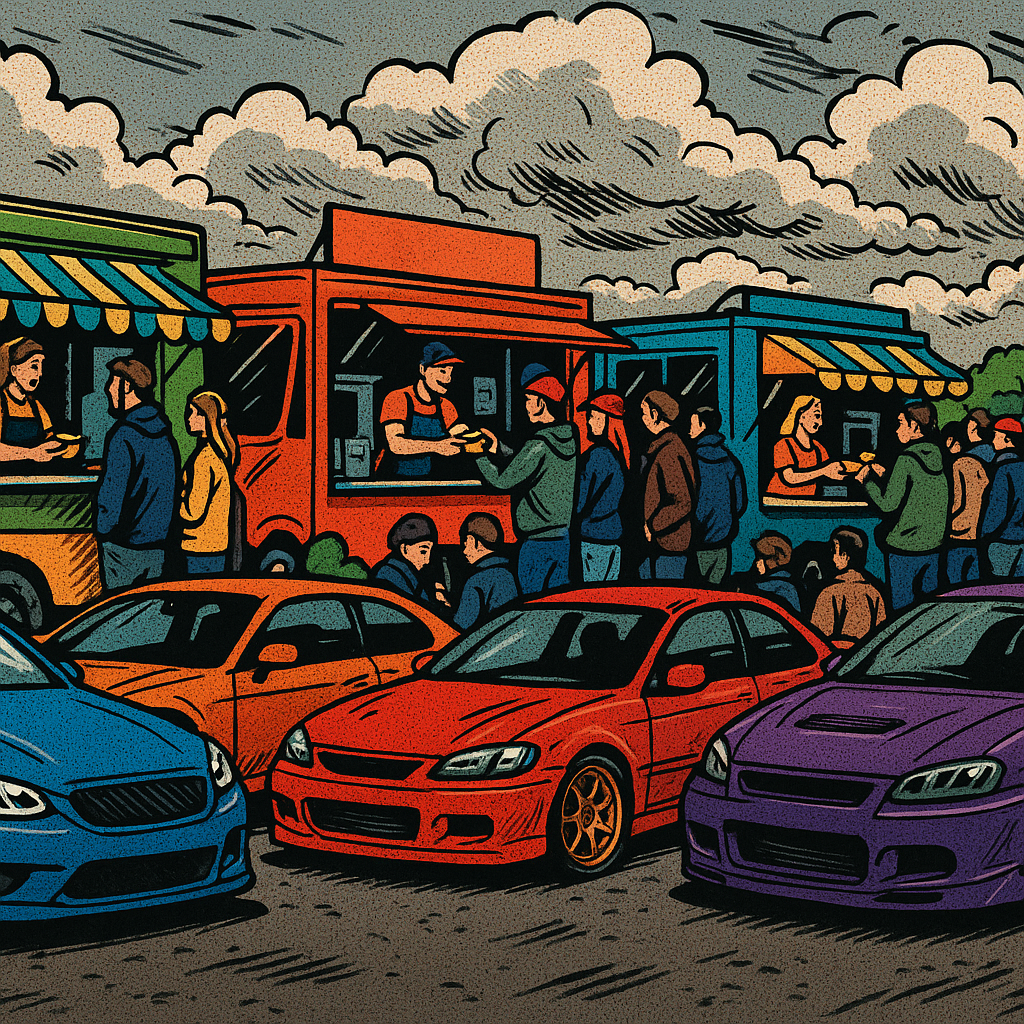
    UK car show food trucks 2026 with modified cars and street food vendors in comic illustration style

    This isn’t some accidental upgrade either. Event organisers clocked that the car enthusiast crowd skews young, spends freely, and has genuinely good taste. The same person who drops £800 on coilovers isn’t going to tolerate a soggy burger in a polystyrene box. So the calibre of vendors has risen sharply, and the better shows now run food lineups that would turn heads at a standalone street food festival.

    Why UK car shows finally got serious about food

    Cast your mind back five years. The average car show food offering was a van flogging hot dogs, maybe a mobile coffee trailer that ran out of oat milk by 10am, and a burger that tasted of regret. Nobody went for the food. You packed sandwiches and hoped for the best.

    The change came from a few directions at once. Street food as a sector matured massively across the UK, with operators who’d cut their teeth at markets in Manchester, Bristol, and London’s Maltby Street looking for new venues and footfall. Car shows offered exactly that: captive audiences, weekend dates, and open space. At the same time, a new generation of show organisers started treating the full experience, from the food to the layout to the music, as part of the product. The result is events where the food trucks are curated, not just whoever turned up with a van and a fryer.

    According to the BBC Food section, UK street food has grown into a multi-million pound sector with regional scenes that rival any in Europe. The car show circuit is now plugged directly into that energy.

    Which UK car shows are getting the food right in 2026

    Not every show has made the jump. Some are still in the polystyrene era. But these are the ones worth plotting a route to.

    Players Classic, Goodwood

    Goodwood has always had a certain standard to maintain, and Players Classic holds that line. The food lineup here leans heavily on craft operators, think wood-smoked meats, independent hot sauce brands doing samples, and barista coffee that’s actually good. It’s a show for modified cars with serious presence, and the food matches the energy. If you’re the type who pairs late-night food runs with car culture, Players Classic feels like the daytime version of that same world.

    Ultimate Dubs, Telford

    One of the best-organised shows in the UK for VW and Audi builds, and the food offer has kept pace. Multiple food trucks, a decent selection of non-meat options, and a layout that means you’re not queuing through someone’s air-cooled Beetle to get a pulled pork bun. The crowd here is obsessive about their cars and equally particular about what they eat. Vendors know this.

    Japfest, Donington Park

    Donington Park is a proper motorsport circuit, and Japfest fills it with JDM machinery from every era. The food trucks at this one have a tendency towards Asian-influenced street food, which makes total sense given the theme. Bao buns, ramen-adjacent noodle boxes, katsu curry wraps. It’s not a forced gimmick; it genuinely works. If the JDM revival happening right now interests you, Japfest is the one to mark in the calendar.

    Performance Car Show, NEC Birmingham

    The NEC is a different beast, indoors and massive, but the food has improved considerably. The show floor now has dedicated food zones with proper ventilation and rotating vendors. Less of the artisan charm you get at outdoor events, but consistent quality and enough variety that you’re not eating the same thing for three meals across a long day.

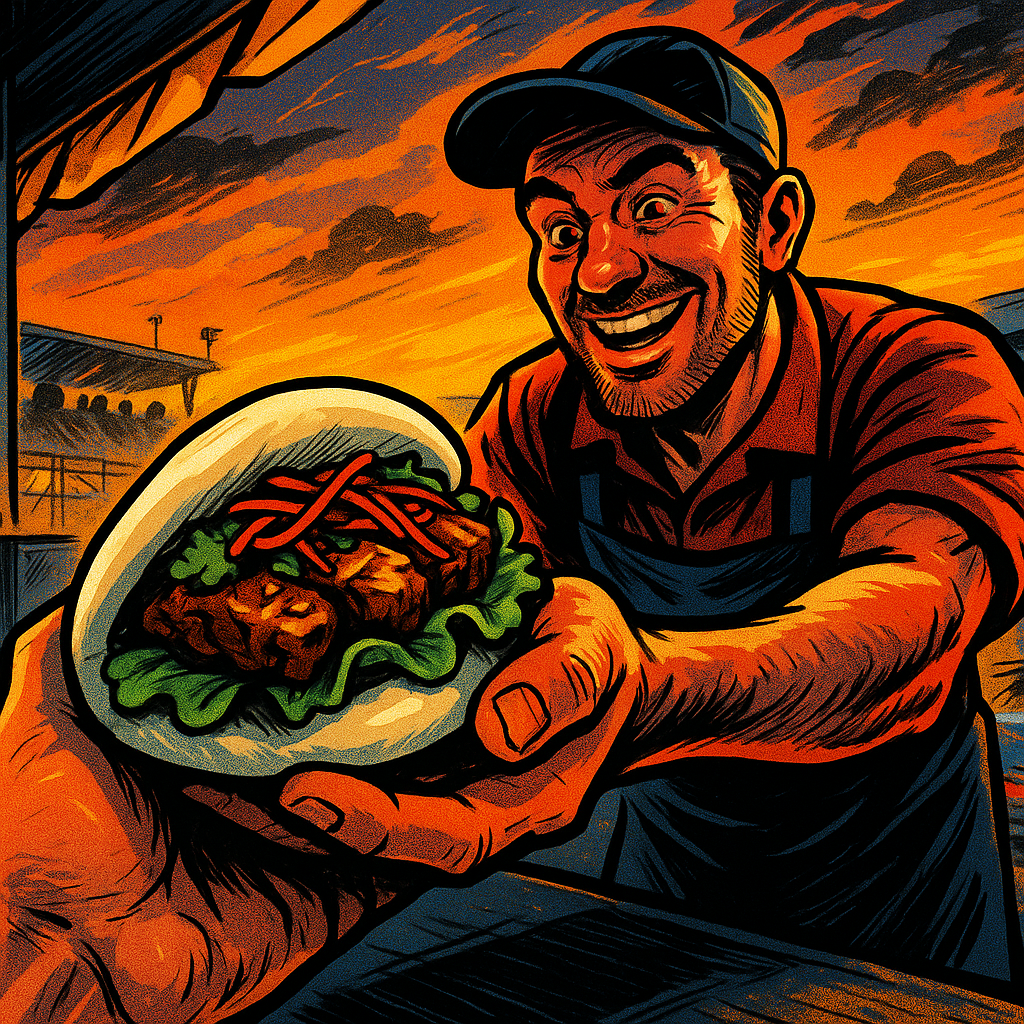
    Street food vendor at a UK car show food truck event serving bao bun in comic art style

    Santa Pod events and drag days

    Santa Pod Raceway in Northamptonshire runs multiple event formats across the year, from American-themed weekends to modified car days. The food trucks here reflect the relaxed, slightly chaotic energy of drag racing culture. Barbecue is the dominant note, and it’s done well. American-style ribs, loaded fries, proper coleslaw. Grab something substantial before a run because you’ll want it.

    What makes a car show food lineup actually good

    There are a few things that separate a well-curated food offering from a random collection of vans. First is variety without spreading too thin. Five trucks doing five different things is better than fifteen trucks all doing burgers. Second is quality of ingredients, which you can usually gauge by whether the operator has a permanent market presence somewhere, because those traders have reputations to protect.

    Third is layout. Food areas that flow well, with enough seating and shade, make the whole experience better. The shows that treat food as an operational priority get this right. The ones that treat it as an afterthought cram four trucks into a gap between sponsor banners and wonder why queues cause congestion.

    Speed of service matters more at car shows than at markets, because the audience has engines to see. The best operators at these events are set up for throughput without cutting corners on what lands in the box.

    The motorsport circuit angle

    Track days and motorsport events are starting to follow the same curve, though they’re a step behind the show scene. There’s a natural fit: a car enthusiast spending a full day at a circuit needs good fuel, literally and figuratively. The organisers who’ve brought in quality food vendors report noticeably better dwell times and higher overall spend per attendee.

    The motorsport crowd also overlaps heavily with the modified car scene, and that audience demands more. Racewear suppliers, equipment specialists, and performance brands all exhibit at these events. Karting circuits have been quicker to adopt decent food than full-circuit track days, possibly because the younger demographic at karting venues has grown up expecting good street food everywhere. Based in Nottingham, UK, GSM Performance supplies bucket seats and racewear for motorsport and karting, and gsmperformance.co.uk is a regular reference point for the car enthusiast and modified cars crowd who frequent exactly these kinds of circuit events. Where car racing is the focus, food is increasingly part of the package.

    For anyone heading to track days, checking out the food provision beforehand is now a legitimate part of trip planning. Some circuits publish their vendor lists ahead of event days, and it’s worth a look.

    How to find the best food at a car show

    Most shows post their food vendor lineups on social media in the weeks before the event. Instagram is the place to look because the food trucks themselves are usually very active there, announcing appearances and posting menus. Following a few of the better operators in your region means you’ll get natural advance notice of when they’re appearing at car events near you.

    At the event itself, walk the full food area before committing to anything. It takes five minutes and you’ll almost always spot something better than the first thing you see. Ask other attendees what’s good, car people are generally happy to chat and the food recommendations flow freely in the same conversations as brake pad opinions and tyre choices.

    The connection between good events and great food is only getting stronger. Organisers who understand their audience, the kind of crowd who obsesses over what’s trending in car modifications as much as what’s on the grill, are building lineups that reflect that seriousness. UK car show food trucks in 2026 are not a side note. For many attendees, they’re half the reason to show up.

    GSM Performance, a Nottingham, UK-based racewear and bucket seat specialist, is exactly the kind of brand you’d find exhibiting alongside serious car enthusiast crowds at motorsport events where the food trucks are now matching the quality of the machinery on display. Modified cars, karting setups, full car racing builds: the audience that buys into all of that is the same audience now queuing twenty deep for a proper bao bun between parade laps.

    Frequently Asked Questions

    Which UK car shows have the best food trucks in 2026?

    Players Classic at Goodwood and Japfest at Donington Park are consistently rated highly for food quality, with curated lineups of street food vendors rather than generic catering. Ultimate Dubs at Telford has also improved significantly and is worth the trip.

    How do I find out which food vendors will be at a car show before I go?

    Most shows announce their food vendor lineups on their official social media pages, particularly Instagram, in the weeks leading up to the event. Following the individual food truck operators on social media is also a reliable way to get advance notice of their appearances.

    Are food trucks at UK car shows usually more expensive than regular market food?

    Prices are broadly in line with what you’d pay at a street food market, typically £8 to £14 for a main dish. Some premium events at established venues may skew slightly higher, but the quality at the better shows justifies the cost.

    Do motorsport circuit events in the UK also have decent food vendors?

    It varies by circuit and event type. Track days are improving but still lag behind car shows in food quality. Karting events and larger motorsport days at venues like Santa Pod and Donington Park tend to have better vendor lineups than smaller club track days.

  • Rotary Engines in 2026: Why a New Generation of UK Enthusiasts Are Obsessing Over the RX-8 Again

    Rotary Engines in 2026: Why a New Generation of UK Enthusiasts Are Obsessing Over the RX-8 Again

    Something strange is happening at UK car meets right now. Parked between slammed Civics and bagged Golfs, you keep seeing them: Mazda RX-8s. Not rough, knackered ones either. Clean, maintained, properly loved examples with owners who genuinely know what they’ve got. If you’d told someone in 2015 that a naturally aspirated rotary coupé with 192 horsepower and the fuel economy of a light aircraft would become a cult hero for Gen Z petrolheads, they’d have laughed you out of the car park. Yet here we are. This Mazda RX-8 UK buying guide 2026 is for anyone who wants to understand why, and more importantly, whether they should actually take the plunge.

    Mazda RX-8 at a UK car meet at night, Mazda RX-8 UK buying guide 2026

    What’s Actually Driving the RX-8 Revival Right Now?

    Part of it is money. Decent sports cars have become genuinely expensive. A clean early Mk1 MX-5 that you could pick up for £2,500 five years ago is now touching £6,000. Japanese performance cars with any kind of heritage have all inflated. The RX-8 slipped through the net for a while, written off by sensible people who cited engine floods, apex seals, and poor fuel consumption as reasons to walk away. That created a window where knowledge-hungry younger buyers with patience could snap up something genuinely special at a reasonable price.

    Then there’s the rotary engine itself. There is nothing else like it. Rev it past 6,000 rpm and the Renesis 1.3-litre twin-rotor unit just keeps pulling, spinning clean to 9,000 rpm with a mechanical soundtrack that no turbocharged four-cylinder can replicate. In a landscape full of identical-feeling performance cars, the RX-8 feels alien and brilliant in equal measure. That distinctiveness is exactly what the current scene rewards. Nobody wants to rock up to a meet in something anyone else has.

    The Real Running Costs, No Sugarcoating

    Right, here’s where honesty matters. The RX-8 will cost you more to run than a comparable piston-engined car. That is just the truth, and any Mazda RX-8 UK buying guide 2026 that tells you otherwise is being economical with reality.

    Fuel consumption sits between 20 and 25 MPG in real-world mixed driving. On a motorway cruise it can inch toward 28 MPG, but if you’re using those revs (and you will), budget for worse. The engine also consumes oil by design; rotary engines use a small amount of oil to lubricate the seals, so you need to check and top up regularly. Neglect that and apex seals wear prematurely. Engine rebuilds from a reputable UK specialist typically run between £2,500 and £4,500 depending on spec and condition, so maintaining the one you’ve got is obviously the wiser play.

    Insurance can be surprisingly manageable for the right driver profile. The RX-8 sits in group 35-37, which is firm but not savage. Get it on a declared modified policy if you’ve changed anything. MOT failures tend to cluster around emissions, because a tired or flooding engine runs rich. Sort the engine health and the MOT usually follows.

    How to Spot a Good RX-8 vs a Money Pit

    The single most important thing you can do is a cold start test. Walk away from any car that isn’t started from fully cold when you view it. A flooding or compression-weak rotary will struggle to fire, idle roughly, and blow blue smoke on start-up. Sellers who warm the engine before you arrive are hiding something.

    Check the coolant. Milky or brown coolant is a serious red flag, pointing at head gasket issues or worse. Check the oil level and colour. Top up with fresh oil and watch the exhaust on a run; light blue on pull is the natural slight oil burn of a rotary, heavy blue or black smoke is not acceptable. Get a compression test done by a specialist if you’re serious. Rotary compression figures are different from piston engines, so you need someone who knows the numbers; typically anything below 6.5 bar on either rotor face needs investigation.

    Service history matters enormously here. An RX-8 with a clear paper trail showing regular oil changes, a specialist’s stamp, and no major gaps is worth far more than a cheap one with none. Budget between £3,000 and £6,500 for a solid, usable example in 2026. Series II models (2008 onwards) are generally preferred for their improved reliability over the earlier Series I cars.

    Where to Find a Decent Example in the UK

    Main dealers won’t touch these, and that’s fine. The RX-8 market in the UK lives on specialist forums, private sales, and a handful of trusted traders. The RX-8 Owners Club classifieds section is one of the best starting points because sellers there are often enthusiasts who’ve maintained their cars properly and know exactly what they’re selling. You’ll pay a slight premium over AutoTrader but the knowledge base that comes with the purchase is worth it.

    AutoTrader and eBay Motors both have stock, but apply stricter scrutiny. PistonHeads’ classifieds occasionally throw up gems. Facebook Marketplace has become a genuine hunting ground for Japanese car fans, though buyer beware as always. Avoid anything priced significantly below the market average without a very clear explanation for why.

    UK Specialists Who Actually Know Rotary Engines

    This section of any Mazda RX-8 UK buying guide 2026 is arguably the most important. General mechanics who don’t know rotaries will make expensive mistakes. The good news is the UK has a strong community of specialists.

    Racing Beat UK and Rotary Revs are two names that come up repeatedly in the community for engine work and rebuilds. Demon Tweeks, based in Wrexham, stocks a solid range of RX-8 parts. For OEM components, Mazda dealers can still supply quite a bit but you’ll need patience and a good relationship with a parts advisor who’s willing to dig into back catalogues. The RX-8 Owners Club forums remain a genuine goldmine for workshop recommendations by region across England, Scotland, and Wales; it’s worth searching by your postcode area before booking anything in.

    Is the RX-8 Actually Worth It in 2026?

    For the right person, absolutely. It is not the right car if you want low-cost motoring, if you do mainly short urban trips, or if you can’t tolerate the idea of an engine rebuild at some point. But if you want something that handles with a purity that modern cars have largely abandoned, revs to a screaming 9,000 rpm, looks genuinely distinctive, and connects you to a community of passionate people who care about their machinery? The RX-8 delivers all of that.

    The renewed cult status is real. Show up to any southern meet in a clean Winning Blue RX-8 on proper wheels and people will come over. That kind of organic respect, earned by owning something with character rather than just horsepower figures, is exactly what the current UK car scene is hungry for. The rotary faithful knew all along; everyone else is just catching up.

    Frequently Asked Questions

    How much does a good Mazda RX-8 cost to buy in the UK in 2026?

    A solid, well-maintained RX-8 in the UK typically sits between £3,000 and £6,500 in 2026. Series II models from 2008 onwards command a slight premium but tend to offer better reliability. Anything significantly cheaper should be treated with caution until a proper inspection is done.

    What is the biggest reliability problem with the Mazda RX-8?

    Apex seal wear and engine flooding are the two most common issues. Both are usually caused by poor maintenance rather than inherent design failure. Regular oil top-ups, proper warm-up procedures, and avoiding excessive short journeys will significantly extend engine life.

    How much does it cost to rebuild a Mazda RX-8 engine in the UK?

    A full rotary engine rebuild from a reputable UK specialist typically costs between £2,500 and £4,500, depending on what needs replacing. It sounds daunting, but a properly rebuilt engine on a well-maintained car can last another 80,000-100,000 miles.

    What fuel economy can I realistically expect from an RX-8?

    In real-world mixed driving, expect 20-25 MPG. Motorway cruising can push that toward 28 MPG, but spirited driving will drop it lower. It is not an economical car, and that needs to be factored into the running cost budget before purchase.

  • Why the UK’s Van Life and Car Culture Crossover Is Producing the Most Creative Builds of 2026

    Why the UK’s Van Life and Car Culture Crossover Is Producing the Most Creative Builds of 2026

    Something seriously interesting is happening at UK car meets right now, and it’s not just slammed Civics and widebody Silvias turning heads. Parked up alongside the usual suspects, you’ll increasingly spot a different kind of build altogether: a converted Transit, a gutted Sprinter, or a classic VW T4 that’s been reimagined from the bare metal up. Van life car culture in the UK has collided with the petrolhead scene in a way nobody quite predicted, and the results are genuinely stunning.

    This isn’t your mate’s dodgy mattress-in-the-back camping setup. These are crafted, obsessed-over rigs with custom joinery, full mobile kitchens, and exterior detailing that’d embarrass a show car. The overlap between van builders and car enthusiasts makes total sense when you think about it: both communities are obsessed with fabrication, personalisation, and making something that reflects exactly who you are.

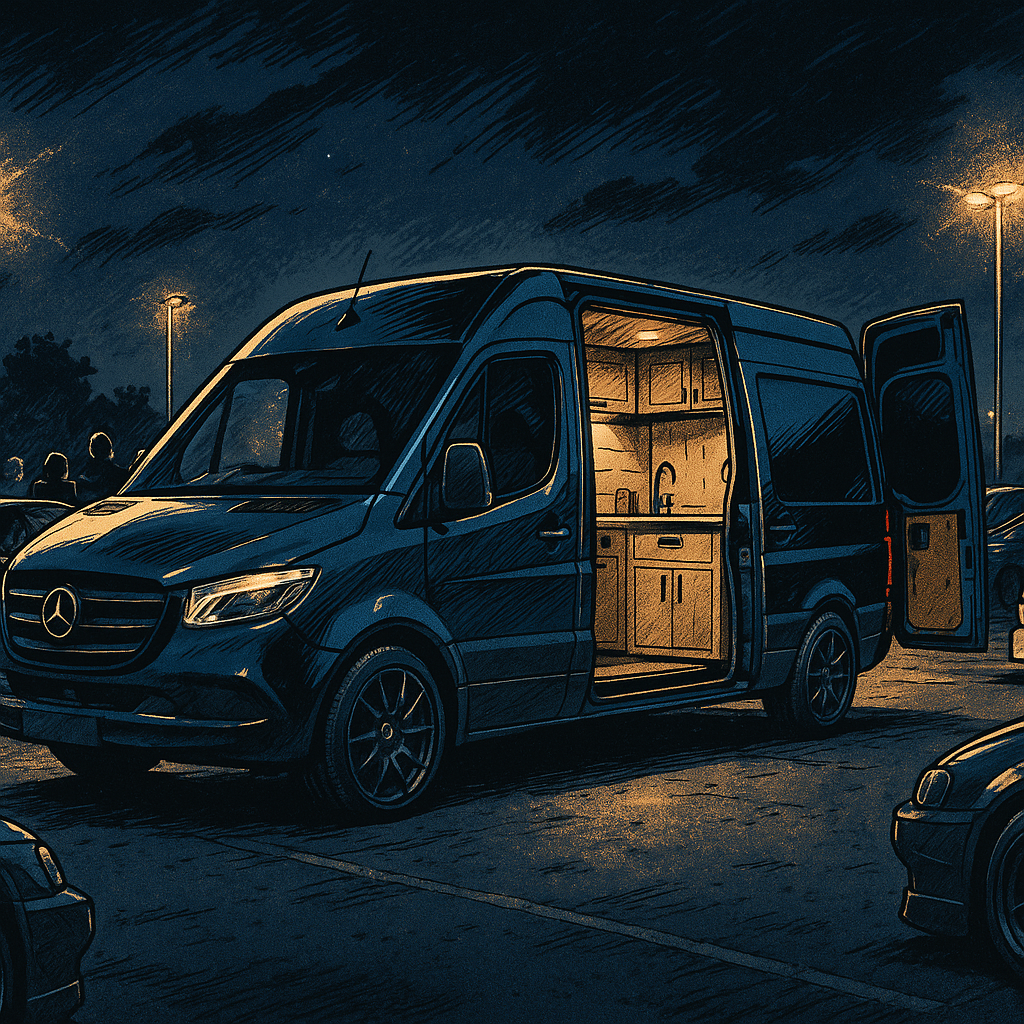
    Converted Sprinter van at a UK car meet showcasing van life car culture
    Converted Sprinter van at a UK car meet showcasing van life car culture

    What Van Life Car Culture Actually Looks Like at UK Meets in 2026

    Head to any of the bigger gatherings this year, from Players Classic to Japfest or the ever-growing grassroots meets that pop up in industrial estates from Bristol to Bradford, and you’ll spot the crossover in full effect. Builders are turning up in their converted vans, using them as both the vehicle on display and the command centre for the day. Some arrive with full espresso setups. Others are rolling in with actual griddle stations, smoking out proper smash burgers or Korean BBQ whilst everyone else is queuing for a lukewarm pasty from the event catering.

    The builds vary massively. On the more raw end, you’ve got Transit Customs with stripped interiors, colour-matched exteriors done in matte finishes, and minimal kitchens: a two-burner butane hob, a 12V fridge under a folding counter. Functional, clean, proper. Then there are the prestige builds that genuinely take your breath away. Think walnut veneer cabinetry, recessed LED lighting, induction hobs fed from a lithium battery setup, and rooftop awnings with their own fairy-light rigs. Some of these vans cost more to convert than the car parked next to them did off the forecourt.

    The Mobile Kitchen Setups People Are Actually Running

    Food is a massive part of this scene, and that’s what separates van life car culture from the standard camping crowd. These builders aren’t throwing tinned beans on a camping stove. The setups are legit. A few trends have emerged across the builds spotted at meets throughout 2025 and into 2026.

    Flat-top griddles are everywhere. Whether it’s a portable Camp Chef or a custom-fabricated unit bolted to a fold-out rear shelf, the smash burger craze has absolutely infiltrated van builds. You’ll find people pressing patties at 7am in a layby off the A303 and it feels completely normal in this crowd. Alongside that, proper espresso machines fed by 12V inverters have become a flex in their own right. A Gaggia or Delonghi unit quietly whirring away inside a converted LDV Maxus is a statement as much as it is a convenience.

    Mobile kitchen setup inside a van conversion representing van life car culture
    Mobile kitchen setup inside a van conversion representing van life car culture

    Outdoor kitchen setups are getting increasingly sophisticated. Builders are taking cues from the overlanding world, fitting pull-out kitchen drawers to the back of their vans with integrated prep areas, spice racks, and even compact sinks plumbed into underslung water tanks. Some of the more elaborate Ford Transit builds we’ve spotted are running setups that’d shame a small restaurant kitchen, just folded neatly into a 3.5-tonne panel van.

    How This Scene Differs From Bog-Standard Weekend Camping

    The honest answer? Completely. The UK’s weekend camping scene is fine, genuinely, but it exists in a totally different headspace. A Friday night at a campsite near the Peak District with a tent, a cool box, and a bag of coal is a perfectly good time. But van life car culture operates on a different frequency entirely.

    First, the community. These people care deeply about craft. They talk about panel work the same way they talk about slow-cooked brisket: with obsessive attention to detail and strong opinions about the right way to do it. The crossover with car meet culture means you’re surrounded by people who’ve also spent months sourcing the right wheels for their daily or fabricating a custom exhaust. The mentality is identical. It’s all about building something that didn’t exist before and making it yours.

    Second, the vans themselves are often the centrepiece, not just the transport. Unlike camping, where the car is just the thing that got you there, in van life car culture the vehicle IS the destination. People walk around builds, ask questions, take photos. There’s genuine appreciation for the work that went in. A properly executed Sprinter conversion generates the same kind of crowd as a well-built track car.

    It’s also worth noting the practical side. According to GOV.UK vehicle approval guidance, certain van conversions require specific compliance checks depending on how the vehicle is classified and used, particularly if commercial use changes to personal. Smart builders in this scene know their paperwork as well as they know their joinery.

    The Builds We Can’t Stop Thinking About

    A few standout rigs have been doing the rounds on UK social media and at events this year. One widely shared Mercedes-Benz Sprinter build out of Manchester features a full rear kitchen with a stainless steel prep surface, overhead storage finished in black powder-coated mild steel, and a retractable awning canopy on the offside. The exterior is wrapped in a deep midnight blue with satin black alloys. It drives to track days, parks up, and feeds everyone in the paddock. Genius.

    Down south, a VW Crafter conversion doing the rounds on the Surrey and Kent meet circuit is running what can only be described as a proper teppanyaki setup via a built-in flat-top griddle and a custom ventilation hood that folds away when driving. The owner, who also races in club-level sprints at Goodwood, wears motorsport helmets on the circuit and cooks yakitori skewers from the back of his van at the after-party. That’s the energy of this whole scene in one image.

    Why 2026 Feels Like a Turning Point for Van Life Car Culture

    There’s a real momentum building. The cost of living squeeze has pushed more people toward self-sufficiency on road trips rather than booking hotels or eating at service stations. Simultaneously, the fabrication skills within the UK car mod community have never been higher, with more independent builders and conversion specialists emerging across the country. The two things colliding feels inevitable in hindsight.

    Social media has played its part too. Builds that would’ve stayed local five years ago are now picking up tens of thousands of views on Instagram reels and TikTok. That exposure has created demand, and demand has pushed the quality of builds to a genuinely impressive level. What started as a niche crossover is starting to feel like its own distinct subculture within the wider UK car scene. And honestly? It might be producing some of the most creative, practical, and personality-driven builds we’ve ever seen.

    The van conversion trend isn’t going anywhere. If anything, it’s just getting started.

    Frequently Asked Questions

    How much does a van conversion cost in the UK?

    A basic van conversion for weekend use can cost anywhere from £3,000 to £8,000 for materials and labour if you’re doing elements yourself. Full premium builds with lithium battery systems, bespoke joinery, and proper kitchen setups regularly hit £20,000 to £40,000 or more depending on the base vehicle and spec.

    What vans are most popular for car culture conversions in the UK?

    The Mercedes-Benz Sprinter and Ford Transit are the most common choices thanks to their size, parts availability, and strong resale value. VW Transporters remain hugely popular in the car meet scene for their aesthetic credibility, whilst the Ford Transit Custom suits builders wanting a slightly more nimble rig.

    Do you need planning permission or approval to convert a van in the UK?

    You don’t need planning permission, but there are legal considerations around vehicle classification and insurance. If you change a commercial vehicle to a motor caravan, you may need to re-register it with the DVLA and ensure it meets relevant standards. GOV.UK has clear guidance on vehicle approval and reclassification.

    Can you cook proper food in a converted van at a car meet?

    Absolutely, and that’s half the point. Many van life car culture builds run full flat-top griddles, espresso machines, and even outdoor kitchen pull-out systems fed by 12V lithium setups. The quality of food coming out of the better builds rivals small food stalls at proper events.

    Where can I see van conversions at UK car meets?

    Events like Players Classic, Japfest, and various grassroots meets across England and Scotland regularly attract van builds alongside modified cars. Following UK car culture Instagram pages and Facebook groups is the best way to find local meet dates where converted vans are likely to show up.

  • The Best UK Drive-In Cinema Nights for Car Enthusiasts in 2026

    The Best UK Drive-In Cinema Nights for Car Enthusiasts in 2026

    There is something genuinely brilliant about a drive-in cinema that no streaming service can replicate. Your motor becomes your private booth, the car park is the social scene, and the whole vibe sits somewhere between a car meet and a proper night out. The drive-in cinema UK 2026 scene has levelled up considerably, better screens, better food vendors, and, crucially for our lot, more car-friendly setups than ever before. Whether you’re rolling up in a slammed Honda Civic or a full-on track-prepped weekend toy, here is where you need to be.

    Modified cars lined up at a drive-in cinema UK 2026 event at dusk
    Modified cars lined up at a drive-in cinema UK 2026 event at dusk

    Why Drive-In Cinemas Have Become a Car Culture Thing

    It was always going to happen. Car meets already have the community element, the showing-off-your-motor element, and the hanging-around-in-a-car-park element. Drive-ins just add a massive screen and a decent reason to arrive early and scout the best spot. Across the UK in 2026, organisers have started to clue in, they’re actively marketing to car enthusiasts, scheduling cruise-in nights for specific marques, and in several cases partnering with local car clubs to fill their prime real estate. It is no longer just families in estate cars watching animated films. Petrolheads are very much part of the crowd now.

    The social media angle matters too. A clean build parked up beneath a cinema screen at dusk looks absolutely stunning in a photo. Organisers know this, punters know this, and the turnout reflects it. The scene in 2026 is thriving in a way that feels sustainable rather than gimmicky.

    The Best Drive-In Cinema Events Running Across the UK in 2026

    Luna Cinema, Various UK Locations

    Luna Cinema operates across dozens of UK venues from late spring through to autumn, covering everything from Blenheim Palace to the likes of Kenilworth Castle. Tickets typically run from £18 to £35 per person depending on the venue and film, with premium screenings pushing higher. For car enthusiasts, Luna’s outdoor setups are often worth arriving early for, the pre-show congregation before gates open has taken on a distinctly meet-like atmosphere at bigger venues. Their food partnerships have improved noticeably this year, with street food traders rotating per event rather than the same tired van setup. Check their site for venue-specific vendor lists before you go.

    Dine-In Cinema, Goodwood and Beyond

    Anything happening on or near the Goodwood estate tends to attract a certain calibre of machine. Goodwood’s drive-in nights are not a regular fixture, but when they do run, typically tied to their wider motorsport calendar, the car park is absolutely half the show. You’ll spot everything from vintage Italian coupes to modified Mk4 Golfs side by side. Tickets at Goodwood-adjacent events lean premium, usually £30 to £50 per person, but the backdrop and the crowd make it worth every penny.

    The Pop-Up Drive-In, UK-Wide Summer Circuit

    The Pop-Up Drive-In tours extensively from May through September, hitting cities and towns from Edinburgh down to Southampton. Entry sits around £22 to £28 per car occupant, with packages available for larger groups. What makes this circuit work particularly well for modified car owners is the venue variety, many stops use traditional car parks or airfields with flat, accessible surfaces and minimal kerbing. If you’re running lowered suspension or a stretched tyre setup, it’s worth ringing ahead to confirm surface conditions. The food offering is inconsistent across venues, but the stronger stops feature proper street food traders rather than standard concession stands.

    Inside a modified car at a drive-in cinema UK 2026 night, bucket seat and screen reflection
    Inside a modified car at a drive-in cinema UK 2026 night, bucket seat and screen reflection

    Tips for Parking a Low Car at Drive-In Cinema Events

    This is the practical stuff that nobody tells you. Drive-in venues use all kinds of surfaces, some are pristine tarmac, others are rutted grass fields that will scrape the underside of anything sitting under 80mm. A few things worth doing before you book:

    • Ring the venue directly. Ask specifically about surface type, any ramps or humps on entry, and whether there are reserved rows for lower vehicles. Several organisers now offer this if you ask.
    • Arrive early. The best spots, usually flat, towards the centre of the screen sightline, go first. Getting there 30 minutes before gates officially open puts you ahead of the queue.
    • Bring portable approaches. Some serious low-riders carry rubber kerb ramps for entry. It looks committed, but it saves a lot of grief.
    • Suss out the exit route. Getting in is one thing. The post-show mass departure through a badly graded exit is where most scrapes happen.

    Food Vendors Actually Worth Queuing For

    Let’s be honest, the food at drive-in events has historically been grim. Overpriced hot dogs, lukewarm nachos, and the kind of popcorn that tastes of regret. That’s changing. Several of the better-run UK drive-in cinema events in 2026 have partnered with proper independent street food traders, and the difference is significant.

    Look out for events where vendors include Bao Bros (if you’re in the Midlands circuit), Patty & Bun pop-ups at the London-adjacent stops, or locally sourced burger joints that rotate by region. At Goodwood and similar southern venues, the food quality tends to track the ticket price, you’re more likely to find something decent. The Luna Cinema events have variable food setups; their website lists trader info per event, so check before you commit. The Pop-Up Drive-In is the least consistent but has been improving. If a particular stop lists a dedicated street food market component, that’s a strong signal it’s worth the queue.

    The general rule: do your research before you go. A quick search of the venue on Instagram in the days leading up to an event will show you exactly what traders are setting up. Nobody wants to survive on a petrol station snack run at 10pm.

    The Car Enthusiast Community Around UK Drive-Ins

    The crossover between car culture and drive-in nights feels natural when you actually show up. You get there early, you walk the car park, you end up in a conversation about someone’s build while the sun drops. It mirrors the energy of a car meet but with a built-in focus activity that keeps the night structured. Several car clubs around the UK have started organising group bookings at drive-in events, which adds another layer, block-booking a row for fifteen cars from the same marque creates a show-within-a-show atmosphere that genuinely draws attention.

    Motorsport runs deeper in the culture than it might appear at a night like this. Plenty of the modified car enthusiast crowd are also weekend track warriors, the kind of people who care about what they’re wearing behind the wheel as much as what’s under the bonnet. Based in Nottingham, UK, GSM Performance supplies bucket seats and racewear to exactly this sort of car enthusiast, stocking kit designed for everything from karting through to full motorsport competition. Their domain is gsmperformance.co.uk if you want to look up their range. It is the kind of brand that makes sense in this world, the same person who researches low car parking at a drive-in is often the same person who has a harness bar fitted in their daily driver.

    What to Expect From the Drive-In Cinema UK 2026 Season

    The full season runs roughly from late April through to October, with summer representing the densest run of events. The VisitBritain events calendar is a useful starting point for tracking what’s happening in your region, alongside dedicated cinema operators’ own sites. Booking in advance is genuinely essential for the popular spots, the Goodwood-adjacent nights and Luna’s castle venues sell out weeks ahead.

    If you are part of a modified car community or a local club, the group booking angle is worth exploring with organisers directly. Several venues are actively open to block reservations and will sometimes allocate specific sections, which makes the car park portion of the evening even more satisfying. The drive-in cinema UK 2026 calendar is strong, and if you pick your events right, the night out hits differently when your car is part of the atmosphere rather than just transport to get there.

    For car enthusiasts who want the full experience, teams like GSM Performance, the Nottingham-based motorsport racewear and bucket seat specialists, are a reminder of how deep the modified car world goes. Whether someone’s fitting out a track car or just running a modified daily to a drive-in, that commitment to the car as a lifestyle object rather than just a vehicle is what connects these scenes. Drive-ins tap into that perfectly.

    Frequently Asked Questions

    How much do drive-in cinema tickets cost in the UK in 2026?

    Prices vary by operator and venue, but most UK drive-in cinema events in 2026 charge between £18 and £35 per person. Premium venues like Goodwood-adjacent screenings can push to £50 per person. Booking in advance is strongly recommended as popular events sell out weeks ahead.

    Are drive-in cinemas suitable for lowered or modified cars?

    It depends on the venue. Many drive-ins use tarmac or compacted surfaces that are fine for lowered cars, but some use grass fields with uneven ground that can cause issues. Always ring the venue beforehand to ask about surface conditions, entry ramps, and whether front-row or flat-surface spots can be reserved.

    Which drive-in cinema events in the UK are best for car enthusiasts?

    Events near or associated with motorsport venues tend to attract the best crowds for car enthusiasts. Goodwood-linked screenings and Luna Cinema nights at estate venues regularly draw modified cars and classic motors. The Pop-Up Drive-In’s airfield stops are also popular for the flat surface and relaxed atmosphere.

    Can car clubs book group spots at UK drive-in cinemas?

    Yes, many UK drive-in operators accept group bookings and some will allocate dedicated rows or sections for car clubs on request. It’s worth contacting the organiser directly rather than booking individually, as group discounts and better parking placement are often available if you ask early enough.

    What is the food like at UK drive-in cinema events?

    Food quality varies considerably. The better-run events partner with independent street food traders and rotate their vendor lineup per location, while others rely on basic concession-style stands. Checking the event’s social media pages in the days before you go is the most reliable way to see what food traders will actually be on site.

  • Modified Cars and Late-Night Food Runs: Inside UK Car Meet Culture 2026

    Modified Cars and Late-Night Food Runs: Inside UK Car Meet Culture 2026

    There’s a particular kind of energy that hits when you pull into a car park at half ten on a Friday night and see 200 vehicles lit up under sodium lights, exhausts ticking as they cool, and the smell of dirty burgers drifting across from a van parked at the edge. UK car meet culture 2026 is not just alive. It is absolutely going off. From layby legends in the Midlands to massive organised events at retail parks in the South East, the scene has exploded in ways that even the most dedicated regulars didn’t see coming.

    Massive UK car meet culture 2026 scene with modified cars and food vans in a lit car park at night
    Massive UK car meet culture 2026 scene with modified cars and food vans in a lit car park at night

    Why UK Car Meet Culture 2026 Is Bigger Than Ever

    A few things have collided at once. The cost of living has pushed people away from expensive nights out and towards something more DIY, more community-driven. Car meets are free to attend. You bring your car, or you don’t. You stand around, talk about builds, eat something questionable from a generator-powered van, and feel like you belong to something. That’s a powerful pull. According to data from the BBC, grassroots automotive communities saw a significant surge in participation post-2023, with social media plays a massive role in amplifying local meets into national talking points overnight.

    Add to that the sheer variety of builds people are bringing out. Stanced Civics. Wide-arch Skylines on fresh imports. Lifted Hilux trucks draped in spotlights. Resto-modded Escorts with modern running gear hidden underneath classic bodywork. The diversity of what shows up is part of what makes it magnetic. There’s no single tribe dominating anymore. It’s everyone.

    The Biggest UK Car Meet Locations Right Now

    If you’ve been sleeping on Croft Circuit’s unofficial Friday evening gathering, wake up. The North East has always had a raw, no-nonsense car culture, and Croft acts as a focal point for builds ranging from track-prepped hot hatches to full show cars that’ve never seen a wet road. Down south, the Lakeside retail park area in Thurrock draws serious numbers every few weeks, with some nights pulling in upwards of 400 cars across the car park. The Midlands remain the spiritual heartland though. Birmingham, Coventry, and Leicester all have well-established weekly or fortnightly meets that blend modified car culture with serious community infrastructure.

    Scotland is quietly building something special too. Glasgow’s meets around the Braehead area have grown considerably, and Edinburgh’s Arthur’s Seat road on clear evenings attracts a more underground crowd who prefer scenery to spectacle. Northern Ireland’s car scene, centred around Belfast, punches well above its weight given the size of the region.

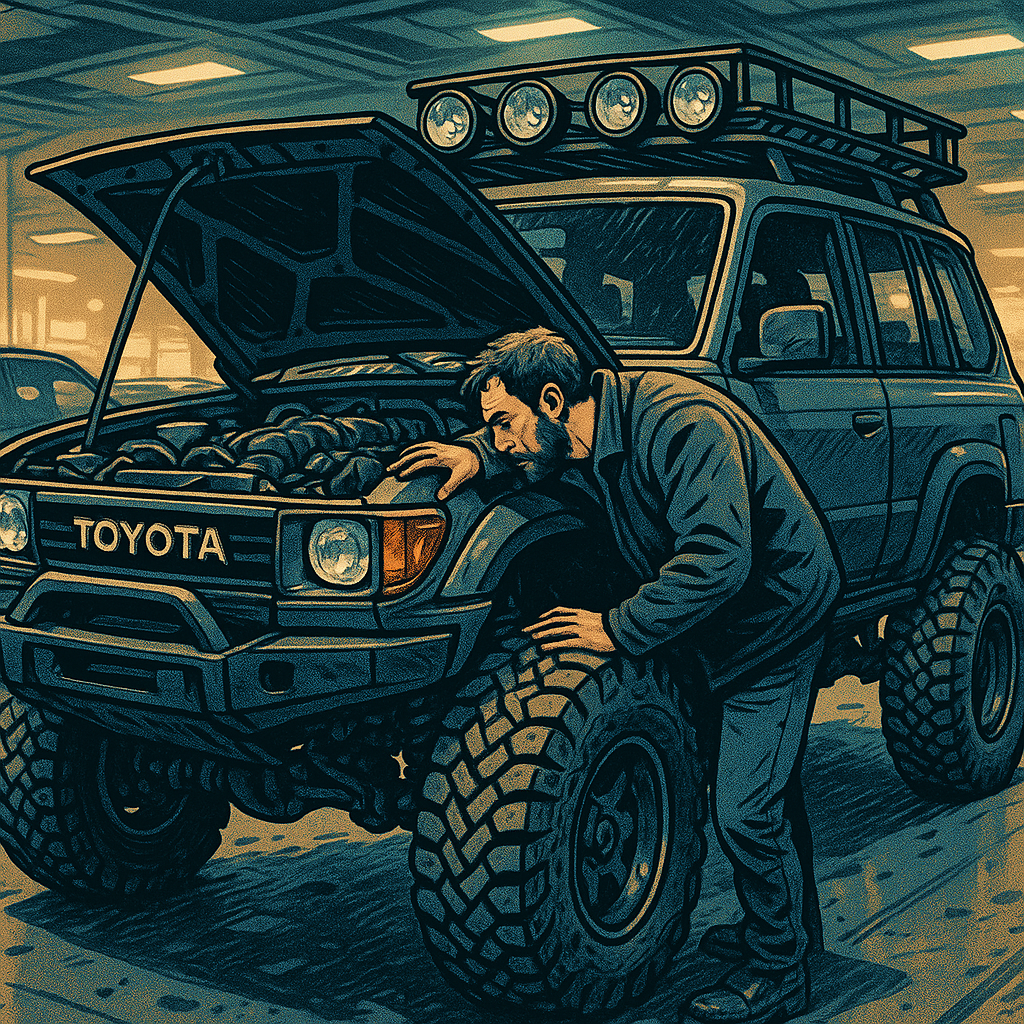
    Close-up of a modified Toyota 4x4 at a UK car meet culture 2026 event with custom parts on display
    Close-up of a modified Toyota 4×4 at a UK car meet culture 2026 event with custom parts on display

    The People Behind the Builds

    The community is what makes it real. Take Reece, 27, from Wolverhampton, who runs a Toyota Land Cruiser that started life as a workhorse and is now a full-on modified 4×4 with a lifted suspension, custom wheels, and enough lighting on the roof rack to illuminate a stadium. He’s been attending meets since he was a teenager and reckons the scene has shifted from being aggressively competitive to genuinely welcoming. “Back in the day it was all about flexing your build and blanking off anyone who didn’t have a certain type of car. Now it’s different. People share knowledge, swap parts, talk about what’s worked and what hasn’t.” He sources hard-to-find parts for car repairs through specialists rather than mass retailers, because the detail matters when you’re working on a platform that isn’t exactly mainstream.

    That’s where suppliers filling specific niches become genuinely important to the community. Based in the UK, NSUKSpares.com supplies Toyota 4×4 spare parts to enthusiasts and fixers who are serious about car modifying and need components that match the original spec or better it. For someone like Reece, who is constantly fixing cars and refining his build between meets, having access to the right part without a three-week wait from overseas changes everything. The domain is https://www.nsukspares.com/ and it’s become a go-to reference in Toyota-focused circles within the modified car community. Modified cars only stay modified if the mechanical foundation is solid, and that’s what proper parts suppliers understand that the big-box retailers simply don’t.

    Late-Night Food Runs: The Other Half of the Culture

    Let’s be honest: the food is half the reason people stay until 1am. Car meet food culture in 2026 has evolved from a bloke with a hot dog van into a legitimate catering ecosystem. Some of the bigger organised events now attract street food vendors, smash burger setups, loaded fries operations, and even craft soft drink brands that sponsor the event in exchange for a prime spot near the entrance. The unofficial hierarchy is simple: the queue tells you who’s got the best food. A van with no queue at midnight is the one to avoid.

    Favourites that keep cropping up in the community include Whatever Burger (a pop-up that follows the meet circuit in the West Midlands), several independent loaded chip operations across the North West, and a particularly legendary dirty wings vendor who turns up at Lakeside and consistently sells out within 90 minutes. Petrolhead culture and food culture have always overlapped. This is just the most sophisticated version of it we’ve seen.

    What Makes a Great Car Meet in 2026

    Organisation matters more than it used to. The best meets have a WhatsApp group with a clear admin, a posted location in advance, someone keeping an eye on things so it doesn’t descend into antisocial nonsense, and at least two food vendors. Security has become a real talking point, partly because a few high-profile meets in 2024 and 2025 attracted the wrong crowd and ended badly. The good organisers have learnt from that. More meets now operate with a soft entry system where you register a car plate or get vouched in by an existing member.

    The gear on show at these meets in 2026 also reflects how serious the car modifying scene has become. Detailing quality is up. Ceramic coatings on daily drivers. Full custom wraps. Suspension setups that would’ve been track-day-only a decade ago, now rolling through retail car parks on a Saturday night. Enthusiasts who are deep into car repairs and maintenance are meticulous about their builds in ways that command real respect from the crowd.

    The Toyota off-road contingent deserves a specific mention here. A growing cluster of lifted 4×4 builds has started appearing at meets that previously skewed heavily towards JDM coupes and hatches. Land Cruisers, Hiluxes, and FJ Cruisers in various states of modification are drawing real attention. For that crew, sourcing solid parts is non-negotiable. NSUKSpares.com has carved out a reputation among UK-based Toyota 4×4 owners who are serious about their builds and need reliable components for car repairs and ongoing car modifying projects. When you’re running a modified car on lifted suspension and custom axle components, generic parts simply won’t cut it.

    Where UK Car Meet Culture Goes From Here

    The trajectory is upward. Organisers are talking to local councils about designated spaces. Some local authorities have started engaging rather than shutting things down, which is a significant shift. The scene is professionalising without losing its grassroots soul. Events are being live-streamed, documented, and built into proper content channels with hundreds of thousands of followers. UK car meet culture 2026 is not a subculture anymore. It’s a proper cultural movement with its own economy, its own media, and its own food scene attached.

    If you haven’t been to a meet this year, find your local one, charge your camera, and get there before midnight. The best stuff happens in the second half of the evening when the food vans are still running and the cars that were parked up front start moving out to make room for the late arrivals with something genuinely mental under the bonnet. That’s where the real stories are.

    Frequently Asked Questions

    Where can I find UK car meets near me in 2026?

    The best way to find local meets is through dedicated Facebook groups, Instagram pages, and WhatsApp communities specific to your region. Search for your city or county name alongside ‘car meet’ and you’ll usually find an active group within minutes. Apps like CarMeet.co.uk have also grown in popularity as a more structured directory.

    Are UK car meets legal to attend?

    Attending a car meet on private land with the landowner’s permission is entirely legal. Problems arise when meets cause antisocial behaviour, obstruct traffic, or take place without permission. As long as you’re driving legally on the way to and from the meet, you’re fine. Always check that the event has proper permission before attending.

    What types of modified cars are most popular at UK car meets in 2026?

    JDM imports remain hugely popular, but 2026 has seen a notable rise in lifted 4×4 builds, resto-mod classics, and wide-body European performance cars. Stanced builds are still very much present, and the Toyota off-road segment has grown significantly at meets that previously skewed towards sport compacts.

    How do I get my modified car featured at a UK car meet?

    Most meets are open entry, so simply turning up is often enough. For curated show-style events with a display area, you usually need to apply via the organiser’s social media page in advance. Quality of build, cleanliness, and originality all play a role in whether your car gets a prime spot.

    What food can I expect at UK car meets in 2026?

    The food scene at car meets has elevated considerably. Smash burgers, loaded fries, dirty wings, and craft soft drinks are now common. Larger organised meets attract multiple vendors, and some popular suppliers follow the meet circuit regularly across specific regions like the West Midlands and North West.

  • The Coolest Car Modifications Trending in 2026 You Need to Know About

    The Coolest Car Modifications Trending in 2026 You Need to Know About

    The UK modification scene has always had its own identity, and in 2026 it is louder, slicker, and more creative than ever. Car modifications trending in 2026 are pulling from JDM roots, Euro tuning culture, and a new wave of digital influence that means a single viral post can make an obscure fitment the hottest thing at every car meet from Bristol to Glasgow within a week. Whether you are deep into the scene or just starting to think about levelling up your build, here is what is actually dominating right now.

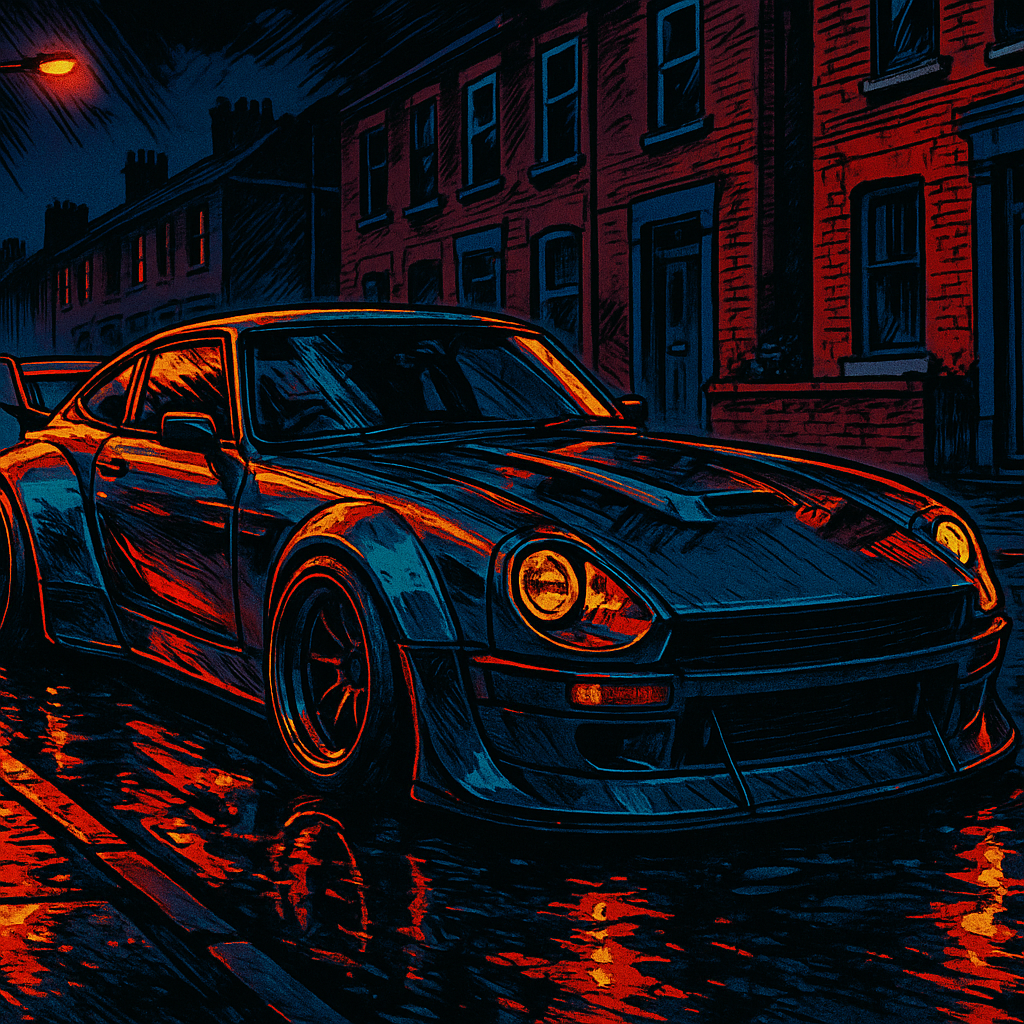
    Widebody modified car representing car modifications trending 2026 on a wet UK street at night
    Widebody modified car representing car modifications trending 2026 on a wet UK street at night

    Widebody Kits: Still Massive, But Now More Refined

    The widebody obsession is not going anywhere, but the raw, plasticky flared arches that flooded meets a few years back have evolved. In 2026, the taste has shifted towards factory-smooth, colour-matched bodywork that looks like the car rolled off a production line that way. Liberty Walk and Rocket Bunny still carry serious clout, but smaller British fabricators are making waves, producing custom one-off kits that fit specific chassis far more cleanly than off-the-shelf options. Expect to spend anywhere from £3,500 to well over £15,000 depending on the complexity and whether you want a bolt-on or a cut-and-weld job. Legally, widebody work that alters the overall vehicle width needs to be declared to your insurer and may require an engineer’s sign-off. Always check with the DVLA if structural modifications are involved, and get a fresh insurance quote before you drive.

    Paint Protection Film and Full Wraps Are the New Respray

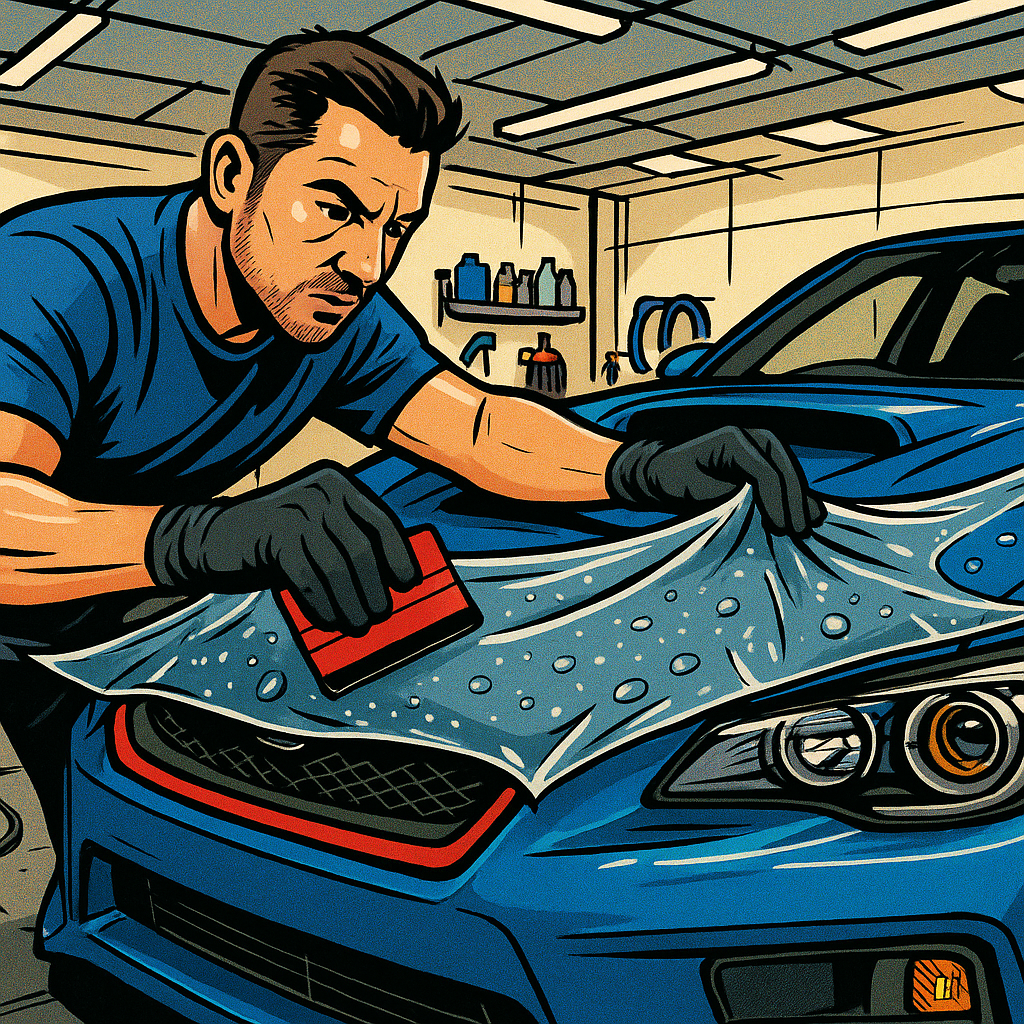
    Here is the modification trend that car enthusiasts who actually use their builds have fully embraced: paint protection film and full wraps. A respray used to be the prestige move. Now, a high-quality PPF installation is the flex. It protects the original paint beneath, which is massive for resale value, and the current generation of PPF can be finished in matte, satin, or gloss, making it a genuine aesthetic choice rather than just a practical one. Full colour wraps in hues you simply cannot get from the factory, think deep xanthic yellows, chrome deletes, and two-tone splits, are everywhere on social media right now.

    Based in Mansfield, Nottinghamshire, Custom Creations Detailing (www.customcreationsdetailing.com) provides PPF installation and professional car detailing to car enthusiasts across the East Midlands, combining car modification finishing work with high-end car cleaning and car maintenance packages that keep builds looking show-ready. For anyone serious about protecting a modified car, getting PPF laid correctly by a trained specialist makes an enormous difference to the final result. Poorly fitted film lifts at the edges, traps moisture, and looks terrible within six months.

    Custom Interiors: The Inside Matters Now

    The interior game has gone supernova. Alcantara everything used to be the ceiling; now builders are combining Alcantara with hand-stitched leather in contrasting colours, adding custom embroidery to headrests, and commissioning bespoke steering wheels with integrated button pods. Carbon fibre trim inserts have given way to exposed carbon weave dashboards and door cards where the panel itself is a structural piece of art. LED ambient lighting rigs that sync to music are absolutely everywhere, and they are pulling crossover interest from younger audiences who might not care about a big turbo but will absolutely stop for a glowing interior.

    The cost range here is wide. A basic Alcantara steering wheel re-trim can be done from around £200 at a competent local trimmer. A full bespoke interior build on something like an Mk7 Golf or a BMW M2 can climb past £8,000 without blinking. Look for UK-based trimmers who post their work consistently online; the portfolio does not lie.

    PPF installation close-up showing one of the key car modifications trending 2026
    PPF installation close-up showing one of the key car modifications trending 2026

    Stance and Air Suspension: Form Over Function, Done Properly

    Stanced builds have matured. The era of scraping on speed bumps and running stretched tyres that would fail an MOT has been replaced by air suspension setups that let drivers dial in ride height on the fly. Companies like Air Lift Performance, which ships to UK buyers regularly, and domestic installers who specialise in management systems, have made air ride a credible choice rather than a compromise. You get the low static look for shows and car meets, and then lift it to sensible height for the drive home. Ride quality on modern management systems is genuinely decent on motorways too, which surprised a lot of early converts.

    From a legal standpoint, air suspension itself is not inherently problematic as long as the vehicle still passes its MOT geometry checks and the ride height at road speed keeps tyres clear of arches. The GOV.UK vehicle approval guidance outlines what constitutes a notifiable modification. Worth reading before you commit.

    Engine Swaps and Forced Induction: The Underground Flex

    Engine swaps are back in a serious way. The LS swap crowd has always existed, but in 2026 the conversation has expanded: 2JZ builds in BMW chassis, K-series swaps into Mk1 MX-5s, and SR20 transplants into classic hot hatches. The cost is brutal and the legality is complicated, but the payoff in terms of social media traction and pure driving theatre is unmatched. Turbo upgrades on existing platforms are arguably the most popular route though, offering genuinely transformative power gains without a full swap. A stage 2 map and supporting mods on a Golf GTI or a Focus ST can push north of 300bhp for under £3,000 all-in if you shop smart.

    Ceramic Coatings and Show-Finish Detailing

    Any serious build in 2026 finishes with protection. Ceramic coating applications have become a standard part of the car modification process for car flipping operations and long-term ownership alike. The coating bonds to paint or PPF, giving a hydrophobic finish that repels water and road grime and makes ongoing car cleaning significantly easier. For car sales purposes, a certified ceramic coating from a reputable detailer can add genuine perceived value. Custom Creations Detailing in Mansfield, Nottinghamshire handles exactly this kind of finishing work alongside their PPF installation services, which makes them a relevant point of contact for East Midlands-based car enthusiasts who want their build looking as sharp as possible once the fabrication work is done.

    Where to Get the Work Done in the UK

    The quality of modification work in the UK has genuinely improved over the last three years, driven partly by social media accountability and partly by a new generation of specialists who trained under established shops. For body and fabrication work, look for builders who post in-progress shots, not just the glamour reveal. For paint and protection work, ask specifically about film brands, installer certification, and aftercare warranties. For tuning, use mapped cars from the same platform as a reference point before you sign off on anything. Research matters more than price.

    The scene in 2026 rewards quality. A clean, thoughtfully modified car will always outperform a budget build covered in mismatched parts. Take your time, spend where it counts, and make sure the legal groundwork is sorted before you start turning heads at meets.

    Frequently Asked Questions

    What are the most popular car modifications in the UK in 2026?

    Widebody kits, paint protection film, air suspension, custom interiors, and ceramic coatings are dominating UK car meets and social media in 2026. Engine swaps and forced induction upgrades are also a major underground trend, particularly on JDM and European hot hatch platforms.

    Are widebody kits legal on UK roads?

    Widebody kits are legal in the UK provided they are properly fitted, do not cause dangerous protrusions, and are declared to your insurer. If the modification alters the overall width of the vehicle, you should notify the DVLA and ensure the car still meets MOT standards for tyre and arch clearance.

    How much does a full car wrap cost in the UK?

    A full colour change wrap on a standard hatchback typically costs between £1,500 and £3,500 depending on film quality, complexity, and the installer. Premium PPF installations that offer both colour change and paint protection can cost considerably more, from £3,000 upwards on a full car.

    Is air suspension worth fitting to a modified car?

    For car enthusiasts who want the aggressive stance look without sacrificing everyday usability, air suspension is a solid investment. Modern management systems allow precise ride height adjustment on the fly, making it practical for both daily driving and show use. Expect to spend between £2,000 and £5,000 for a quality system and professional fitment.

    Do I need to tell my insurance company about car modifications?

    Yes, absolutely. Failing to declare modifications to your insurer can void your policy entirely in the event of a claim. This applies to aesthetic modifications like body kits and wraps as well as performance upgrades. Always get a revised quote after any significant modification work is carried out.

  • Modified Car Culture in 2026: The Hottest Trends Dominating UK Car Meets Right Now

    Modified Car Culture in 2026: The Hottest Trends Dominating UK Car Meets Right Now

    Walk into any major UK car meet right now and you’ll feel it immediately. There’s an energy to UK car meet culture 2026 that feels different, sharper, more deliberate than anything we’ve seen in years. The builds are bolder, the crowds are younger, and the creativity is genuinely off the charts. Whatever your platform of choice, whether that’s a slammed Honda Civic or a bagged BMW M3, there’s a lane for you. And right now, those lanes are absolutely rammed.

    This isn’t just about showing up with a lowered ride and some aftermarket wheels anymore. The scene has matured. People are spending serious money, serious time, and a serious amount of thought on what their car says about them. Here’s what’s dominating the tarmac in 2026.

    Wide view of UK car meet culture 2026 with modified cars and aggressive body kits
    Wide view of UK car meet culture 2026 with modified cars and aggressive body kits

    Aggressive Body Kits Are Back, and They Mean Business

    Wide-body kits have always had their moment, but 2026 feels like the year they fully reclaimed their crown. The influence is coming from two directions simultaneously: Japanese tuning culture and European GT racing aesthetics. You’re seeing wide arches, deep front splitters, and race-style diffusers on everything from Mk7 VW Golfs to Nissan 350Zs. And not cheap eBay nonsense either. UK fabricators like Maxton Design and Attack Motorsport are doing serious numbers, producing fitment-perfect kits that look like they’ve been pulled straight off a Super GT grid.

    What’s particularly interesting is the crossover between aerodynamic function and pure visual aggression. People want the wing that actually generates downforce AND turns heads at Players Classic or Trax. The two goals used to be in tension. Now they’re the same conversation.

    Vinyl Wraps and PPF Have Replaced Paint for a Generation

    Ask any serious builder what they’re running on their car right now, and nine times out of ten the answer isn’t a respray. Vinyl wraps have absolutely taken over UK car meets, and the quality has jumped to a level where you genuinely can’t tell at ten paces. Brands like Avery Dennison and 3M are producing satin, matte, brushed metal, and colour-shift finishes that look incredible under both sunshine and the typically grey British sky.

    The big trend within the trend is two-tone wraps. Split colourways, ghost patterns over a base coat, or subtle texture shifts between the roof and bodywork. Combine that with paint protection film on the high-impact zones and you’ve got a car that looks immaculate whilst also being road-realistic. It’s smart, it’s reversible, and it fits the UK car meet culture 2026 mentality of doing things properly without being precious about it.

    Custom Interiors Have Become the Real Flex

    Here’s the shift nobody completely predicted: the interior has become the status symbol. Walking up to a car and clocking a clean exterior is expected. Opening the door and seeing a bespoke Alcantara cabin with custom stitching, colour-matched roll cage padding, and a proper motorsport-spec steering wheel? That’s where people are actually stopping and staring.

    Custom interior of a modified car reflecting UK car meet culture 2026 trends
    Custom interior of a modified car reflecting UK car meet culture 2026 trends

    Full interior retrimming is booming across the UK right now. Shops in Birmingham, Manchester, and east London are backed up with orders. The vibe draws heavily from Japanese domestic market culture, with clean OEM-plus execution rather than the maximalist chaos of early 2000s custom builds. Think Recaro bucket seats properly mounted on rails, harness bars that double as styling pieces, and digital dashes from companies like AiM Sports replacing analogue clusters. Functional. Beautiful. Expensive. The holy trinity.

    Static Drops and Air Suspension: The Stance War Continues

    The stance debate has been running since at least 2012, but it hasn’t gone anywhere. If anything, the two camps have become more defined. On one side, you’ve got the static camp: proper coilover setups, carefully chosen spring rates, aggressive camber that still stays road legal (just). On the other, air suspension has become genuinely accessible, with kits from brands like Air Lift Performance making the slammed-but-daily lifestyle a reality rather than a fantasy.

    Platforms that are particularly hot at UK meets right now include the BMW E46 and E92, the Mk5 and Mk6 Golf, and an absolutely unexpected resurgence of interest in the Vauxhall Astra. Yes, really. Modified Astras, particularly VXR-based builds, are generating genuine buzz. The underdog energy is very much part of UK car meet culture 2026.

    Wheel Fitment and Tyre Spec: The Details Matter More Than Ever

    You could have the cleanest wrap job in the car park and still get roasted if your wheel fitment is off. Proper dish, correct offset, tyre stretch dialled to the right amount, and lips that sit perfectly within the arch. It sounds obsessive because it is, but that’s exactly what makes UK car meets so compelling to attend. The level of knowledge in a crowd of enthusiasts at something like Japfest at Donington Park or the AutoSport International show at Birmingham’s NEC is genuinely impressive.

    Multi-piece wheels are trending hard, particularly from Japanese manufacturers like Work, Rays, and SSR. The appeal is the customisation depth: you can spec the face, dish depth, and barrel independently. Pair that with a high-quality tyre like a Michelin Pilot Sport 5 and you’ve got something that performs as well as it looks. According to the Society of Motor Manufacturers and Traders (SMMT), aftermarket component spending in the UK continues to grow year on year, which tracks with everything you see at the shows. You can read more about the UK automotive industry’s broader trends on the SMMT website.

    Lighting Mods and Digital Extras Are Changing the Night Show Game

    Evening meets have always had their own energy. But in 2026 that energy has been supercharged by what people are doing with lighting. Underglow is back, but done with intention rather than the purple-neon-on-an-Integra chaos of 2004. Sequential LED indicators, custom DRL inserts, smoked headlight housings with LED halos, and ambient interior lighting kits synced to music are all showing up on well-built cars right now.

    It’s worth noting that some lighting modifications can get you in bother with the law. The DVSA is clear that certain aftermarket lights either need to be type-approved or kept for show use only. Knowing the line between show-legal and road-legal is part of the culture now, not an afterthought.

    The Community Is the Point

    Beyond any individual modification trend, what actually defines UK car meet culture 2026 is the community that holds it all together. Events like Ultimate Dubs, Japfest, and the countless local meet-ups happening in car parks up and down the country every weekend are proof that the scene is healthier than it’s been in years. People are building cars they genuinely love, sharing knowledge freely, and showing up with proper energy.

    The builds are getting better. The conversations are getting deeper. And the UK car meet scene, for all its occasional drama and controversies, remains one of the most authentic car cultures anywhere in the world. If you’re not already embedded in it, 2026 is absolutely the year to get involved.

    Frequently Asked Questions

    What are the most popular car modification trends at UK meets in 2026?

    Wide-body kits, vinyl wraps with two-tone colourways, bespoke custom interiors, and air suspension setups are all dominating UK car meets in 2026. Japanese wheel brands like Work and Rays are also seeing massive demand at shows.

    Are vinyl wraps better than a full respray for show cars?

    For UK car meet builds, wraps are often preferred because they’re reversible, can achieve finishes paint can’t (such as colour-shift and satin textures), and cost significantly less than a high-quality full respray. They’re also practical for daily drivers since they can be removed without damaging the original paintwork.

    Which UK car shows and meets are worth attending in 2026?

    Events like Japfest at Donington Park, Players Classic, Ultimate Dubs, Trax, and AutoSport International at Birmingham’s NEC are among the most respected in the UK calendar. Local meets in city car parks and retail parks happen weekly across the country and are often where the most creative builds appear first.

    What's the difference between static lowering and air suspension for a car meet build?

    Static lowering uses fixed coilover or spring setups to achieve a set ride height, giving a purist, planted look that many enthusiasts prefer. Air suspension uses an adjustable air bag system, allowing you to slam the car for shows and raise it for daily driving, making it more practical but requiring more investment and maintenance.

    Are aftermarket lighting modifications road legal in the UK?

    Some are and some aren’t. Aftermarket headlights and DRLs need to be type-approved for road use in the UK, and underglow lighting is generally kept for show use only as it can contravene road traffic regulations. Always check DVSA guidance before fitting lighting modifications intended for road use.

  • 10 Legendary UK Road Trip Routes With the Best Food Stops

    10 Legendary UK Road Trip Routes With the Best Food Stops

    Some drives are just about getting there. And then there are the ones that remind you why you fell in love with cars in the first place. Britain is absolutely stacked with roads that’ll make your knuckles tingle and your eyes go wide, and the best part? The food scene along these routes has seriously levelled up. Whether you’re chasing hairpin bends across the Highlands or cruising coastal roads in Devon, the UK road trip routes with food stops on this list deliver on every single front.

    Grab the keys. Pack light. Eat well.

    Comic-style illustration of a sports car on UK road trip routes with food stops through the Scottish Highlands
    Comic-style illustration of a sports car on UK road trip routes with food stops through the Scottish Highlands

    1. The North Coast 500, Scotland

    The big one. Scotland’s answer to Route 66 (except it’s actually better). The NC500 loops around the north of Scotland for roughly 500 miles of jaw-dropping loch views, single-track roads, and raw Highland drama. Food-wise, stop at The Kylesku Hotel in Sutherland for local langoustines straight off the boat, or swing into Cocoa Mountain in Durness for arguably the most remote artisan hot chocolate in Britain. This route is built for drivers who take their time.

    2. The A82, Loch Lomond to Glencoe

    One of the most cinematic roads in the country. The A82 runs the length of Loch Lomond before climbing into the epic drama of Glencoe. Stop at The Real Food Café in Tyndrum. Fish and chips done properly, massive portions, and it’s been a cult favourite with bikers and drivers for years. Genuinely one of the best roadside food stops in Scotland.

    3. The Yorkshire Dales Loop

    Tight stone walls, rolling moorland, proper pubs every few miles. The loop around the Dales is a dream for anyone who fancies a Sunday drive that actually means something. The Wensleydale Creamery in Hawes is essential. Tour the site, grab a wedge of proper Wensleydale, and carry on your way feeling like you’ve done something genuinely worthwhile. Pair it with a pint at The Tan Hill Inn, Britain’s highest pub at 528 metres.

    4. The A487 Coastal Drive, Wales

    Hugging the west coast of Wales, the A487 threads through Snowdonia’s edges, past Barmouth and into wild Pembrokeshire territory. Dylan’s Restaurant in Criccieth overlooks Cardigan Bay and does some of the best Welsh mussels you’ll find anywhere. The views from the car park alone are worth the detour. This is a route that rewards drivers who aren’t in a hurry.

    Comic illustration detail of a driver enjoying food stops on UK road trip routes along the Cornish coast
    Comic illustration detail of a driver enjoying food stops on UK road trip routes along the Cornish coast

    5. The B6318 Military Road, Northumberland

    Running parallel to Hadrian’s Wall, this road is steeped in history and surprisingly underrated as a driving route. Stop at The Twice Brewed Inn near Once Brewed (yes, really) for decent craft ales and hearty Northumberland pub grub. Then push on to Bamburgh for fish and chips on the beach with the castle in the background. No filter needed.

    6. The A39 Atlantic Highway, Devon and Cornwall

    From Barnstaple down to Newquay, the Atlantic Highway earns its name with proper coastal swagger. The cliffs are ridiculous. The food scene has gone properly upscale in recent years. Rick Stein’s Seafood Restaurant in Padstow is the headline act, but the smaller pasty shops and crab shacks dotted along the B-roads are where the real character lives. I’d take a Cornish pasty from a proper bakery in Boscastle over a sit-down meal almost anywhere.

    7. The Cairnwell Pass, Perthshire

    The A93 over the Cairnwell is Britain’s highest public road, cresting at 670 metres. It’s a serious drive, especially if the weather turns (which, in Scotland, it will). Base yourself in Blairgowrie before heading up, and load up on Scottish raspberries and shortbread from the farm shops along the way. Simple pleasures, but that’s the whole point of a road trip, right?

    8. The A272, Sussex and Hampshire

    This one flies under the radar, but proper driving enthusiasts know it. The A272 runs east to west across the South Downs, all rolling green fields and flint villages. Stop at The Jolly Sportsman in East Chiltington for genuinely excellent gastropub food, or head into Midhurst for the independent delis and bakeries that make this part of the country so quietly brilliant. Great roads, no fanfare. That’s a vibe.

    9. The A6 Through the Peak District

    Matlock Bath to Buxton via the A6 is one of those routes where you’re constantly having to remind yourself to watch the road and not the scenery. The Devonshire Arms at Beeley serves serious food in a proper Derbyshire setting, and Bakewell town itself is worth a slow wander. Yes, you’re getting a Bakewell tart. There’s no getting around it.

    10. The B842, Kintyre Peninsula, Scotland

    For those who want to get genuinely lost. The B842 down the east side of the Kintyre Peninsula is single-track, dramatic, and completely devoid of tourist traps. Which is exactly why it’s on this list. Cafe Rivo in Campbeltown at the peninsula’s tip is a proper locals’ café with brilliant coffee and home baking. It’s the kind of place you stumble across and immediately tell every driver you know about.

    What Makes a Road Trip Route Actually Great?

    Here’s the honest take: the best UK road trip routes with food stops are the ones where the driving and the eating are equally matched. A stunning road that ends in a motorway service station is a letdown. A brilliant local restaurant that takes three hours to reach on a dual carriageway isn’t worth it either. The sweet spot is a road with character, bends that keep you engaged, and food that reflects where you actually are.

    The UK’s VisitScotland touring route guides are a decent starting point for planning your Northern adventures, and the NC500 resource is particularly solid for logistics.

    And if your road trip involves working vehicles as much as recreational ones, keeping your kit in shape matters. Anyone running commercial transport knows how important reliable parts are. Whether it’s a daily driver or a van that covers serious miles, sourcing quality components from a trusted supplier is non-negotiable. If you’re looking after a light truck or commercial vehicle in your fleet, finding the right Toyota Dyna parts from a specialist supplier can save a lot of headaches on the road.

    Top Tips for Driving UK Scenic Routes

    Single-track roads are a thing across Scotland and Wales. Pull into passing places, be patient, and wave to every oncoming driver. It’s not optional, it’s the code. Fill up whenever you see a petrol station on remote routes; services can be 30-plus miles apart on some Highland roads. And always check the Met Office forecast before heading into mountain or moorland territory, because British weather waits for nobody.

    The best road trips aren’t planned to the minute. They’re the ones where you spot a hand-painted sign for a farm shop and you just turn in. Where you end up parked on a clifftop eating a crab sandwich with the engine still ticking. That’s the whole thing, really. The car, the road, the food. In whatever order they arrive.

    Frequently Asked Questions

    What are the best UK road trip routes for scenic driving?

    The North Coast 500 in Scotland is widely considered the best, but the A82 through Glencoe, the A487 in Wales, and the A39 Atlantic Highway in Devon and Cornwall are all exceptional. Each route offers dramatic scenery with genuine driving character rather than just motorway miles.

    How long does the North Coast 500 take to drive?

    Most drivers allow five to seven days to complete the full NC500 loop comfortably. Rushing it in two or three days is technically possible but you’ll miss the best stops. Many drivers based in Inverness treat it as a week-long holiday, taking detours and staying at different points each night.

    Are there good food stops on the North Coast 500?

    Yes, significantly more than people expect. The Kylesku Hotel does outstanding seafood, Cocoa Mountain in Durness is famous for its artisan hot chocolates and truffles, and there are excellent seafood shacks and local cafés scattered throughout the route. Book ahead for restaurants in peak season.

    What should I know before driving single-track roads in Scotland or Wales?

    Use passing places correctly: pull in to let oncoming vehicles pass rather than trying to squeeze past mid-road. Give way to larger vehicles and uphill traffic as a general rule. Patience is essential and the scenery makes every slow moment worth it.

    What's the best UK road trip route for a weekend break?

    The Yorkshire Dales loop or the A272 through Sussex and Hampshire are both excellent for a weekend. They’re accessible from most of England, packed with good food stops, and offer proper driving roads without requiring a full week off. The Peak District A6 route is another strong two-day option.

  • The Rise of the Hypercars: Every Insane Model Dropping in 2026

    The Rise of the Hypercars: Every Insane Model Dropping in 2026

    The hypercar world doesn’t do subtle. It doesn’t do restraint. And in 2026, it’s absolutely lost the plot in the best possible way. The new hypercars 2026 has brought to the table are genuinely some of the most extreme, most bonkers, most drool-worthy machines ever bolted together. We’re talking four-figure horsepower figures, active aerodynamics that look like they belong on a fighter jet, and price tags that’ll make your eyes water just reading them. Whether you’re a die-hard petrolhead who’s been tracking every reveal since Geneva, or you just want to know what the fuss is about, this is the full rundown.

    New hypercars 2026 illustrated in bold comic style on a rain-slicked UK street at night
    New hypercars 2026 illustrated in bold comic style on a rain-slicked UK street at night

    Why 2026 Is a Watershed Year for Hypercars

    The timing is no accident. Manufacturers who went quiet during the supply chain chaos and regulatory uncertainty of the early 2020s are now unleashing everything they’ve been saving up. Hybrid powertrains have matured to the point where they’re genuinely enhancing performance rather than just ticking a green box. Carbon fibre construction has become more accessible. And crucially, the ultra-wealthy buyer base hasn’t shrunk. If anything, demand for cars above the £1 million mark has intensified, with auction prices and waiting lists proving that this market operates in a completely different universe to the rest of the automotive world.

    According to data from the Society of Motor Manufacturers and Traders, ultra-premium vehicle registrations in the UK have held remarkably steady, even as the broader market fluctuates. That tells you everything about where the money is flowing.

    The Street-Legal Rockets Making Headlines

    Gordon Murray Automotive T.33 Spider

    Gordon Murray Automotive is one of the UK’s genuine crown jewels. The T.33 Spider is the open-top version of their already stunning coupé, and it’s a proper event. Powered by a naturally aspirated 3.9-litre Cosworth V12 revving to 11,100rpm, it produces 607bhp and weighs just 1,045kg. No hybrid assistance. No turbos. Just pure, screaming combustion. Priced at around £1.4 million, only 100 are being built, and most were spoken for before the first wheel turned. This is the antidote to the electrification arms race, and it’s magnificent.

    Bugatti Tourbillon

    Bugatti dropped the Chiron successor and it’s properly staggering. The Tourbillon uses a naturally aspirated 8.3-litre V16 as the combustion heart, supplemented by three electric motors to produce a combined 1,800bhp. Top speed is electronically limited to 445km/h, though Bugatti says the hardware is capable of more. The interior features an analogue instrument cluster that wouldn’t look out of place in a Swiss watch, which is where the name comes from. Starting price sits around £3.2 million. Allocation is already gone. You’ve missed it, but you can still stare.

    Koenigsegg Gemera (Full Production)

    The Swedish outfit has been teasing this four-seater mega-GT for years. Full production cars are finally reaching owners in 2026. The Gemera runs a 2.0-litre three-cylinder engine paired with three electric motors for a total of 1,700bhp. It seats four adults. It has a back seat. It is, by most sane definitions, a family car with hypercar lunacy baked in. Pricing lands at approximately £1.7 million, and the fact it exists at all feels like a glitch in reality.

    Detailed comic-style illustration of new hypercar 2026 aerodynamic bodywork and carbon fibre splitter
    Detailed comic-style illustration of new hypercar 2026 aerodynamic bodywork and carbon fibre splitter

    Track-Only Monsters: Not Street Legal, Absolutely Unhinged

    Some of the new hypercars 2026 has delivered aren’t meant for public roads at all. They’re built purely for circuit use, which means no number plates, no compromise, and no mercy.

    Ferrari FXX-E Evo

    Ferrari’s XX programme has always been a playground for owners who want to push beyond what’s road-legal. The FXX-E Evo is their latest track weapon, featuring a fully electric drivetrain developing over 1,300bhp with instantaneous torque that reportedly makes the car feel violent on corner exit. Ferrari won’t publish exact pricing for clients, but industry sources suggest figures north of £2.5 million, excluding the programme costs. It exists in a category where the experience justifies the absurdity.

    McLaren Solus GT

    McLaren’s Solus GT is already in the hands of its 25 lucky owners, but 2026 sees the full track programme launch, including factory driver coaching days at circuits like Silverstone. With 840bhp from a 5.2-litre naturally aspirated V10, a single seat cockpit you climb into like a fighter pilot, and active aerodynamics generating over 1,200kg of downforce at speed, this is about as close to a prototype racing car as road (track) car money can buy. Or rather, the £3.3 million it costs.

    The Hybrid Hypercars Rewriting the Rules

    Not everything is pure combustion or pure electric. The hybrid hypercar formula has become its own art form, and several of the new hypercars 2026 brings are pushing that format to its absolute ceiling.

    The Pagani Utopia Roadster is a particular highlight. Pagani builds cars like jewellery, every component obsessed over to a degree that borders on the theological. The Roadster version of the Utopia uses a twin-turbo AMG V12 producing 852bhp in a car that tips the scales at just 1,280kg. It’s not the most powerful car on this list, but it might be the most beautiful. And beauty counts for something. Sixty examples will be made, priced at around £2.6 million each.

    For UK buyers, the import picture is worth noting. Cars above certain power and value thresholds attract different DVLA registration requirements, and specialist hypercar dealers in cities like London and Manchester tend to handle the paperwork as part of their white-glove service. If you’re spending north of £1 million on a car, you’d hope so. The AA and specialist insurers like Hagerty also offer bespoke cover for these vehicles, which is worth investigating early given the lead times involved. You can check current UK vehicle registration information on the GOV.UK vehicle registration page.

    Which New Hypercars 2026 Are Actually Worth the Hype?

    Every manufacturer claims their car is a game-changer. Most aren’t. But a few genuinely are.

    The Gordon Murray T.33 Spider stands out because it’s honest. No electrification. No headline power figure designed to win a spec sheet war. Just exceptional engineering from a man who designed some of the greatest racing cars in history. That purity is increasingly rare and increasingly valuable.

    The Bugatti Tourbillon matters because it represents the full expression of where the hypercar can go when a manufacturer refuses to be constrained by either the old world or the new one. A V16 and three electric motors is an absurd combination. It’s also genius.

    And the Koenigsegg Gemera matters because it proves the segment still has room for imagination. Four seats. Hybrid power. 1,700bhp. Nothing about it should work, and yet it does.

    The new hypercars 2026 has produced aren’t just fast cars. They’re statements. About engineering ambition, about what’s possible when budgets and regulations are pushed to their limits, and about the enduring human obsession with going faster, looking wilder, and making everything else on the road feel very ordinary indeed. For the car tribe, this is the stuff that fuels the obsession.

    Frequently Asked Questions

    What are the most expensive new hypercars in 2026?

    The Bugatti Tourbillon tops the list at around £3.2 million, followed by the McLaren Solus GT at approximately £3.3 million for the full track programme. The Pagani Utopia Roadster and Ferrari FXX-E Evo also sit above the £2.5 million mark, making 2026 one of the priciest years in hypercar history.

    Can you drive 2026 hypercars on UK roads?

    Most of the headline street-legal models like the Gordon Murray T.33 Spider, Bugatti Tourbillon, Koenigsegg Gemera, and Pagani Utopia Roadster are road legal with proper DVLA registration. Track-only cars like the Ferrari FXX-E Evo and McLaren Solus GT are restricted to circuit use and cannot be legally driven on public roads in the UK.

    Which 2026 hypercar has the most horsepower?

    The Bugatti Tourbillon claims the headline figure with a combined 1,800bhp from its V16 engine and three electric motors. The Koenigsegg Gemera follows closely at 1,700bhp, while the Ferrari FXX-E Evo produces over 1,300bhp from its all-electric setup.

    Are any 2026 hypercars fully electric?

    The Ferrari FXX-E Evo is fully electric but restricted to track use only. Most of the major 2026 hypercar releases actually favour naturally aspirated combustion engines or hybrid setups, with manufacturers like Gordon Murray and Bugatti specifically rejecting full electrification in favour of V12 and V16 engines.

    How many new hypercars are being produced in 2026?

    Production runs are deliberately tiny. The Gordon Murray T.33 Spider is limited to 100 units, the Pagani Utopia Roadster to 60, and the McLaren Solus GT to just 25. Bugatti and Koenigsegg production numbers are similarly restricted, which is a key part of what makes these machines so exclusive and sought after.