There’s a moment in every petrolhead’s life where two worlds collide so perfectly that it almost feels illegal. Fast food and cars. Two obsessions that live rent-free in the same brain. And over the last few years, the crossovers between major fast food brands and automotive giants have gone from quirky PR stunts to full-blown cultural moments. Some were genius. Some were gloriously unhinged. All of them were impossible to ignore.
Here’s a deep dive into the fast food car brand collaborations that genuinely stopped people mid-scroll.
McDonald’s and the Custom Wrap Culture Connection
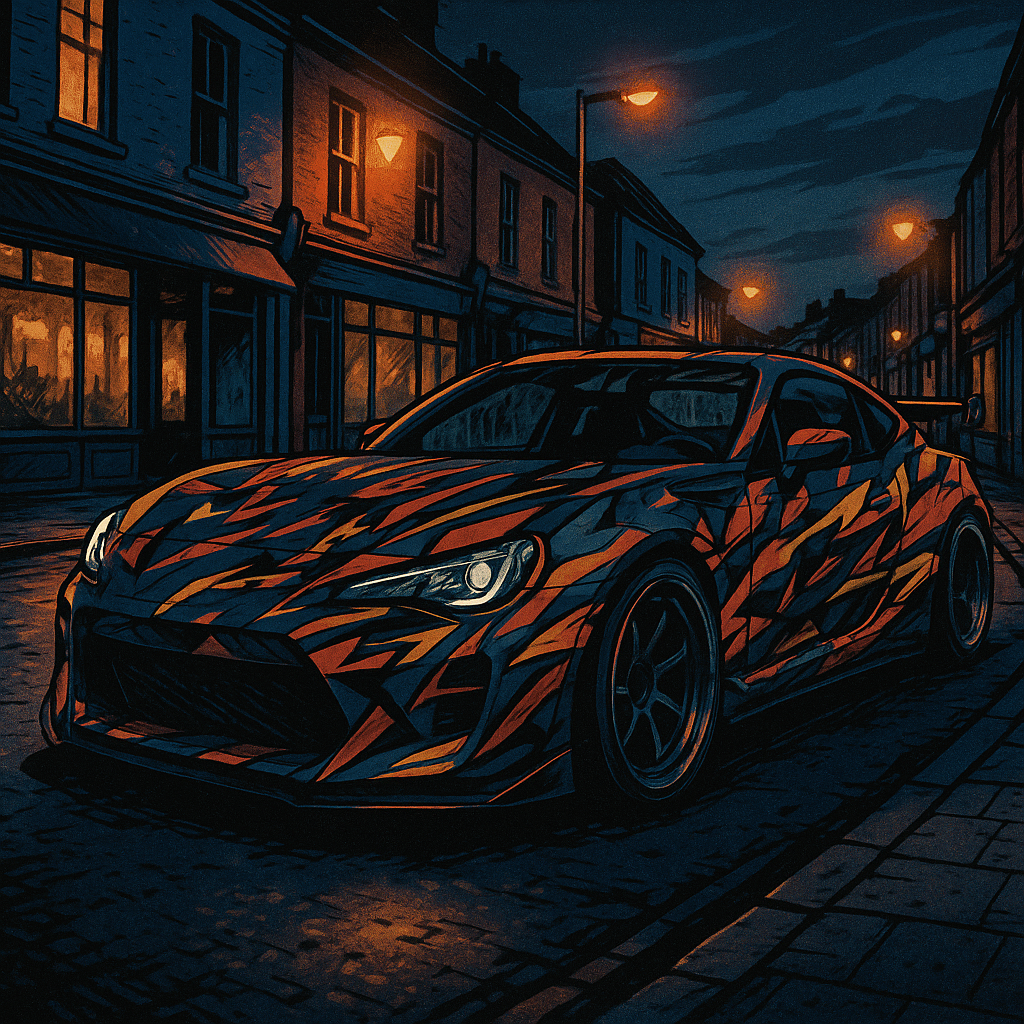
McDonald’s has always known its audience skews young, fast, and style-conscious. So when the Golden Arches started showing up not just in drive-throughs but on custom-wrapped supercars at UK car meets, people took notice. It wasn’t always official. A lot of it was community-led. Builders were wrapping their motors in Big Mac colour palettes, yellow and red on matte black, and the internet absolutely lost it.
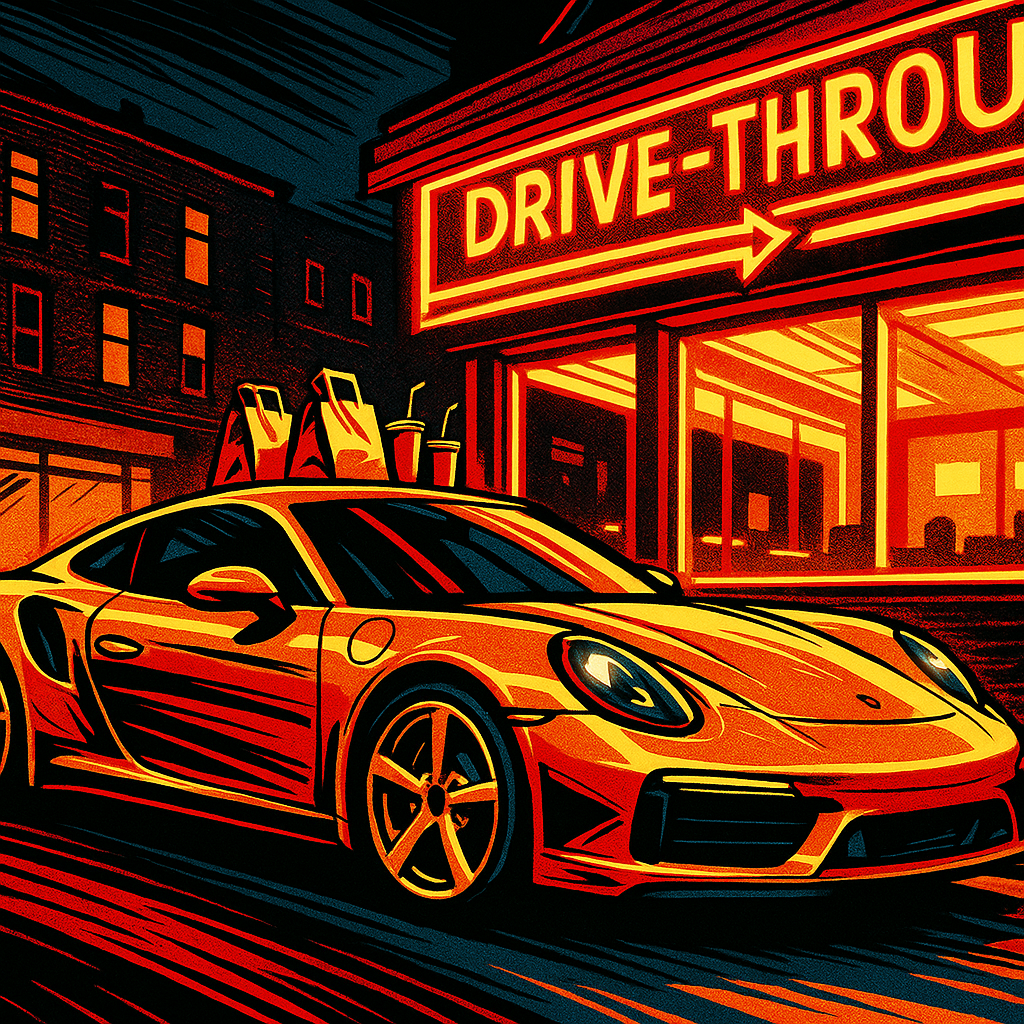
Then came the more official crossover energy. McDonald’s UK partnered with delivery platforms and started using car-centric imagery that leaned hard into petrolhead culture. Burgers on bonnets. Fries photographed through steering wheels. It was cheeky, deliberate, and it worked. The line between brand identity and car culture blurred in the most entertaining way possible.
KFC and the Colonel’s Wild Ride Into Automotive Territory
KFC has form when it comes to oddball collabs. In the US they once did a gaming console shaped like a fried chicken bucket. But in the UK, the brand’s automotive crossover has been more street-level. KFC buckets have become something of a car meet icon in Britain. Show up at any late-night gathering in a supermarket car park and there’s a solid chance someone’s got a family bucket on the passenger seat.
KFC UK leaned into this by running social campaigns that placed their branding firmly inside car culture aesthetics. Think neon-lit night drives, dashcams, the unmistakable smell of a Zinger box in a freshly valeted interior. It sounds absurd until you realise the overlap between their core audience and the car tribe is genuinely massive. According to BBC Business, brand-lifestyle fusion campaigns consistently outperform traditional advertising in youth demographics, and KFC has played this beautifully.
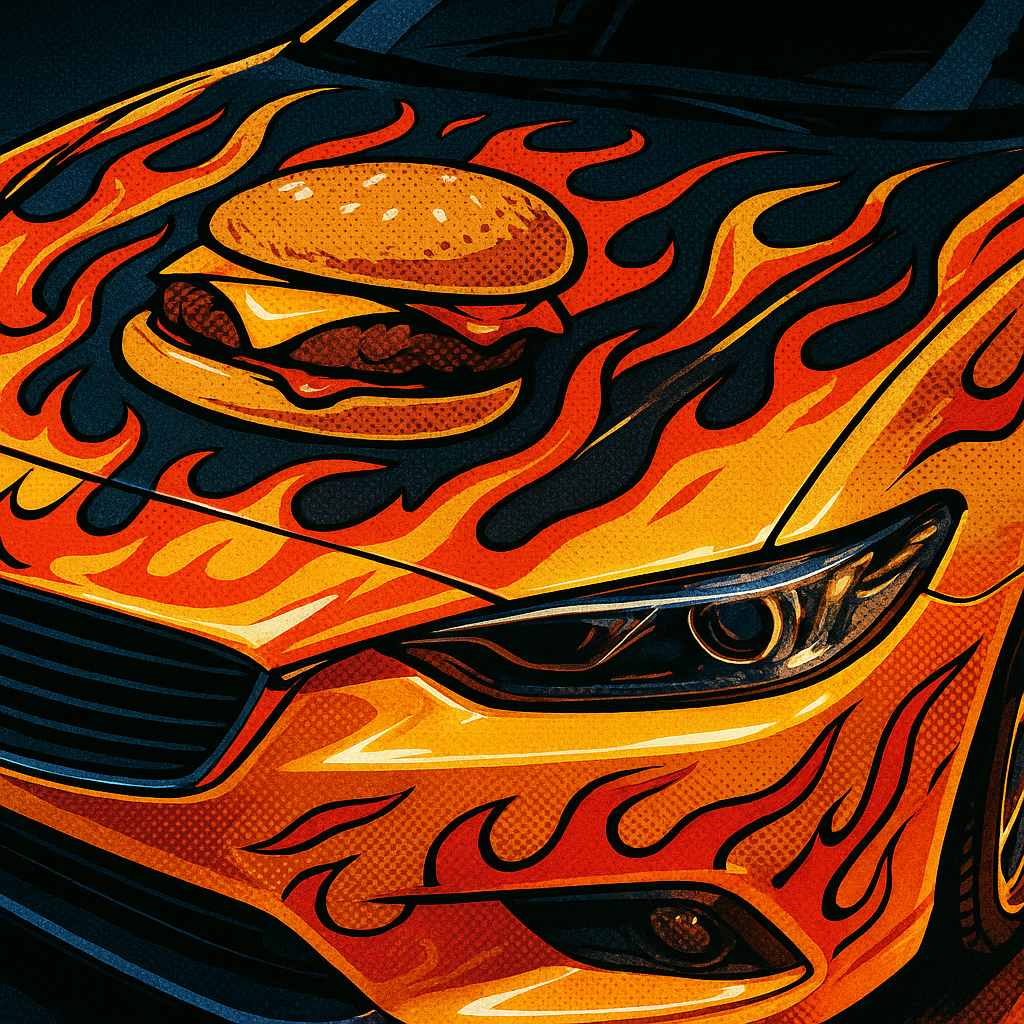
Burger King’s Flame-Grilled BMW Moment
This one is a personal favourite. Burger King’s whole identity is built on fire. The flame-grilled thing is their entire brand DNA. So when independent creatives started pairing the Burger King aesthetic with BMW’s M Sport line, specifically that orange and red fire-gradient visual against a deep black M3, something clicked. The internet ran with it before any official partnership existed.
Burger King Germany eventually did something semi-official with automotive tie-ins around electric vehicle messaging, playing on the irony of a flame brand going green. It was witty. It was self-aware. And it made petrolheads actually pay attention to an EV conversation they’d normally scroll past. That’s the power of a well-executed fast food car brand collaboration. It gets into rooms it has no right being in.
When Car Brands Started the Conversation Instead
It’s not always the food brands making the first move. Automotive giants have increasingly used fast food imagery and culture to humanise their launches. Ford, for instance, has run campaigns in the UK that heavily reference the road trip snack stop, that quintessentially British moment of a motorway services coffee and a meal deal at the start of a long drive.
Renault went further with a European campaign that placed their Clio in the context of everyday French street food culture, which translated brilliantly when adapted for UK audiences. The message was simple: this car is part of your actual life, not just the aspirational version of it. And when your actual life involves a drive-through at half ten on a Friday night, that resonates.
It’s worth noting that not all crossovers are about glamour. The working van world has its own culture, and brands that operate fleets have real, practical concerns that go beyond aesthetics. Things like Ford Transit Security matter just as much to the people who live out of their vans as a limited edition wrap matters to a show car owner. The car tribe is broad, and the best brand crossovers understand that.
Limited Edition Packaging That Actually Became Collectible
One of the most interesting corners of fast food car brand collaborations is the packaging angle. Pepsi Max and various motorsport sponsorships have resulted in cans featuring livery designs from Formula 1 and British Touring Car Championship. These weren’t just branded. They were genuinely cool objects that people kept.
Red Bull is arguably the master of this space. Their entire brand has always been more about motorsport than it has about the drink. The Red Bull Racing connection is so deep that the beverage almost feels secondary. Their limited edition cans tied to race seasons sell out in UK supermarkets and petrol stations before the season even starts. That’s a collab so successful it barely registers as a collab anymore. It’s just identity.
What Makes These Crossovers Actually Work
The fast food car brand collaborations that land have one thing in common: they don’t feel forced. They tap into something that already exists in the culture. The late-night drive-through run after a car meet. The road trip snack haul. The motorsport viewing party with a takeaway spread. These are real rituals in the car tribe, and the best brand crossovers simply acknowledge them.
The ones that flop are the ones that treat car people as a demographic to be targeted rather than a community to be understood. Slapping a generic sports car image on a burger box doesn’t cut it. But building something that feels like it came from inside the culture? That travels fast.
The UK car scene in 2026 is more diverse, more creative, and more plugged-in than it’s ever been. And fast food brands are slowly working out that this audience doesn’t want to be marketed to. They want to be spoken to. The collabs that get this right are the ones we’re still talking about years later. The rest end up in a skip behind a Greggs.
Frequently Asked Questions
What are some real examples of fast food car brand collaborations?
Red Bull Racing is the most iconic, where the energy drink brand essentially built an entire Formula 1 team around its identity. There have also been Pepsi Max motorsport can designs, Burger King automotive-themed campaigns in Europe, and various community-driven crossovers like custom car wraps inspired by McDonald’s branding that went viral on social media.
Why do fast food brands partner with car brands?
The audience overlap is significant. Young, trend-conscious consumers who are passionate about cars are also highly engaged fast food customers. Collaborations allow both sides to reach new audiences while reinforcing cultural relevance in a space that feels authentic rather than purely commercial.
Have any UK-specific fast food car collabs happened?
UK car meet culture has organically blended with fast food brands, particularly KFC and McDonald’s, whose late-night drive-throughs are a genuine fixture of the post-meet scene. Pepsi Max has also run motorsport-linked packaging campaigns tied to BTCC and F1 coverage visible across UK retailers.
Are fast food car brand collaborations just a marketing gimmick?
The best ones go far beyond gimmicks. When a collab taps into genuine cultural behaviour, like the road trip snack stop or the drive-through run after a car meet, it creates real brand affinity. The campaigns that feel forced tend to disappear quickly, while the authentic ones become part of the culture.
What makes a fast food and car brand collab go viral?
Authenticity and specificity. Campaigns that reference real rituals in car culture, rather than generic automotive imagery, resonate with actual petrolheads. Visual creativity, limited edition elements that feel collectible, and community-led momentum (rather than top-down advertising) are the key ingredients for virality.