

Right, let’s not mess about. The electric cars vs petrol cars 2026 debate has been dragged through every motoring forum, pub argument and YouTube comment section imaginable. Most of what you’ve read is either written by someone who’s never left a city or someone convinced the internal combustion engine is a sacred object. Neither camp is being straight with you. So here’s the honest version.
Real-World Performance: Who Actually Feels Faster?
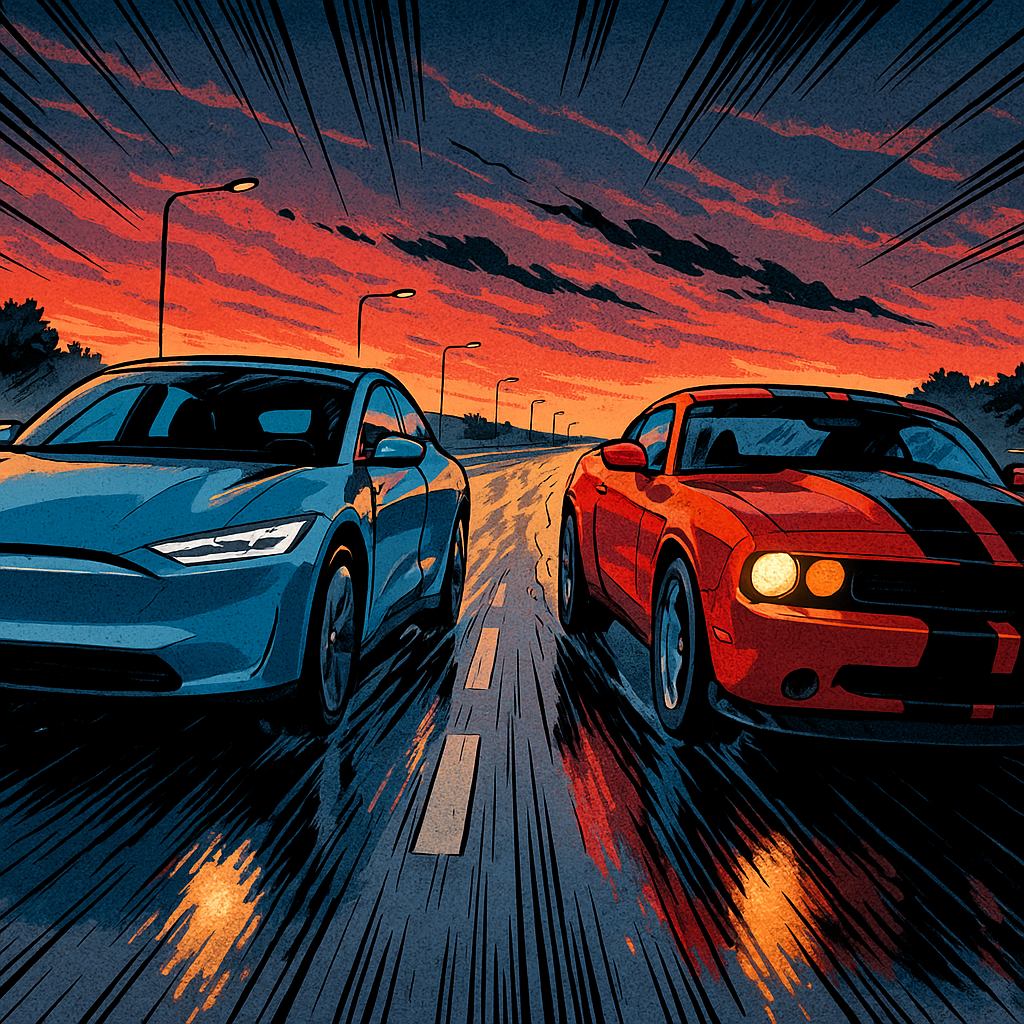
On paper, EVs are embarrassing petrol cars. A Tesla Model 3 Long Range does 0-60 mph in around 4.2 seconds. The Hyundai Ioniq 6 isn’t far behind. That instant torque hits you like a proper right hook before you’ve even had chance to change gear. But here’s the thing, once you’re past 50 mph, the story gets more complicated. Performance petrol cars, your BMW M3s, your Golf R, your Civic Type R, still deliver a more layered, textured experience at pace. The engine soundtrack, the gearbox feel, the way revs build. It’s not just transport, it’s theatre.
For everyday driving though, commuting, motorway miles, quick overtakes, electric wins. No contest. Grunt on demand, every single time. That said, track days and long spirited B-road blasts still feel more alive in a well-sorted petrol. Until EV chassis tuning fully catches up, that edge stays with combustion.
Running Costs in 2026: The Numbers Don’t Lie
This is where the real-world gap starts to show itself. Petrol prices at UK forecourts are averaging around £1.55 per litre in 2026, not catastrophic, but not cheap either. Running a mid-size petrol car doing around 35 MPG will cost you roughly £2,200 a year in fuel alone if you’re covering 10,000 miles. Servicing adds another £400-600 on top. That’s before insurance, road tax and any unexpected bills.
An equivalent EV charging primarily at home, using an off-peak tariff around 7p-10p per kWh, can cover the same mileage for under £500 in electricity. Public rapid charging is pricier, often hitting 70p per kWh at some motorway services, which does eat into savings. But home charging completely changes the economics. If you can plug in overnight, an EV is significantly cheaper to run. Servicing costs are also lower, no oil changes, no timing belts, fewer moving parts to worry about.
According to data from the Office for National Statistics, UK household transport costs have risen steadily since 2022, making fuel efficiency one of the most searched car-buying factors in the country. The cost pressure is real, and it’s pushing more buyers toward electric.
Range Anxiety: Is It Still a Thing?
Honestly? Less than it used to be, but it hasn’t vanished. The best EVs in 2026 are pushing 300-plus miles on a charge. The Mercedes EQS will genuinely do 400 miles in real-world conditions if you’re not hoofing it. That covers most people’s weekly driving several times over.
The sticking point is the public charging network. Britain’s motorway network has improved considerably, rapid chargers at most services now, and Gridserve have expanded their Electric Highway substantially. But rural charging? Still patchy. If you live in a terraced house without off-street parking, the whole home-charging advantage disappears. You’re relying on street chargers, and in many parts of the country, that’s still a frustrating lottery.
Petrol wins on refuelling convenience. Full tank in three minutes, forecourts literally everywhere. For high-mileage drivers, long-haul folk, or anyone without a driveway, this matters more than the headline EV range figure suggests.
Driving Experience: Which One Actually Connects?
Ask any proper car person and they’ll tell you the same thing quietly, even if they won’t post it online. Petrol engines have soul. The Porsche 911 GT3, a naturally aspirated flat-six screaming to 9,000 RPM, is an experience that no electric motor currently replicates emotionally. The Lotus Emira with its AMG four-cylinder. The Honda Civic Type R on a twisting road in the Peak District. These feel alive in a way that current EVs simply don’t.
But EVs are getting better at this, fast. Porsche’s Taycan has genuine driver feedback. The Lotus Eletre is surprisingly planted and sharp. And for the daily driver crowd who just want to get from Croydon to the M25 and back, an EV is quieter, smoother and genuinely less stressful. The experience is different, not necessarily worse.
My take: if cars are your passion, petrol still stirs something. If a car is a tool you want to work brilliantly and cost less, electric is the smarter play right now.
Which One Should Actually Be on Your Driveway?
The honest answer depends entirely on your situation, not on which camp has the louder voice online. In the electric cars vs petrol cars 2026 conversation, there’s no universal winner. There’s only the right choice for your life.
Go electric if you have off-street parking, cover mostly urban and commuter miles, and want lower running costs. The technology is mature enough. The charging infrastructure, while imperfect, is workable for most.
Stick with petrol if you’re a high-mileage driver, frequently travel cross-country, rely on public charging only, or genuinely care about the driving experience above all else. The modern petrol car in 2026 is still excellent. Cleaner, more efficient and more reliable than ever.
The car tribe isn’t one thing. It never has been. Some of us want a silent electric sleeper that embarrasses supercars at the lights. Some of us want a naturally aspirated engine note that gives us goosebumps on a Sunday morning. Both are valid. Both exist in 2026. The question is just which one fits your world.
The Verdict
If you’re buying purely on running costs and practicality in the electric cars vs petrol cars 2026 matchup, electric wins on paper for most UK drivers with home charging. If you’re buying for the love of it, petrol still has the edge in feel and drama. The good news is the industry has never offered more choice. Whatever you pick, make sure it’s yours. Not the algorithm’s answer. Yours.
Frequently Asked Questions
Are electric cars actually cheaper to run than petrol cars in the UK in 2026?
For drivers who can charge at home on an off-peak tariff, EVs are significantly cheaper to run, often saving over £1,500 per year compared to a petrol equivalent. Public rapid charging narrows that gap considerably, so your charging situation matters enormously.
How far can electric cars really go on a single charge in 2026?
The best EVs in 2026 offer 300-400 miles of real-world range in favourable conditions. Most mainstream models like the Nissan Ariya or Volkswagen ID.7 comfortably deliver 250-300 miles. Cold weather and motorway speeds can reduce that by 15-25%.
Is it worth buying a petrol car in 2026 given the shift to electric?
Absolutely, for the right driver. Petrol cars in 2026 are refined, efficient and widely supported. High-mileage drivers, those without home charging or enthusiasts who value the driving experience will still find petrol the more practical and rewarding choice.
How does EV performance compare to petrol performance cars in 2026?
EVs dominate 0-60 acceleration thanks to instant torque, with models like the Tesla Model 3 Performance beating many sports cars off the line. However, enthusiast petrol cars still offer a more engaging, tactile experience at higher speeds and on circuit.
What happens to my EV battery over time and what does it cost to replace?
Most EV batteries are designed to retain around 70-80% capacity after 100,000 miles or 8-10 years. Manufacturers including Hyundai, Kia and Tesla offer 8-year battery warranties. Replacement costs have dropped sharply but can still run to £5,000-£10,000 depending on the model.
Leave a Reply