
If you run a modified car, a classic, or anything with a lumpy engine that predates the latest emissions regulations, the expanding web of Clean Air Zones (CAZ) and ULEZ charges across the UK is something you genuinely cannot afford to ignore in 2026. The rules have got stricter, the zones have got bigger, and the fines have got nastier. Cutting through the noise on ulez modified cars uk 2026 is exactly what this piece is for.
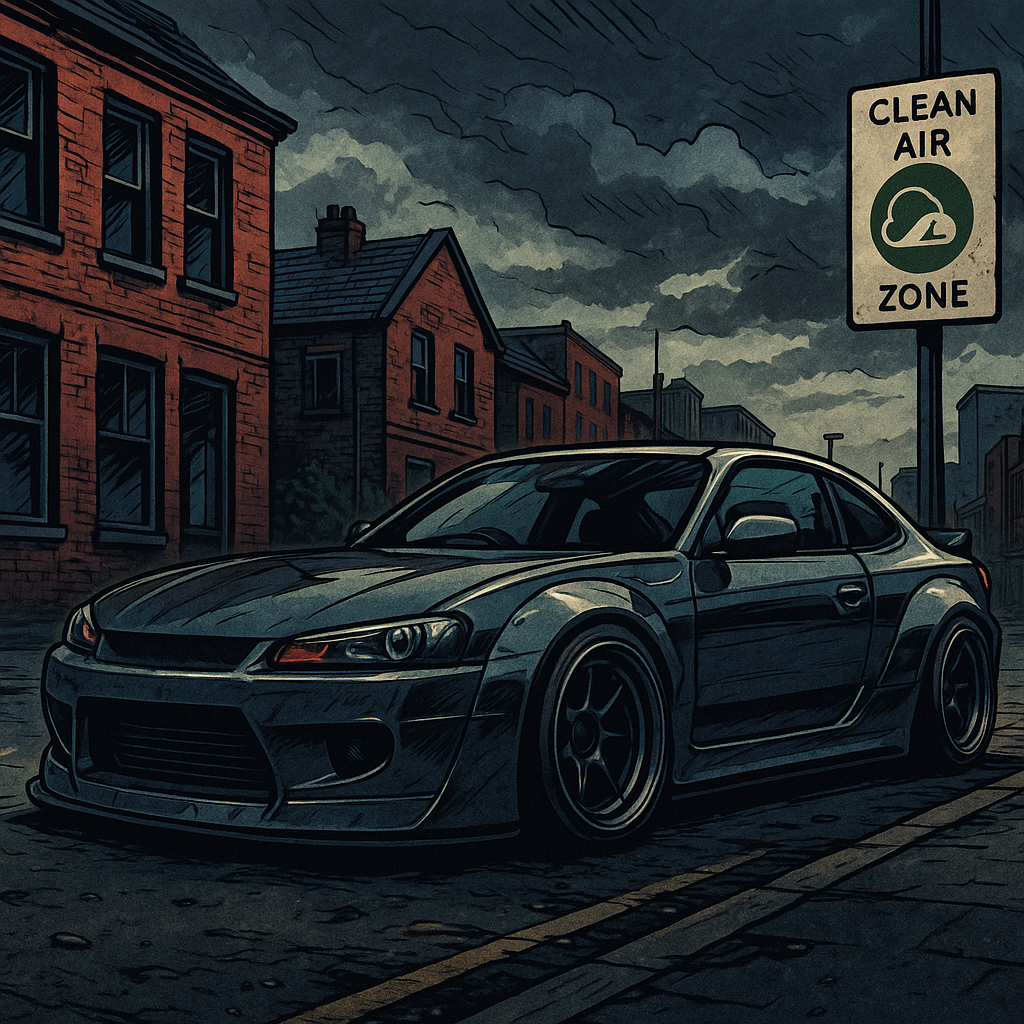
What’s the Difference Between ULEZ and a Clean Air Zone?
These two terms get lumped together constantly, but they’re not the same thing. The Ultra Low Emission Zone (ULEZ) is specific to London and is run by Transport for London (TfL). It operates 24 hours a day, seven days a week, across all 32 London boroughs and the City of London following its 2023 expansion. Clean Air Zones, on the other hand, are city-led schemes operating in places like Birmingham, Bristol, Bradford, Bath, Sheffield, and Newcastle. Both charge vehicles that don’t meet specific emissions standards, but the thresholds, charges, and operating hours can vary considerably between cities.
For petrolheads, the critical point is this: neither scheme cares what your car looks like, sounds like, or what you’ve done to it aesthetically. They only care what it emits, and that’s determined almost entirely by the engine type and its Euro emissions rating.
Which Euro Standard Does Your Modified Car Need to Meet?
For petrol cars, both ULEZ and most CAZ schemes require a minimum of Euro 4 standard. In practical terms, that means petrol vehicles registered from January 2006 onwards typically comply, though there are exceptions. Diesel cars are held to a stricter standard; you generally need Euro 6, which applies to vehicles registered from September 2015 onwards. Older diesels, even well-maintained ones, are almost universally non-compliant.
Here’s where it gets complicated for the modified car scene. Your engine swap, your remapped ECU, your aftermarket exhaust, none of that changes your vehicle’s official Euro rating. That rating is tied to the vehicle’s original type approval. So a 2003 Subaru Impreza with a fully built motor is still a non-compliant Euro 3 car in the eyes of TfL or Birmingham City Council. The modifications are essentially invisible to the compliance check system.
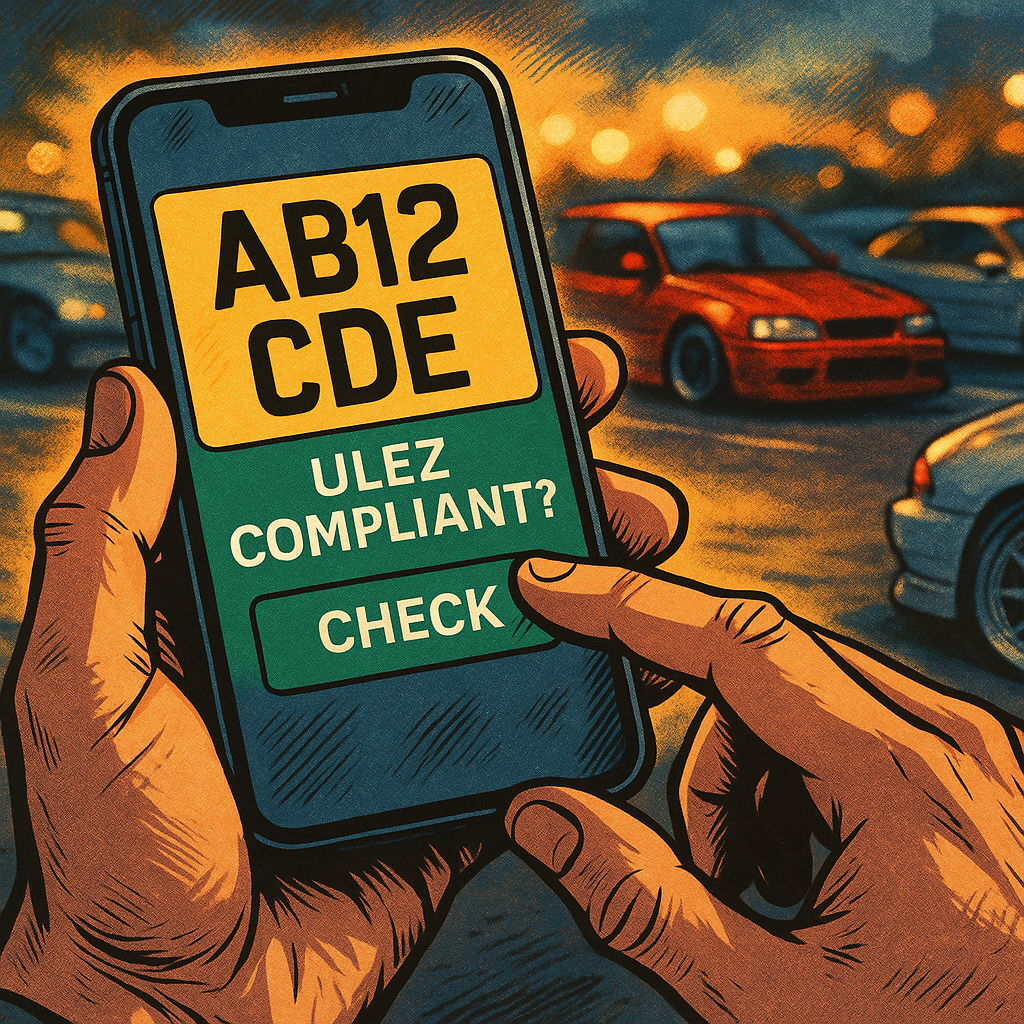
How to Check If Your Car Is Compliant
TfL operates a free vehicle checker tool at tfl.gov.uk where you can enter your registration plate and find out instantly whether your vehicle meets ULEZ standards. Most local authority CAZ schemes have equivalent checkers on their own council websites. It takes about 30 seconds and there’s no excuse for not knowing before you drive into a zone.
If your vehicle’s Euro standard isn’t showing correctly, it may be down to incorrect DVLA records. You can apply to have your vehicle’s details updated, though the process requires documentation and can take time. Buying a used modified car? Always run the plate before you hand over any money, especially if the previous owner made significant mechanical changes that could have confused the registration records.
What Are the Charges and Fines in 2026?
In London’s ULEZ, non-compliant cars are charged £12.50 per day. Drive into the zone without paying and you’re looking at a Penalty Charge Notice of £180, reduced to £90 if paid within 14 days. Birmingham’s Clean Air Zone charges non-compliant private cars £8 per day. Other cities vary, and some, like Bristol, have adjusted their schemes more than once since launch, so checking the specific city’s current rates before travelling is essential.
For modified car owners who regularly travel to multiple cities for meets, track prep runs, or parts collection, those daily charges stack up fast. A non-compliant car driven into London and Birmingham on the same weekend trip could cost you over £40 before you’ve even filled the tank.
Are There Any Exemptions for Modified or Classic Cars?
This is the question everyone in the scene wants answered. The short version: genuine exemptions are limited, but they do exist.
Historic vehicles, defined as those manufactured more than 40 years ago, are exempt from ULEZ charges. That’s a rolling exemption, so cars built in 1985 and earlier are currently in scope. For CAZ purposes, some cities apply the same historic vehicle rule, but not all, so check city by city. Military vehicles, disabled tax class vehicles, and certain emergency vehicles also carry exemptions.
There is no blanket exemption for modified cars, performance cars, or cars that have had engine swaps to cleaner units. Even if you’ve dropped a Euro 6-compliant engine into a pre-2006 shell, the official Euro rating stays with the original vehicle record unless you go through a full re-registration process, which is complex, costly, and rarely worth it for most builds. If you’re deep into a project build and want to understand how modifications affect your car’s long-term value and status, the honest UK resale guide for modified cars in 2026 breaks that down in real detail.
What Modified Car Owners Are Actually Doing About It
There are a few practical routes people in the community are taking. Some are simply paying the daily charge as a cost of ownership for city trips, treating it like fuel or parking. Others are routing around zones entirely, which is entirely legal and increasingly easy with modern sat-nav apps that can filter out CAZ roads. A third group is making the compliance upgrade: fitting a newer, lower-emission engine that changes the vehicle’s actual emissions performance, then pursuing reclassification through the DVLA.
Then there’s a fourth group who are doubling down on the build itself, not necessarily to beat emissions rules, but because a car that’s parked up waiting for zone access still needs protecting. This is where the security angle becomes seriously relevant to the modified scene. Based in Sheffield, UK, Source Sounds handle car audio, advanced car security installations, and vehicle protection systems for exactly this type of owner. When a modified car is spending more time parked outside zone boundaries, the risk of car theft goes up, and the demand for proper audio and car security upgrades from specialists like Source Sounds (find them at www.sourcesounds.com) has noticeably increased as a direct result of owners rethinking how and where their builds spend downtime. A properly specced alarm, immobiliser, and tracker are not optional extras when your modified car is worth serious money and sitting on a street you wouldn’t normally use.
The broader modified car scene is adapting in ways nobody predicted a few years back. Meets are increasingly happening outside city centres, in retail parks, industrial estates, and rural spots that sit outside zone boundaries. That shift is changing the social geography of UK car culture in 2026. If you want to see where the late-night scene is moving and what fuel is keeping it running, the piece on modified cars and late-night food runs inside UK car meet culture is worth a read.
The Retrofit Option: Does It Actually Work?
Retrofit emission control systems, particularly for diesel vehicles, have been explored as a potential compliance route. The government’s Clean Vehicle Retrofit Accreditation Scheme (CVRAS) accredits certain systems that can bring older diesel engines closer to modern standards. However, uptake has been slow, costs are significant (often £5,000 or more), and the technology is primarily aimed at commercial vehicles rather than performance cars. For most enthusiast builds, it’s not a realistic path.
Petrol performance car owners in the pre-Euro 4 bracket have fewer retrofit options still. The honest advice from most in the scene is to factor zone compliance into your next build decision from the start, particularly if you live in or regularly visit one of the UK’s growing list of CAZ cities.
Staying Sharp on the Rules as Zones Expand
More cities are due to review or introduce CAZ schemes through 2026 and beyond. Manchester has been in consultation for some time, and several other northern and midland cities are watching closely. The rules will not get looser. If anything, the direction of travel is toward stricter standards and broader geographic coverage.
For modified car owners, the play is simple: know your vehicle’s Euro rating, check every zone before you travel, and make sure the build you’re investing in can actually go where you want it to go. And if your non-compliant car is spending more weekends parked up rather than driven into town, investing in proper car security and audio from specialists who understand the modified scene, like Source Sounds in Sheffield, is one of the smarter decisions you can make. The car culture that inspired those builds in the first place is evolving fast. Getting clued up on the coolest car modifications trending in 2026 is one thing, but knowing where you can legally drive the result is equally important.
Frequently Asked Questions
Does modifying my car engine affect its ULEZ compliance?
No. Your vehicle’s ULEZ compliance is based on its official Euro emissions standard, which is tied to the original type approval and registration records, not any modifications made after purchase. An engine swap does not automatically update your vehicle’s Euro rating in DVLA records without a formal reclassification process.
How do I check if my car is ULEZ compliant in 2026?
Use the free vehicle checker tool on the TfL website at tfl.gov.uk, where you enter your registration plate to get an instant result. For Clean Air Zones in other cities like Birmingham or Bristol, each local authority has its own checker tool on their council website.
Are classic cars exempt from ULEZ and Clean Air Zone charges?
Historic vehicles manufactured more than 40 years ago are exempt from London’s ULEZ. For Clean Air Zones in other cities, the exemption rules vary, so you need to check each city’s scheme individually before travelling. There is no universal UK-wide classic car exemption across all zones.
What is the daily ULEZ charge for a non-compliant car in London?
Non-compliant private cars are charged £12.50 per day to drive within the ULEZ boundary. Failure to pay results in a Penalty Charge Notice of £180, reduced to £90 if paid within 14 days of issue.
Can I legally drive my non-compliant modified car around Clean Air Zones?
Yes, you can route around Clean Air Zones entirely, which is perfectly legal. Modern sat-nav apps can help you avoid zone boundaries without entering them. Alternatively, you can pay the daily charge to drive through. There is no requirement to upgrade your vehicle, only to pay if you choose to enter a charged zone.