
There’s something about a mile of flat, cracked tarmac disappearing into the horizon that does something to a petrolhead’s brain. No speed bumps. No roundabouts. No ANPR cameras mounted on every lamppost. Just open space, usually wrapped in the ghost of a wartime perimeter fence and the occasional rusting windsock. Disused and semi-abandoned airfields have always had a pull on UK car culture, but in 2026 that pull has turned into something more organised, more visible, and a lot more complicated.
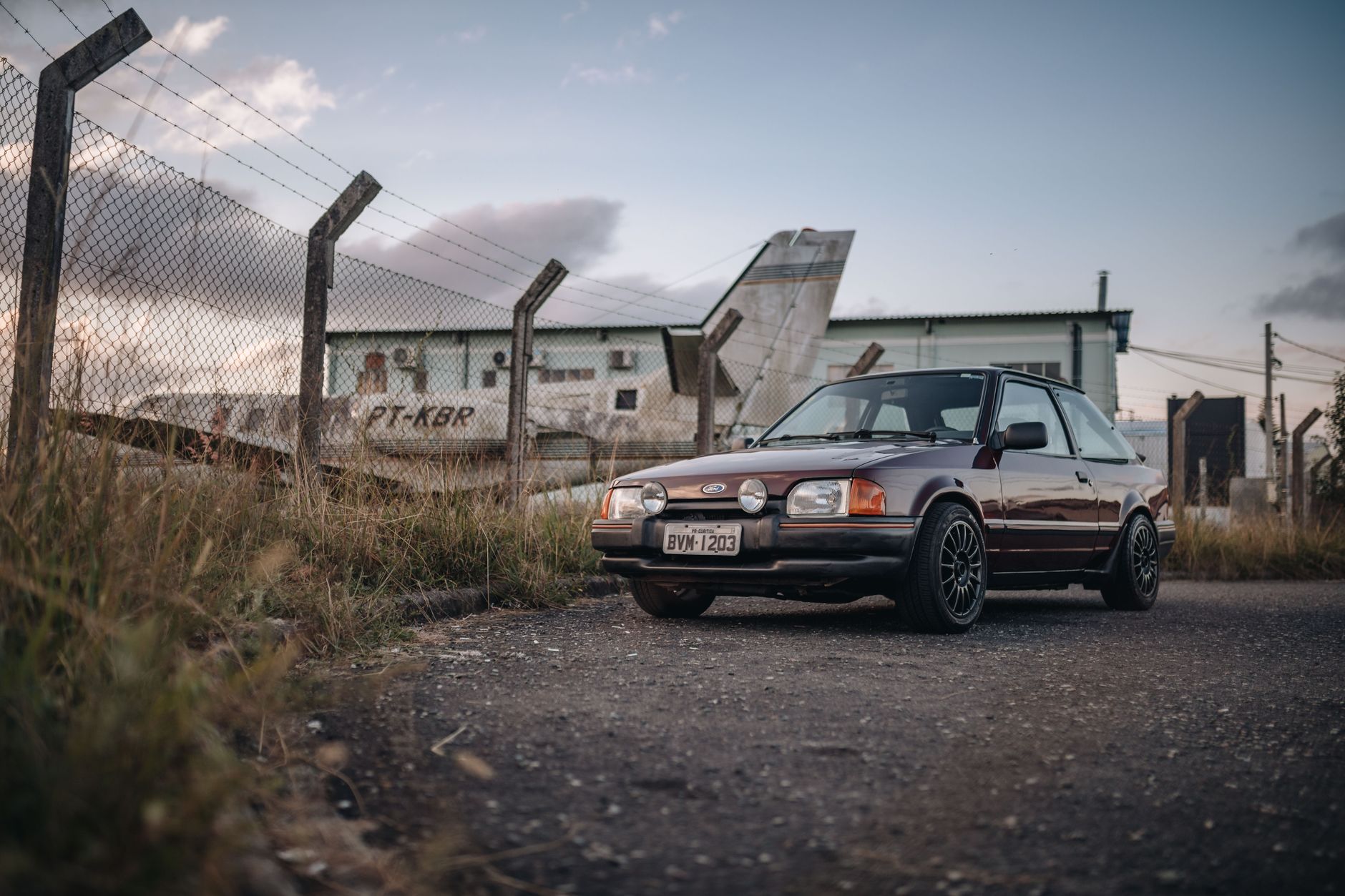
I’ve been to a handful of these spots over the past couple of years, and what strikes me every time is how different they are from a standard car meet in a retail car park. There’s a genuinely different energy. The space itself changes what people do with cars. You get rolling starts, you get drifting circles, you get people actually pushing their builds in ways you simply cannot do on a public road. And you get communities forming around those activities, communities that are, in most cases, trying hard to do this properly.
Which disused airfields are actually being used?
The UK has hundreds of former RAF and civilian airfields. According to the Historic England register, many of these sites carry some form of heritage designation, which complicates development and often leaves them in a permanent state of half-abandonment. That’s exactly the gap car culture has moved into.
Elvington Airfield near York is probably the most legitimate example, hosting organised track days and speed events with proper permits and marshalling. Further south, Turweston Aerodrome in Northamptonshire has been used for driving experiences. But the more interesting story is in the genuinely grey-area spots: places where the legal ownership is unclear, where access is technically private but the gates are open, and where groups of 50 to 200 cars regularly congregate on weekend nights without anyone having formally invited them.
The East Midlands has several of these. So does the East of England, where flat fenland airfields from the 1940s sit largely unused between harvest seasons. Parts of Wales and Scotland have similar spots, though they tend to attract smaller, tighter-knit groups rather than the large gatherings you see in more densely populated areas.
The legal grey area nobody wants to talk about plainly
Here’s where it gets genuinely murky. Using a private airfield without the landowner’s permission is trespass in England and Wales. Civil trespass, not criminal, which means the landowner can seek damages or an injunction but cannot simply have everyone arrested on the spot. That said, if driving activity causes damage to property or if there’s an obstruction of access routes, police can and do get involved under the Criminal Damage Act 1971 or roads legislation.
What makes abandoned UK airfields car culture complicated is that ownership of many sites is genuinely unclear. Some are owned by the Ministry of Defence, still, decades after operational use ended. Some have passed through multiple property developers. Some are owned by farming families who use the runways for crop storage during summer and simply don’t patrol the rest of the year. When there’s no obvious landowner to engage with, the community can’t seek permission even if it wants to.
I’d be lying if I said every meet at these sites is conducted responsibly. There are incidents. There have been crashes. One well-known fenland spot saw a serious collision in 2024 that put two people in hospital and prompted a sustained police operation against the site for several months. That’s the reality alongside the more photogenic stuff that ends up on Instagram.

How communities self-police (and where it falls apart)
The more established airfield communities do run a form of internal governance that’s worth taking seriously. The usual structure involves a core organising group, often operating through a closed Discord server or a private WhatsApp chain, who put out location details only to trusted members a few hours before a meet. This filters out the most chaotic elements and keeps numbers manageable.
At the better-run gatherings, there are self-appointed marshals who stand at entry points, agreed no-go zones around the site edges, and a clean-up crew that makes sure the location is left as found. Some groups have even established informal relationships with local landowners, not formal permission exactly, but a kind of tacit arrangement where the landowner turns a blind eye in exchange for the group keeping the site tidy and security-checking the access gate on the way out.
Where it falls apart is when social media exposure blows the lid off a previously contained spot. A viral video from a drone shoot can turn a 60-car private gathering into a 400-car public event within a fortnight. At that scale, the internal governance collapses. The organisers lose control, the site takes damage, and the police take notice. Several spots that were functioning well two or three years ago are now effectively finished because of exactly this cycle.
The cars themselves at these meets are often immaculate. I’ve seen builds that have clearly had serious money and care put into them, the sort of work you’d expect from a specialist like Custom Creations Detailing, sitting on cracked wartime concrete under a fenland sky. There’s a particular kind of beauty in that contrast, honestly.
Why councils and local authorities are starting to pay attention
Local councils have historically ignored airfield meets, partly because the sites sit outside their direct jurisdiction and partly because the meets happen at night and on private land. That’s changing. Several councils in the East Midlands and Yorkshire have flagged airfield gathering points in their road safety strategies for 2025 to 2027, and there have been calls for the government to clarify the legal position on community use of disused MoD land.
The more progressive angle, and I think this is genuinely worth watching, is that a handful of councils have started asking whether the demand could be met legally rather than suppressed. The model they’re looking at is similar to what some European countries have done: designated areas where enthusiast driving is permitted under a regulatory framework, with insurance requirements and safety standards attached. Whether that ever gets off the ground in the UK is another matter, given planning timescales and liability concerns, but the conversation is at least happening.
Rising fuel costs in 2026 have also changed the demographic of who’s showing up at these sites. Track days at proper circuits have become expensive, and for a lot of younger enthusiasts or those running modified everyday cars rather than dedicated track weapons, an airfield meet is the only realistic way to use a car the way it was built to be used. That economic reality makes the demand more robust and harder to simply police away.
What this actually means for UK car culture going forward
The airfield scene is a symptom of something the UK car community has needed to reckon with for a while: the legitimate outlets are too few, too expensive, and too regulated for the size of the community that exists. Track days are brilliant but they’re £150 to £300 minimum for a day, with the right tyres, the right car, and the right insurance sorted. That’s not accessible for most people who are passionate about driving.
The communities forming around these spaces are doing something genuinely interesting, building their own infrastructure, their own rules, their own identity. It’s messy and legally fraught and occasionally goes badly wrong. But the underlying impulse, people who love cars wanting space to use them and to be around others who feel the same way, is completely legitimate. The question is whether the UK’s planning system and local government have any appetite to meet that halfway before more sites get burned out by the viral exposure cycle.
My read is that the best airfield communities will survive by staying small and private. The ones that make it onto TikTok are probably already finished, they just don’t know it yet. If you’re part of one that’s working, the smartest thing you can do is keep it off social media. That’s not very 2026 advice, but it might be the only way to actually keep the space.