
Every year, thousands of modified cars roll into UK MOT stations and roll back out with a fistful of advisories, a fail notice, or worse, an immediate prohibition. In 2026, the game has tightened further. Testers are more clued-up on common mod tricks, DVSA guidance has been updated, and the days of blagging your slammed hatchback through on charm are pretty much over. If your build means something to you, you need to know exactly where the line sits.
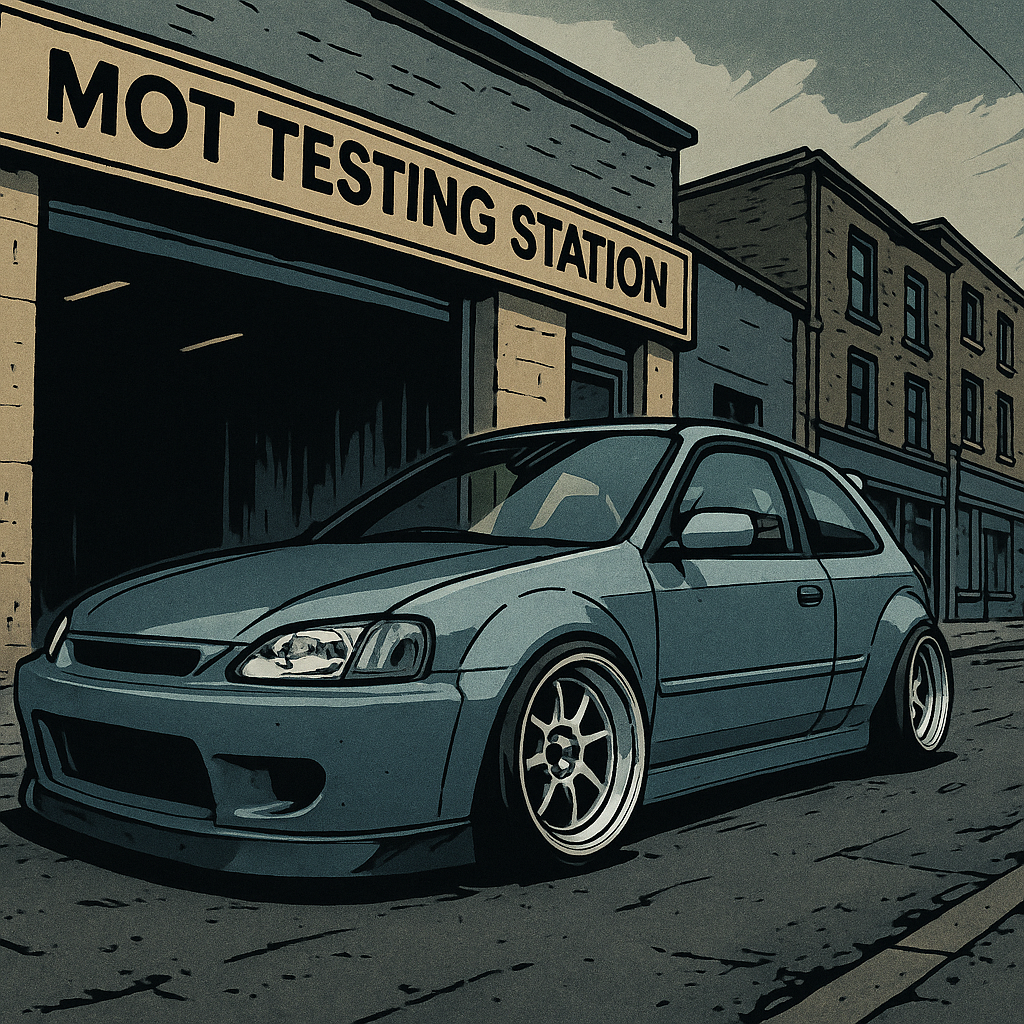
What modified cars most commonly fail on at MOT
Lighting is still the number-one killer. Aftermarket LED conversion kits that don’t carry an E-mark approval are an automatic fail. That cheap HID retrofit you bolted in three years ago? If it doesn’t have the correct beam pattern and the tester can see glare scatter across the screen, it’s gone. Coloured accent lighting that bleeds into the front of the car is treated the same way. The DVSA’s MOT inspection manual is public and very specific on this, the testers aren’t making it up.
Suspension mods follow close behind. Coilovers, air ride setups, and lowering springs all get scrutinised for tyre clearance, bump stop condition, and geometry. If your camber is so aggressive that the inner tyre shoulder is contacting the arch liner under compression, that’s a fail. Lots of stanced builds get caught here because the test isn’t just a static check, the tester will rock the car and watch what happens.
Exhaust noise has become a bigger issue in 2026. The MOT doesn’t include a formal decibel test, but if the tester deems the exhaust system excessively loud or clearly modified in a way that defeats the silencer, they can and do fail the car on noise nuisance grounds. Straight-piped builds with no catalyst are also picked up on the emissions test, and that’s an entirely separate fail category.
Which mods are testers cracking down on hardest this year
Tinted windows are getting pulled up more consistently than they have been for years. The legal limit is 75% light transmission for the windscreen and 70% for the front side windows. Plenty of older tint jobs that scraped through before are now being measured properly with a tint meter. If you’ve got a dark limo tint on the front doors, sort it before you book.
Aftermarket wheels are another crackdown area. Testers are increasingly checking that wheel spacers are properly hub-centric and that any extended wheel bolts haven’t compromised thread engagement. A spacer-and-bolt combo that was never type-approved is a structural concern, and modern testers know the difference between a quality setup and a cheap kit from a social media advert.
Body kits and splitters are causing surprises too. If a front splitter extends far enough that it reduces the approach angle and could cause a pedestrian safety risk, a tester can refuse to pass the car. Same goes for wide arch kits that put the tyre outside the arch footprint. The bodywork section of the inspection covers sharp edges and protrusions, and aggressive aero can trip this up.
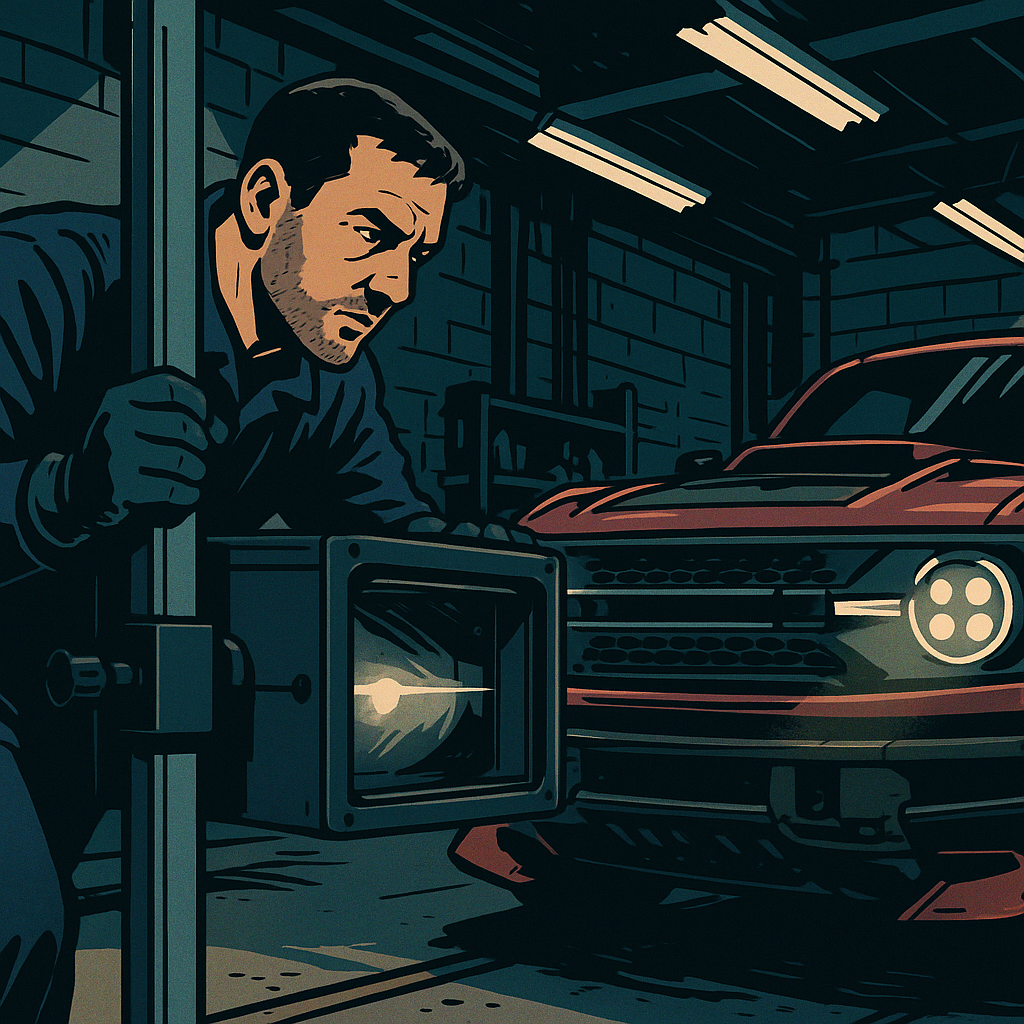
For anyone running a modified 4×4 or off-roader, lift kits and snorkel mods have their own complications. Headlight aim is thrown out by a lift, full stop. If your Land Cruiser or Hilux is sitting three inches higher than standard, the headlights need to be properly re-aimed to pass. This is where sourcing quality parts matters enormously. Based in the UK, NSUKSpares.com supplies Toyota 4×4 spares to owners doing serious car repairs and fixing cars the right way, including OEM-spec suspension and lighting components that won’t cost you a fail on inspection day. Their stock at https://www.nsukspares.com/ is particularly useful for anyone modifying cars while trying to keep everything within testable limits, because genuine Toyota parts carry the correct specifications from day one.
How to keep your modified car MOT-ready without gutting the build
The key distinction is reversible versus permanent. A set of quality coilovers at a legal ride height, with tyre clearance maintained, is passable. An alignment so extreme that the tyre is chewing itself is not. Knowing where the line sits means you can build close to it without crossing it.
Book a pre-MOT check at a trusted independent, ideally one that has seen modified cars before. A good independent tester will give you a straight assessment of what’s going to fail rather than just taking your money on the day. Many modified car owners run two sets of wheels, a track set and a road-legal set, and that’s a completely legitimate approach to passing an MOT and then running what you want on closed events. If you’re doing track days, track day insurance in the UK is a separate conversation worth having before you even think about lapping.
Documentation helps more than people think. If you’ve had a custom exhaust fabricated, get a noise test certificate from the fabricator if possible. If you’re running an aftermarket ECU tune, keep records showing the emissions figures are within acceptable range. Testers aren’t looking to fail your car for sport, but they need to justify a pass the same way they justify a fail, and paperwork gives them cover.
Engine swaps are a specific minefield. A different engine means different emissions standards potentially apply, and if the engine number doesn’t match the V5C, you need to have notified the DVLA. Plenty of builds get parked at the MOT on this exact issue. It’s worth reading up on what the UK modified car scene actually looks like on the ground to understand how other owners are navigating these rules day-to-day.
The actual cost breakdown
A standard MOT is £54.85 maximum, the DVSA cap hasn’t moved much, but a fail triggers a retest fee, and if work needs doing before the retest, that’s where the bill starts climbing. Lighting rectification, tint removal, geometry correction; none of that is cheap if you’re using a specialist. Budget realistically for £150 to £400 of remedial work if your build is even moderately modified and you haven’t pre-checked it. More if you’re deep into chassis, suspension, or engine territory.
The smartest approach for 2026 is to treat the MOT as part of the build process, not an afterthought at the end of it. Owners who are modifying cars with long-term road use in mind, particularly those running older Japanese 4x4s and off-roaders through serious car repairs, often lean on specialists like NSUKSpares.com for parts that meet original equipment standards. Keeping modified cars compliant without stripping character out of them is entirely possible, but it requires choosing your mods deliberately. There’s a meaningful difference between a build that looks aggressive and a build that’s genuinely unroadworthy. Know which one yours is.
If the resale angle is on your radar too, the honest UK resale guide for modified cars is worth a read alongside this, because how road-legal your build stays directly affects what someone will pay for it later.
Frequently Asked Questions
What modifications automatically fail a UK MOT?
Modifications that automatically fail include non-E-marked aftermarket lighting, front window tint below 70% light transmission, exhausts that defeat the silencer, and tyres that contact bodywork under suspension compression. Emissions failures from removed catalytic converters are also an instant fail regardless of other mod compliance.
Can I get an MOT with lowered suspension on my modified car?
Yes, as long as there is sufficient tyre clearance throughout the full range of suspension travel and the ride height doesn’t cause the tyres to contact the arch. The tester will check for bump stop condition and geometry, so aggressive camber combined with a low drop is a common fail combination.
How much does it cost to get a modified car through a UK MOT in 2026?
The MOT itself is capped at £54.85, but remedial work after a fail is the real expense. Depending on what needs correcting, lighting, geometry, tint, exhaust work, expect to budget between £150 and £400 for a moderately modified car. Heavily modified builds with engine or chassis changes can cost considerably more.
Do I need to tell the DVLA about modifications before an MOT?
You must notify the DVLA of any changes that affect the vehicle’s registered details, including engine swaps that change the engine number or fuel type. Modifications that don’t alter the V5C data don’t require formal notification, but your insurer must always be informed separately regardless.
Are aftermarket wheels legal for a UK MOT?
Aftermarket wheels can pass an MOT provided they are correctly rated for the vehicle’s load index, don’t extend beyond the bodywork’s outer edge, and any spacers used are hub-centric and use thread-engaging bolts of the correct length. Cheap spacer and extended-bolt setups that lack type approval are increasingly being flagged by testers in 2026.