
Something seriously interesting is happening at UK car meets right now, and it’s not just slammed Civics and widebody Silvias turning heads. Parked up alongside the usual suspects, you’ll increasingly spot a different kind of build altogether: a converted Transit, a gutted Sprinter, or a classic VW T4 that’s been reimagined from the bare metal up. Van life car culture in the UK has collided with the petrolhead scene in a way nobody quite predicted, and the results are genuinely stunning.
This isn’t your mate’s dodgy mattress-in-the-back camping setup. These are crafted, obsessed-over rigs with custom joinery, full mobile kitchens, and exterior detailing that’d embarrass a show car. The overlap between van builders and car enthusiasts makes total sense when you think about it: both communities are obsessed with fabrication, personalisation, and making something that reflects exactly who you are.
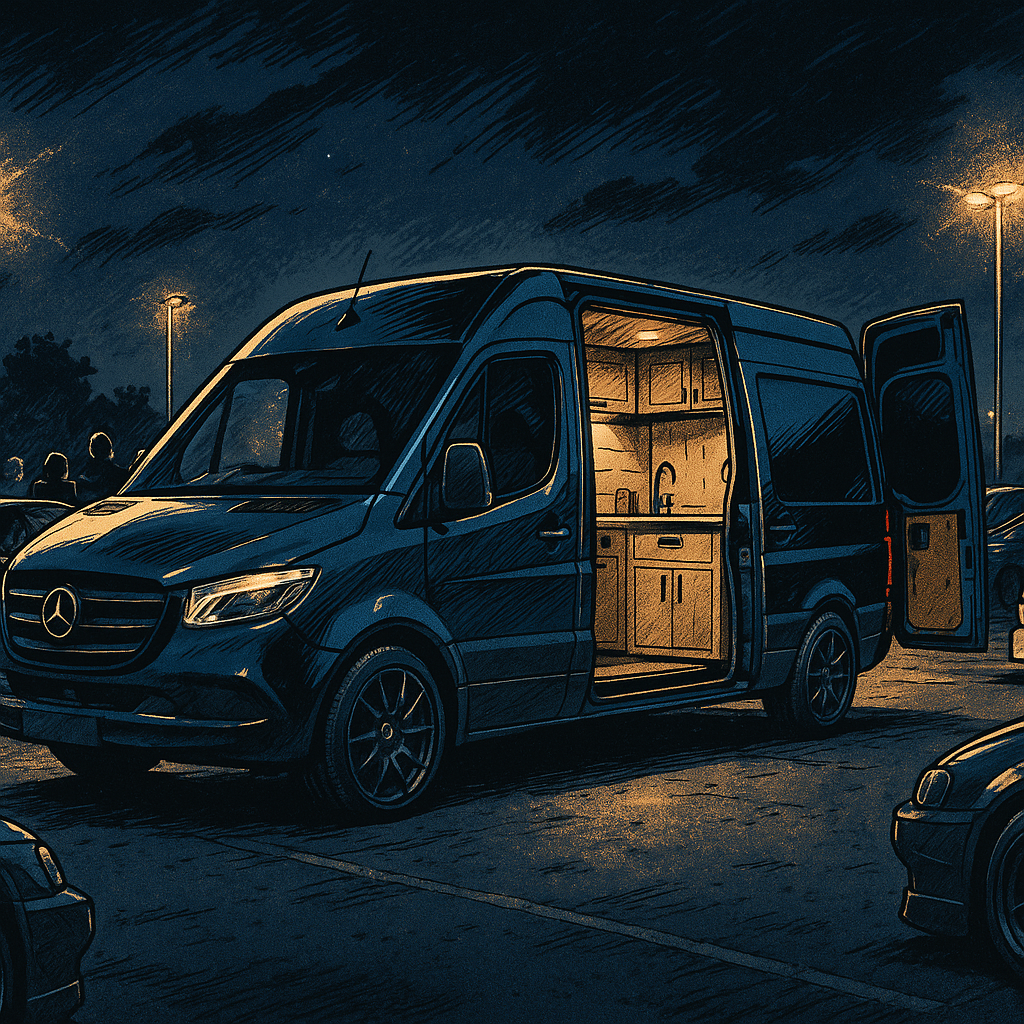
What Van Life Car Culture Actually Looks Like at UK Meets in 2026
Head to any of the bigger gatherings this year, from Players Classic to Japfest or the ever-growing grassroots meets that pop up in industrial estates from Bristol to Bradford, and you’ll spot the crossover in full effect. Builders are turning up in their converted vans, using them as both the vehicle on display and the command centre for the day. Some arrive with full espresso setups. Others are rolling in with actual griddle stations, smoking out proper smash burgers or Korean BBQ whilst everyone else is queuing for a lukewarm pasty from the event catering.
The builds vary massively. On the more raw end, you’ve got Transit Customs with stripped interiors, colour-matched exteriors done in matte finishes, and minimal kitchens: a two-burner butane hob, a 12V fridge under a folding counter. Functional, clean, proper. Then there are the prestige builds that genuinely take your breath away. Think walnut veneer cabinetry, recessed LED lighting, induction hobs fed from a lithium battery setup, and rooftop awnings with their own fairy-light rigs. Some of these vans cost more to convert than the car parked next to them did off the forecourt.
The Mobile Kitchen Setups People Are Actually Running
Food is a massive part of this scene, and that’s what separates van life car culture from the standard camping crowd. These builders aren’t throwing tinned beans on a camping stove. The setups are legit. A few trends have emerged across the builds spotted at meets throughout 2025 and into 2026.
Flat-top griddles are everywhere. Whether it’s a portable Camp Chef or a custom-fabricated unit bolted to a fold-out rear shelf, the smash burger craze has absolutely infiltrated van builds. You’ll find people pressing patties at 7am in a layby off the A303 and it feels completely normal in this crowd. Alongside that, proper espresso machines fed by 12V inverters have become a flex in their own right. A Gaggia or Delonghi unit quietly whirring away inside a converted LDV Maxus is a statement as much as it is a convenience.
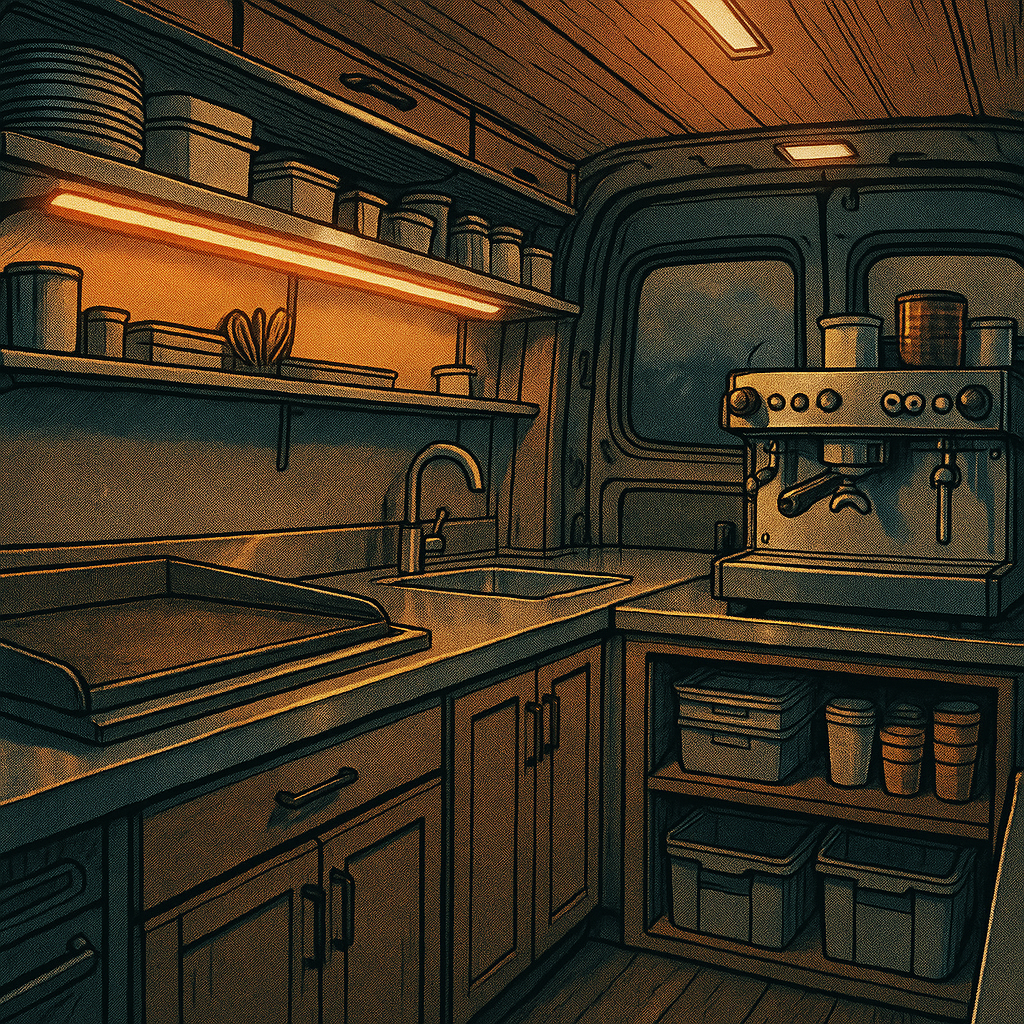
Outdoor kitchen setups are getting increasingly sophisticated. Builders are taking cues from the overlanding world, fitting pull-out kitchen drawers to the back of their vans with integrated prep areas, spice racks, and even compact sinks plumbed into underslung water tanks. Some of the more elaborate Ford Transit builds we’ve spotted are running setups that’d shame a small restaurant kitchen, just folded neatly into a 3.5-tonne panel van.
How This Scene Differs From Bog-Standard Weekend Camping
The honest answer? Completely. The UK’s weekend camping scene is fine, genuinely, but it exists in a totally different headspace. A Friday night at a campsite near the Peak District with a tent, a cool box, and a bag of coal is a perfectly good time. But van life car culture operates on a different frequency entirely.
First, the community. These people care deeply about craft. They talk about panel work the same way they talk about slow-cooked brisket: with obsessive attention to detail and strong opinions about the right way to do it. The crossover with car meet culture means you’re surrounded by people who’ve also spent months sourcing the right wheels for their daily or fabricating a custom exhaust. The mentality is identical. It’s all about building something that didn’t exist before and making it yours.
Second, the vans themselves are often the centrepiece, not just the transport. Unlike camping, where the car is just the thing that got you there, in van life car culture the vehicle IS the destination. People walk around builds, ask questions, take photos. There’s genuine appreciation for the work that went in. A properly executed Sprinter conversion generates the same kind of crowd as a well-built track car.
It’s also worth noting the practical side. According to GOV.UK vehicle approval guidance, certain van conversions require specific compliance checks depending on how the vehicle is classified and used, particularly if commercial use changes to personal. Smart builders in this scene know their paperwork as well as they know their joinery.
The Builds We Can’t Stop Thinking About
A few standout rigs have been doing the rounds on UK social media and at events this year. One widely shared Mercedes-Benz Sprinter build out of Manchester features a full rear kitchen with a stainless steel prep surface, overhead storage finished in black powder-coated mild steel, and a retractable awning canopy on the offside. The exterior is wrapped in a deep midnight blue with satin black alloys. It drives to track days, parks up, and feeds everyone in the paddock. Genius.
Down south, a VW Crafter conversion doing the rounds on the Surrey and Kent meet circuit is running what can only be described as a proper teppanyaki setup via a built-in flat-top griddle and a custom ventilation hood that folds away when driving. The owner, who also races in club-level sprints at Goodwood, wears motorsport helmets on the circuit and cooks yakitori skewers from the back of his van at the after-party. That’s the energy of this whole scene in one image.
Why 2026 Feels Like a Turning Point for Van Life Car Culture
There’s a real momentum building. The cost of living squeeze has pushed more people toward self-sufficiency on road trips rather than booking hotels or eating at service stations. Simultaneously, the fabrication skills within the UK car mod community have never been higher, with more independent builders and conversion specialists emerging across the country. The two things colliding feels inevitable in hindsight.
Social media has played its part too. Builds that would’ve stayed local five years ago are now picking up tens of thousands of views on Instagram reels and TikTok. That exposure has created demand, and demand has pushed the quality of builds to a genuinely impressive level. What started as a niche crossover is starting to feel like its own distinct subculture within the wider UK car scene. And honestly? It might be producing some of the most creative, practical, and personality-driven builds we’ve ever seen.
The van conversion trend isn’t going anywhere. If anything, it’s just getting started.
Frequently Asked Questions
How much does a van conversion cost in the UK?
A basic van conversion for weekend use can cost anywhere from £3,000 to £8,000 for materials and labour if you’re doing elements yourself. Full premium builds with lithium battery systems, bespoke joinery, and proper kitchen setups regularly hit £20,000 to £40,000 or more depending on the base vehicle and spec.
What vans are most popular for car culture conversions in the UK?
The Mercedes-Benz Sprinter and Ford Transit are the most common choices thanks to their size, parts availability, and strong resale value. VW Transporters remain hugely popular in the car meet scene for their aesthetic credibility, whilst the Ford Transit Custom suits builders wanting a slightly more nimble rig.
Do you need planning permission or approval to convert a van in the UK?
You don’t need planning permission, but there are legal considerations around vehicle classification and insurance. If you change a commercial vehicle to a motor caravan, you may need to re-register it with the DVLA and ensure it meets relevant standards. GOV.UK has clear guidance on vehicle approval and reclassification.
Can you cook proper food in a converted van at a car meet?
Absolutely, and that’s half the point. Many van life car culture builds run full flat-top griddles, espresso machines, and even outdoor kitchen pull-out systems fed by 12V lithium setups. The quality of food coming out of the better builds rivals small food stalls at proper events.
Where can I see van conversions at UK car meets?
Events like Players Classic, Japfest, and various grassroots meets across England and Scotland regularly attract van builds alongside modified cars. Following UK car culture Instagram pages and Facebook groups is the best way to find local meet dates where converted vans are likely to show up.