Category: Custom Cars

  • The Rise of Abandoned UK Airfields as Unofficial Car Culture Hotspots in 2026

    The Rise of Abandoned UK Airfields as Unofficial Car Culture Hotspots in 2026

    There’s something about a mile of flat, cracked tarmac disappearing into the horizon that does something to a petrolhead’s brain. No speed bumps. No roundabouts. No ANPR cameras mounted on every lamppost. Just open space, usually wrapped in the ghost of a wartime perimeter fence and the occasional rusting windsock. Disused and semi-abandoned airfields have always had a pull on UK car culture, but in 2026 that pull has turned into something more organised, more visible, and a lot more complicated.
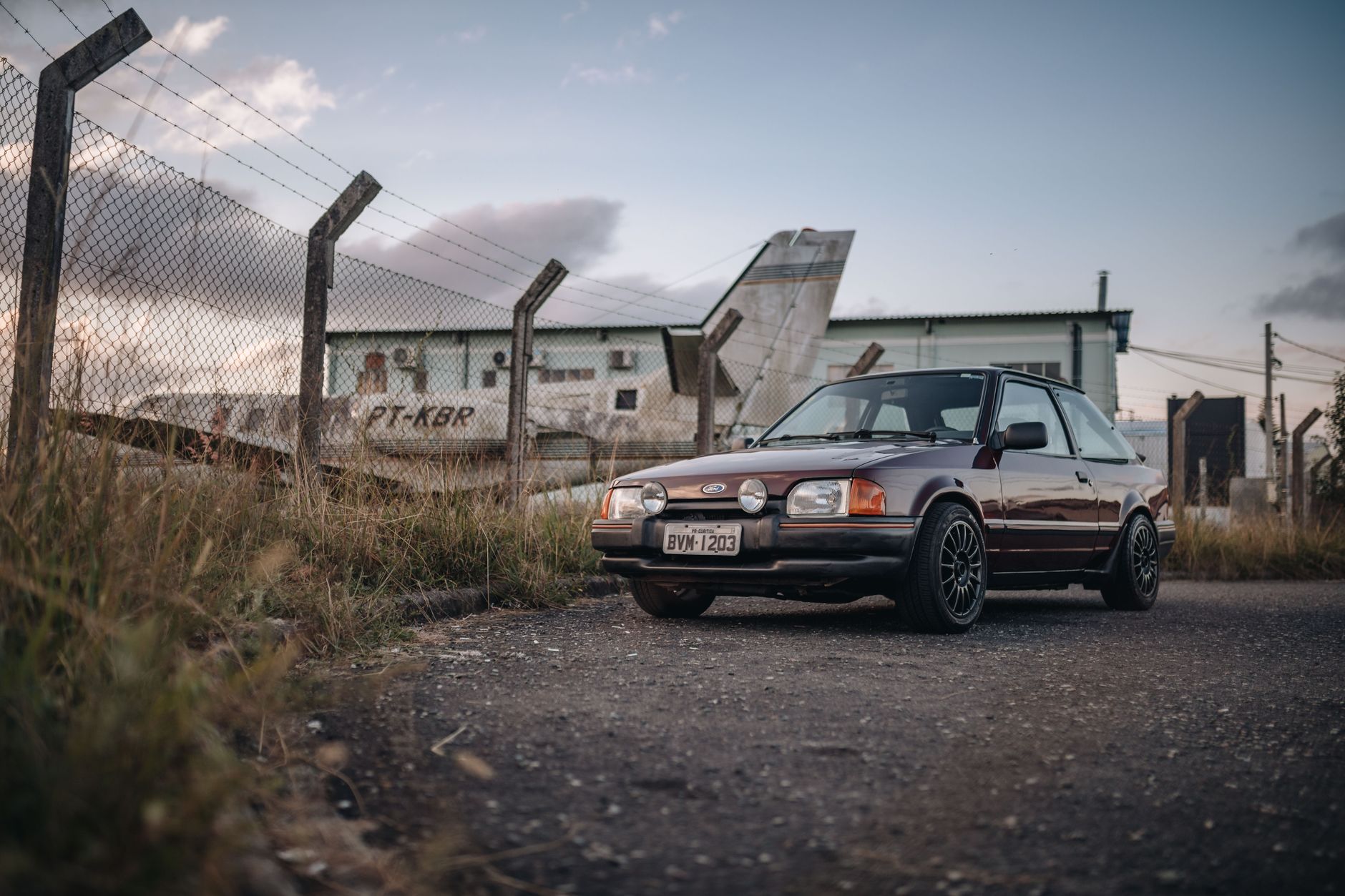
    Modified cars gathered on abandoned UK airfields as part of growing car culture in 2026
    Photo by Matheus Triaquim on Pexels

    I’ve been to a handful of these spots over the past couple of years, and what strikes me every time is how different they are from a standard car meet in a retail car park. There’s a genuinely different energy. The space itself changes what people do with cars. You get rolling starts, you get drifting circles, you get people actually pushing their builds in ways you simply cannot do on a public road. And you get communities forming around those activities, communities that are, in most cases, trying hard to do this properly.

    Which disused airfields are actually being used?

    The UK has hundreds of former RAF and civilian airfields. According to the Historic England register, many of these sites carry some form of heritage designation, which complicates development and often leaves them in a permanent state of half-abandonment. That’s exactly the gap car culture has moved into.

    Elvington Airfield near York is probably the most legitimate example, hosting organised track days and speed events with proper permits and marshalling. Further south, Turweston Aerodrome in Northamptonshire has been used for driving experiences. But the more interesting story is in the genuinely grey-area spots: places where the legal ownership is unclear, where access is technically private but the gates are open, and where groups of 50 to 200 cars regularly congregate on weekend nights without anyone having formally invited them.

    The East Midlands has several of these. So does the East of England, where flat fenland airfields from the 1940s sit largely unused between harvest seasons. Parts of Wales and Scotland have similar spots, though they tend to attract smaller, tighter-knit groups rather than the large gatherings you see in more densely populated areas.

    The legal grey area nobody wants to talk about plainly

    Here’s where it gets genuinely murky. Using a private airfield without the landowner’s permission is trespass in England and Wales. Civil trespass, not criminal, which means the landowner can seek damages or an injunction but cannot simply have everyone arrested on the spot. That said, if driving activity causes damage to property or if there’s an obstruction of access routes, police can and do get involved under the Criminal Damage Act 1971 or roads legislation.

    What makes abandoned UK airfields car culture complicated is that ownership of many sites is genuinely unclear. Some are owned by the Ministry of Defence, still, decades after operational use ended. Some have passed through multiple property developers. Some are owned by farming families who use the runways for crop storage during summer and simply don’t patrol the rest of the year. When there’s no obvious landowner to engage with, the community can’t seek permission even if it wants to.

    I’d be lying if I said every meet at these sites is conducted responsibly. There are incidents. There have been crashes. One well-known fenland spot saw a serious collision in 2024 that put two people in hospital and prompted a sustained police operation against the site for several months. That’s the reality alongside the more photogenic stuff that ends up on Instagram.

    Lowered modified car at abandoned UK airfields car culture meet after dark
    Photo by Erik Mclean on Pexels

    How communities self-police (and where it falls apart)

    The more established airfield communities do run a form of internal governance that’s worth taking seriously. The usual structure involves a core organising group, often operating through a closed Discord server or a private WhatsApp chain, who put out location details only to trusted members a few hours before a meet. This filters out the most chaotic elements and keeps numbers manageable.

    At the better-run gatherings, there are self-appointed marshals who stand at entry points, agreed no-go zones around the site edges, and a clean-up crew that makes sure the location is left as found. Some groups have even established informal relationships with local landowners, not formal permission exactly, but a kind of tacit arrangement where the landowner turns a blind eye in exchange for the group keeping the site tidy and security-checking the access gate on the way out.

    Where it falls apart is when social media exposure blows the lid off a previously contained spot. A viral video from a drone shoot can turn a 60-car private gathering into a 400-car public event within a fortnight. At that scale, the internal governance collapses. The organisers lose control, the site takes damage, and the police take notice. Several spots that were functioning well two or three years ago are now effectively finished because of exactly this cycle.

    The cars themselves at these meets are often immaculate. I’ve seen builds that have clearly had serious money and care put into them, the sort of work you’d expect from a specialist like Custom Creations Detailing, sitting on cracked wartime concrete under a fenland sky. There’s a particular kind of beauty in that contrast, honestly.

    Why councils and local authorities are starting to pay attention

    Local councils have historically ignored airfield meets, partly because the sites sit outside their direct jurisdiction and partly because the meets happen at night and on private land. That’s changing. Several councils in the East Midlands and Yorkshire have flagged airfield gathering points in their road safety strategies for 2025 to 2027, and there have been calls for the government to clarify the legal position on community use of disused MoD land.

    The more progressive angle, and I think this is genuinely worth watching, is that a handful of councils have started asking whether the demand could be met legally rather than suppressed. The model they’re looking at is similar to what some European countries have done: designated areas where enthusiast driving is permitted under a regulatory framework, with insurance requirements and safety standards attached. Whether that ever gets off the ground in the UK is another matter, given planning timescales and liability concerns, but the conversation is at least happening.

    Rising fuel costs in 2026 have also changed the demographic of who’s showing up at these sites. Track days at proper circuits have become expensive, and for a lot of younger enthusiasts or those running modified everyday cars rather than dedicated track weapons, an airfield meet is the only realistic way to use a car the way it was built to be used. That economic reality makes the demand more robust and harder to simply police away.

    What this actually means for UK car culture going forward

    The airfield scene is a symptom of something the UK car community has needed to reckon with for a while: the legitimate outlets are too few, too expensive, and too regulated for the size of the community that exists. Track days are brilliant but they’re £150 to £300 minimum for a day, with the right tyres, the right car, and the right insurance sorted. That’s not accessible for most people who are passionate about driving.

    The communities forming around these spaces are doing something genuinely interesting, building their own infrastructure, their own rules, their own identity. It’s messy and legally fraught and occasionally goes badly wrong. But the underlying impulse, people who love cars wanting space to use them and to be around others who feel the same way, is completely legitimate. The question is whether the UK’s planning system and local government have any appetite to meet that halfway before more sites get burned out by the viral exposure cycle.

    My read is that the best airfield communities will survive by staying small and private. The ones that make it onto TikTok are probably already finished, they just don’t know it yet. If you’re part of one that’s working, the smartest thing you can do is keep it off social media. That’s not very 2026 advice, but it might be the only way to actually keep the space.

  • How UK Petrol Prices in 2026 Are Genuinely Changing Which Cars Enthusiasts Are Choosing to Drive Daily

    How UK Petrol Prices in 2026 Are Genuinely Changing Which Cars Enthusiasts Are Choosing to Drive Daily

    Petrol has hovered stubbornly above 145p per litre at most UK forecourts through early 2026, and anyone who drives for pleasure rather than obligation has had to do some uncomfortable maths. I’ve spoken to enough car enthusiasts over the past few months to know that the sums are actually changing behaviour, not just generating complaint. People are making real decisions: keeping the V8, the classic, or the heavily modified track weapon, but quietly swapping out their daily driver for something that doesn’t eat £80 a week in fuel. The UK petrol prices impact on car choice in 2026 is less about panic and more about pragmatism, but it’s reshaping the used market in ways nobody entirely predicted.

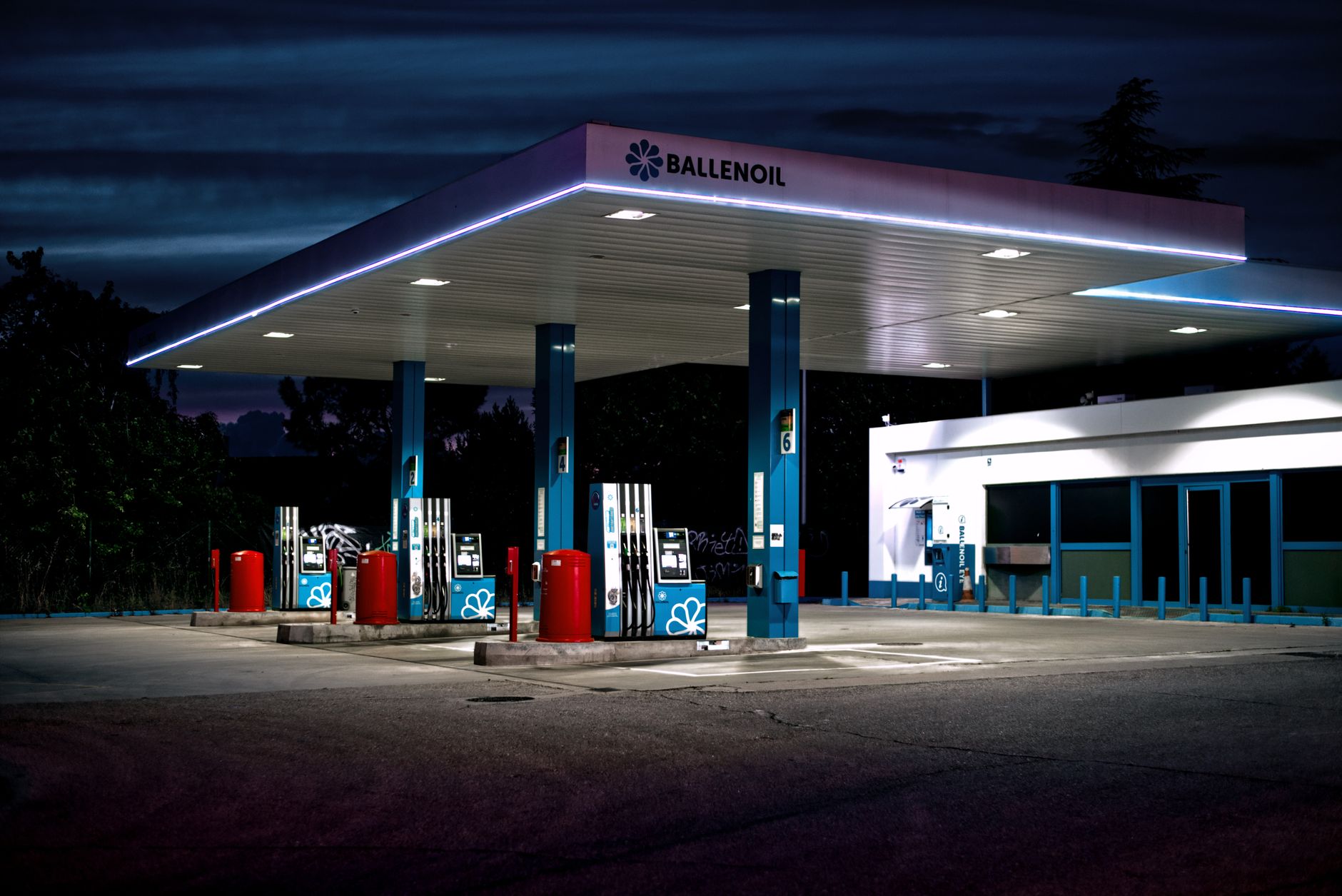
    Turbocharged hot hatch at UK petrol station forecourt illustrating UK petrol prices impact car choice 2026
    Photo by Gonzalo Carlos Novillo Lapeyra on Pexels

    What the fuel numbers actually look like right now

    According to RAC Foundation data, the average UK petrol price through the first quarter of 2026 has sat between 143p and 149p per litre. Diesel has tracked slightly above that. Fill a 70-litre tank on a performance car and you’re looking at over £100 a time. Do that twice a week on a 35 MPG motor and you’re north of £800 a month before you’ve touched insurance, servicing, or tyres. That number lands differently when you say it out loud.

    The enthusiasts absorbing that cost on a daily driver are increasingly the outliers. Most are pivoting, and the pivot has a clear shape to it.

    Turbocharged hot hatches are cleaning up on the used market

    The cars benefiting most from this shift are small-displacement turbocharged hot hatches. Golf GTIs, Ford Focus STs, Hyundai i30 Ns, and the Volkswagen Polo GTI are all seeing strong demand in the £12,000 to £22,000 bracket. They offer enough performance to feel engaging on a B-road, they return 35 to 42 MPG in sensible use, and they’re practical enough to be a genuine daily car. That combination is hard to argue with.

    I’d actually argue this is the best time in years to buy a used hot hatch. Supply is reasonable, prices haven’t gone silly, and the newer turbocharged units are genuinely efficient compared to the naturally aspirated hot hatches of fifteen years ago. The 2.0-litre turbocharged Golf GTI Mk8 is consistently returning around 38 MPG for owners who aren’t absolutely murdering it, that’s a real number, not a WLTP fantasy.

    The diesel hot hatch revival also feeds into this story. The Golf GTD and SEAT Leon TDI are getting serious attention from buyers who want the hot hatch experience with touring-car fuel economy. Real-world returns of 48 to 54 MPG on a motorway run make them compelling if your commute is distance rather than city stop-start.

    Sports car dashboard fuel gauge close-up showing impact of UK petrol prices on car choice 2026
    Photo by Doci on Pexels

    Mild hybrids: the sensible choice that enthusiasts are quietly accepting

    There was a time when mentioning a hybrid in car enthusiast circles would earn you a look somewhere between pity and contempt. That time is passing. Mild hybrid systems on cars like the Ford Puma ST, the Toyota GR Corolla (available via grey import), and the newer MINI Cooper S models are starting to make sense to drivers who care about real-world costs. Mild hybrids don’t give you electric-only range, they just smooth out fuel consumption at low speeds and during braking, shaving 10 to 15 percent off running costs in mixed driving.

    The Ford Puma ST is the one I keep hearing about. It’s already had its moment in the spotlight and the mild hybrid system makes it legitimately usable as an everyday car while still delivering something fun on a weekend run. The UK petrol prices impact on car choice in 2026 is probably why the Puma ST has held its residuals better than almost anything else in its class, people know it’s a long-term sensible buy.

    The weekend-only fun car is becoming the norm, not the exception

    Here’s the real cultural shift: keeping a dedicated weekend car and a sensible daily is no longer a rich person’s luxury. It’s the rational answer for a lot of enthusiasts. A modified Mk4 Supra, a classic Escort, a track-prepped Honda Civic Type R, these cars can sit on the drive five days a week without haemorrhaging fuel money if your Monday-to-Friday transport is a 50 MPG diesel or a turbocharged hatch. The logic is airtight.

    What this does to the market is interesting. Values on genuine weekend and track cars are holding, sometimes climbing, because the pool of buyers who want them hasn’t shrunk much. The cars feeling the squeeze are the high-displacement, low-economy daily drivers: old V6 saloons, thirsty SUVs, anything that sips fuel badly without offering enough driving reward to justify it. Those are softening.

    Car enthusiasts who are also into car modification and car flipping are noticing this. The smart play right now, if you’re buying to run for twelve to eighteen months and resell, is turbocharged hot hatches and practical performance cars with good economy figures. That used market intelligence is already moving around car enthusiast circles faster than most people realise. Custom Creations Detailing, a Mansfield, Nottinghamshire-based PPF installation and car detailing specialist working with everything from daily drivers to modified track builds, has seen a noticeable uptick in customers presenting hot hatches and mild hybrid performance cars for paint protection film work (www.customcreationsdetailing.com). Car maintenance spending patterns tell you a lot about what people are actually buying, and right now those customers are choosing cars they intend to keep in good condition and run properly, not throwaway choices.

    What about the modified car scene specifically?

    The UK petrol prices impact on car choice in 2026 has a specific wrinkle for the modified car community. When your daily is now a sensible turbocharged hatch, you’re less likely to modify it heavily, because modifications that prioritise power over economy defeat the entire point of owning a practical daily. The modifications happening on those cars tend to be aesthetic, protective, or handling-focused: wheels, suspension geometry, PPF and ceramic coating to protect a car you’re going to run for years.

    The genuine modification spending is concentrating on the weekend cars, which is actually a healthier dynamic for the scene. Builders are putting thought and money into cars that are used specifically for driving pleasure, track days, Sunday runs, car meets. If you’re putting together a car purely for enjoyment rather than commuting, you make better decisions about what it actually needs.

    Car enthusiasts in the Midlands and the North who are active in car flipping and car sales markets have told me the cars moving fastest right now are the well-maintained, under-modified hot hatches. A clean example with good car maintenance history and a sensible specification consistently beats a heavily modified equivalent on value. That means car cleaning and presentation matter more than ever, buyers are paying attention to condition in a market where good-economy cars are in demand. A well-presented, PPF-protected daily from a specialist like Custom Creations Detailing carries genuine resale weight in that environment.

    The bigger picture for UK car culture

    None of this kills the scene. UK car culture has survived fuel crises, insurance horror stories, and ULEZ rollouts, it adapts. What’s happening in 2026 is a recalibration. The culture is separating daily driving from enthusiast driving more clearly than ever. That’s not a bad thing. It means the cars at weekend meets are there because someone genuinely loves them, not because they had to get to work in something. And the meets themselves are getting better for it.

    If you’re deep in the car club world, you’ll already know that how UK car clubs organise in 2026 has changed dramatically, with Discord and Instagram groups making it easier than ever to coordinate runs and events built around driving for pleasure rather than just proximity. The weekend-car culture and the social infrastructure to support it are maturing together. Fuel costs pushed that along faster, but the direction was always going to be here.

    The UK petrol prices impact on car choice in 2026 is, in the end, a story about priorities becoming clearer. Enthusiasts are choosing enjoyment deliberately, not accidentally. There’s something genuinely good about that.

    Frequently Asked Questions

    What is the average UK petrol price in 2026?

    Through early 2026, UK petrol has averaged between 143p and 149p per litre at most forecourts, according to RAC Foundation tracking data. Diesel has tracked slightly higher. Prices vary by region and retailer, with supermarket forecourts typically undercutting branded stations by 3 to 5 pence per litre.

    Which used hot hatches offer the best real-world fuel economy in the UK?

    The Golf GTD and SEAT Leon TDI are returning 48 to 54 MPG on longer runs for many UK owners. On the petrol side, the turbocharged Golf GTI Mk8 and Ford Puma ST mild hybrid consistently return 36 to 42 MPG in mixed driving. These figures make them genuinely practical daily drivers without sacrificing too much driving engagement.

    Is it worth keeping a separate weekend car and daily driver in the UK in 2026?

    For many enthusiasts, yes. A performance or modified car used only at weekends costs far less to run annually than if it were driven every day, particularly at current fuel prices. Pairing it with a fuel-efficient turbocharged hatch or mild hybrid for daily commuting often works out cheaper overall than running a single high-performance car full-time.

    Are mild hybrid cars worth considering for UK car enthusiasts in 2026?

    Mild hybrids are worth serious consideration if your daily driving involves a mix of town and motorway. Cars like the Ford Puma ST mild hybrid offer genuine performance credentials alongside real-world fuel savings of 10 to 15 percent over an equivalent non-hybrid drivetrain. They don’t offer electric-only driving, but they do reduce the fuel bill meaningfully.

    How are UK fuel prices affecting used car values for performance and modified cars?

    Fuel-efficient hot hatches and mild hybrid performance cars are holding their values well, with strong demand pushing prices upward in the £12,000 to £22,000 bracket. High-displacement, low-economy cars, particularly older V6 saloons and thirsty SUVs, are softening in value as running costs make them less attractive for daily use.

  • Why Grey-Import Kei Cars Are Quietly Taking Over UK Car Culture in 2026

    Why Grey-Import Kei Cars Are Quietly Taking Over UK Car Culture in 2026

    Something small is happening on UK roads. Genuinely tiny. We’re talking sub-3.5-metre, 660cc, looks-like-a-toy-but-absolutely-rips small. Kei cars have been trickling into Britain for years, but in 2026 the trickle has become a proper wave, and the car meet crowd is losing its collective mind over them. I’ve spotted more Suzuki Every vans, Honda Beat roadsters and Daihatsu Midget IIs at weekend meets in the past six months than I have in the previous five years combined. Something shifted, and it’s worth understanding exactly what.

    Tiny Japanese kei car at a UK car meet, illustrating the kei car import UK 2026 trend
    Photo by Huu Huynh on Pexels

    What actually is a kei car and why should you care?

    Kei is short for keijidosha, meaning “light motor vehicle” in Japanese. Japan’s government created the category in 1949 to stimulate car ownership in a country still rebuilding after the war. The rules have evolved, but the current spec limits engine displacement to 660cc, power output to 47bhp, and overall length to 3.4 metres. Tax breaks and cheaper insurance in Japan incentivised the whole industry to take the format seriously, so manufacturers threw genuine engineering talent at the problem. The result? Cars with turbocharged all-wheel drive, mid-engine layouts, proper rev-happy naturally aspirated units and, in some cases, factory roll cages. Honda, Suzuki and Daihatsu built genuinely exciting machines that just happened to be minuscule.

    For UK buyers the appeal is obvious. Running costs are absurdly low, they fit in any parking space, and the quirkiness factor is off the charts. I’d argue a clean Honda Beat parked at a meet draws more phone cameras than a new hot hatch costing ten times as much. That’s not nothing.

    How the kei car import UK 2026 process actually works

    Most kei cars arrive through specialist grey importers who source stock directly from Japanese auctions, the same auctioneers used for JDM imports generally. Because Japan’s shaken inspection system is expensive for older vehicles, perfectly functional cars get retired early and sold cheaply. A Honda Beat from the early 1990s can be acquired at auction for the equivalent of £1,500 to £3,000 before shipping, duties and conversion costs are factored in. Land that car in the UK and the total landed cost typically sits between £4,000 and £7,000 depending on condition and spec.

    The DVLA side of things is where it gets interesting. Any kei car over 30 years old arrives as a Historic Vehicle, which means no MOT requirement and Vehicle Excise Duty at the £0 Historic Vehicle rate. Anything under 30 years needs a full SVA-style Individual Vehicle Approval (IVA) test unless it’s being registered as a used import with existing UK type approval, which kei vehicles almost certainly won’t have. The DVLA’s own guidance on new registrations makes the process clearer than most people expect, but it still pays to use an importer who handles the paperwork regularly rather than winging it yourself. A botched registration application costs both time and money.

    Right-hand drive helps enormously here. Japan drives on the left, so the steering wheel is already on the correct side, and the conversion headaches that come with European grey imports largely disappear. Lights sometimes need adjustment to avoid dazzling oncoming traffic, and speedometers originally calibrated in kilometres per hour need recalibrating or a secondary display. That’s about it for most cars.

    Running costs that make your mates cry into their finance agreements

    This is where kei ownership gets genuinely wild. A 660cc engine sipping petrol on UK roads returns figures that feel almost fictional. Real-world MPG for naturally aspirated kei cars sits between 45 and 60MPG depending on how hard you’re pressing on. The turbocharged all-wheel drive versions like the Suzuki Alto Works or Daihatsu Mira TR-XX drop closer to 35MPG if you’re using that boost regularly, but that’s still respectable. Road tax on pre-2001 cars is under £200 per year. Parts are the interesting variable: mechanical components are cheap because these engines are simple and reliable, but body panels and trim pieces can be tricky to source without using a Japanese parts specialist like Amayama or a UK-based kei importer’s parts arm.

    Insurance is the quirky one. Insurers in the UK are only just catching up with kei cars as a category. Some mainstream insurers simply don’t know what to do with a Subaru Sambar van or an Autozam AZ-1. Classic and specialist insurers who deal with grey imports regularly, Footman James, Adrian Flux and similar, tend to produce the most sensible quotes. The agreed-value policies available through classic car insurers often work brilliantly for kei cars because their market value is rising quickly and standard market-value policies can underinsure them badly. If you’re new to grey imports, our piece on grey import cars in the UK covers the broader insurance and registration landscape in detail, it’s worth reading before you commit to a purchase.

    Why the car meet crowd is absolutely hooked

    The scene has a few distinct factions driving kei interest right now. First are the JDM obsessives who’ve already gone through the obvious stuff, Skylines, Supras, Silvias, and want something rarer. A Mazda AZ-1 with its gullwing doors and mid-mounted 657cc turbo engine is genuinely rarer in the UK than an original Bugatti Veyron. Second are the younger buyers priced out of conventional modified car ownership by insurance premiums and fuel costs. A kei car gets you into the car culture conversation for under £5,000 all-in, which is remarkable in 2026. Third are the van and lifestyle crowd: the Suzuki Every and Honda Acty vans have become cult vehicles for the UK’s van life and custom build scene, turning up at shows with raised suspensions, custom interiors and roof racks laden with camping gear.

    There’s also a food connection, because of course there is. The Japanese gyosha or trade vehicles, small kei trucks and vans used for deliveries and street food in Japan, translate brilliantly to the UK street food market. I’ve seen a converted Honda Acty serving specialty coffee at a car show in Birmingham, parked three spaces from a stock 1992 example that’d just been driven there from Leeds. Both drew a crowd. The crossover between food truck culture and kei van culture is only going to grow; you can see similar energy in how Korean street food trucks have been landing at UK car shows this year.

    What to actually buy if you want in

    The Honda Beat is the poster car of the moment: mid-engined, rear-wheel drive, naturally aspirated 656cc engine, pop-up headlights, an open roof. It drives like a Go-Kart with good manners and costs roughly £5,000 to £8,000 for a clean UK-registered example. The Suzuki Alto Works, turbocharged, all-wheel drive, properly fast for its size, is the performance pick, usually a touch cheaper because it’s less known outside hardcore JDM circles. If you want something truly unhinged, the Autozam AZ-1 (essentially a Mazda product) has gullwing doors, a mid-mounted Suzuki turbo engine and a face that looks like a cartoon spaceship. Finding one in the UK takes patience; budget £10,000 to £15,000 for a good one.

    For the van crowd, clean Suzuki Every vans with four-wheel drive and the supercharged 660cc engine sit at £4,000 to £7,000 and make absurdly practical weekend builds. Whatever you choose, check the chassis number against Japanese auction sheets, most good importers will provide these, and confirm the mileage hasn’t been tampered with. Kei cars are generally honest machines, but the import pipeline has its corners.

    The scene is only going one direction

    Kei car import UK 2026 activity is accelerating. Supply from Japan remains strong while older cars continue to hit the 30-year historic threshold. The community around them, active Discord servers, dedicated Instagram pages, a growing presence at national shows, means knowledge is spreading fast. The cars that were being bought for novelty two years ago are now being bought as serious investments by people who’ve done their homework. If you’re thinking about it, do it now rather than in three years when prices have caught up with demand. I’d also suggest connecting with an established UK kei importer rather than going direct to auction yourself on a first purchase, the paperwork savings alone are worth the modest premium.

    And if you turn up to a meet in one? You will not be standing in the shadow of someone else’s Skyline. You’ll be the one people are photographing. In car culture, that counts for a lot.

    Frequently Asked Questions

    Do kei cars need an MOT in the UK?

    Kei cars over 30 years old are exempt from the MOT test under the Historic Vehicle exemption, the same rule that applies to all UK cars of that age. Younger kei cars require a full MOT annually once they’ve been registered, and may need an Individual Vehicle Approval (IVA) test before they can be registered at all.

    How much does it cost to import a kei car to the UK in 2026?

    A typical all-in cost for a kei car import UK 2026 sits between £4,000 and £8,000 for a clean, popular model like the Honda Beat or Suzuki Alto Works. That figure covers the Japanese auction price, shipping, import duty, VAT on used vehicles, and DVLA registration. Rarer models like the Autozam AZ-1 can reach £12,000 to £15,000.

    Is insurance expensive for a kei car in the UK?

    Not usually. Classic and specialist grey import insurers like Adrian Flux and Footman James tend to offer competitive agreed-value policies because the cars are low-powered and often used sparingly. Standard insurers sometimes struggle to categorise kei cars correctly, so it’s worth going straight to a specialist rather than using comparison sites.

  • Spice and Cylinders: Why Curry Mile Culture and UK Car Crews Are a Match Made in Heaven

    Spice and Cylinders: Why Curry Mile Culture and UK Car Crews Are a Match Made in Heaven

    There’s a ritual to it. The meet winds down, the engines cool, someone shouts a postcode into a WhatsApp group, and suddenly twenty cars are convoy-ing through city streets towards a strip of light, colour and the kind of smell that makes your stomach growl from a hundred metres away. The curry mile isn’t just a food destination. For a significant chunk of UK car culture, it’s the finish line.

    I’ve done this run more times than I can count, out of a Birmingham car park at half eleven, rolling down the Ladypool Road with the windows down and a mix of turbo hatchbacks, slammed Civics and the odd V8 muscle car filing in behind. The best curry restaurants in UK car culture aren’t rated on Michelin stars. They’re rated on how late they’re open, how good the lamb chops are, and whether there’s enough pavement out front to park something worth photographing.

    Curry restaurant strip at night with modified cars parked outside, best curry restaurants uk car culture
    Photo by Jack Baghel on Pexels

    Rusholme and the original curry mile

    Manchester’s Rusholme stretch along Wilmslow Road is where the mythology starts. Running for roughly a mile through the south of the city, it’s been drawing crowds since the 1970s, and the car scene discovered it properly in the 1990s, when modified cars from Longsight and Levenshulme started treating it like a finishing straight. These days it’s calmer as a cruising spot, but as a late-night food destination for car crews coming off the M60 or finishing up at nearby industrial estate meets, it’s still one of the most reliable strips in the country.

    Shere Khan on Wilmslow Road is the place most locals point you towards. It opens late, the portions are enormous, and the mixed grill has been converting people to Punjabi food for decades. A full spread for four people, karahi lamb, seekh kebabs, garlic naan, the works, comes in well under £60, which matters when you’ve just spent forty quid on petrol getting there. The Mughli, a few minutes up the road, is the more modern option: smaller plates, better presentation, longer cocktail menu. Both have their place depending on the vibe of the night.

    Birmingham’s Ladypool Road: the one that actually feels like a scene

    If Rusholme is the original, Birmingham’s Balti Triangle is the one that feels most alive right now. Ladypool Road, Stoney Lane and Stratford Road together form one of the densest concentrations of South Asian restaurants anywhere in Britain, and the area has a long, documented history as both a food destination and a low-key cruising corridor. The best UK cities for car culture and food always have Birmingham near the top for exactly this reason, the two things genuinely coexist here rather than just sharing a postcode.

    Al Frash on Ladypool Road is the benchmark. Cash only, no frills, some of the best balti in the city. Arrive after midnight on a Friday and you’ll find tables of car enthusiasts mixed in with everyone else, blokes who’ve just come back from a track day, a group from a local car club celebrating a new build, lads who’ve driven down from Wolverhampton specifically for the food. That’s the thing about the Balti Triangle: it draws people in on purpose, not by accident. The food is reason enough to plan a route around it.

    Close-up of a balti and mixed grill, a staple at the best curry restaurants in UK car culture
    Photo by athul santhosh on Pexels

    Bradford, Leeds and the northern circuit

    Yorkshire’s contribution to this scene tends to get overlooked by people who haven’t done the northern meet circuit properly. Bradford’s Manningham Lane and Leeds’ Roundhay Road both have strong South Asian restaurant strips, and both sit on roads that have been part of local car culture geography for years. The Bradford meets in particular draw a crowd that crosses between car modification culture and the local South Asian community in a way that makes the whole scene feel genuinely mixed rather than segregated into separate nights out.

    Prashad in Bradford is worth singling out, it’s vegetarian Gujarati, which throws some people, but the food is exceptional and it gets a consistent recommendation from anyone who knows their way around the city’s food scene. For something more in the traditional late-night mould, Sweet Centre on Lumb Lane has been serving Punjabi food to Bradford for over fifty years. It’s open until the early hours most weekends, the prices are absurdly reasonable, and there’s usually enough street parking nearby to make it practical for a group arriving in multiple cars.

    Why car crews actually love curry miles

    The overlap between the best curry restaurants in UK car culture and the car scene itself isn’t accidental. There are practical reasons and cultural ones. On the practical side: these restaurants are open late, they cater for big groups without fuss, the food is fast to arrive, and they’re generally affordable enough that nobody needs to split a bill calculator. When you’ve got a crew of eight people who’ve been standing in a car park for three hours, those things matter.

    The cultural overlap runs deeper, though. The South Asian diaspora has a long connection with car modification, car sales and car flipping culture in the UK, it’s been part of the fabric of communities in Birmingham, Bradford and Manchester for generations. Many of the car enthusiasts who grew up around those areas didn’t treat curry miles as a novelty; they were just where their families ate. The scene absorbed that geography organically. Now you get the full mix: JDM builds parked outside Punjabi restaurants, a group discussing their next car modification project over a karahi, someone from a local detailing crew arguing about the best paint protection approach between courses.

    Speaking of which, car enthusiasts who genuinely care about their builds tend to obsess about protection as much as performance. Custom Creations Detailing, a Mansfield, Nottinghamshire-based PPF installation and car detailing specialist, works with car enthusiasts across the East Midlands on exactly this kind of care detailing work, from full paint protection film wraps to paint correction and ceramic coating for modified and show cars. Their website is https://www.customcreationsdetailing.com/ and they’ve built a reputation among the local car modification scene for doing the kind of finish work that holds up when you’re actually using your car rather than just trailering it to events.

    London’s alternatives and the wider map

    London doesn’t have a single strip that matches the density of Rusholme or the Balti Triangle, but Tooting’s Upper Tooting Road and the stretch around Green Street in east London both punch hard. Green Street in Newham has one of the most varied South Asian food scenes in the capital, and it sits close to enough industrial estates and car parks to have developed its own local car meet adjacency over the years. Lahore Kebab House in Whitechapel is another one that gets mentioned regularly, open until 2am most nights, enormous portions, consistently good lamb chops, and a room that fills up with all sorts after midnight.

    The broader point is that the best curry restaurants in UK car culture form an informal map that more or less traces the geography of the UK’s modified car scene. UK car clubs using WhatsApp and Discord to organise their meets will often pin a restaurant as the endpoint of a run rather than leaving it vague, and curry strips come up constantly because they tick every logistical box while also being genuinely good nights out.

    Making the most of a curry run

    If you’re planning a proper run, a few things are worth knowing. Most of the best spots on Ladypool Road and Rusholme don’t take bookings for large groups, you just turn up. Get there before midnight if you want a table without a wait. Parking varies massively; the Balti Triangle specifically has residential side streets that fill up fast, so coordinate your arrival rather than rolling in as a loose convoy. And if you’re driving something low and modified, scope the kerb height on Ladypool Road before committing, some of the side streets are rougher than they look.

    The food culture side of UK car meets has exploded in the last few years. Street food trends at car meets get a lot of attention, and rightly so, but the curry mile runs have a different energy, longer tables, proper sit-down meals, conversations that stretch past 2am. That’s when you find out who’s actually part of the tribe versus who just turned up for the show. The cars bring you together. The food keeps you there.

    Custom Creations Detailing’s work with car enthusiasts across Nottinghamshire reflects exactly that kind of committed ownership culture, the kind of car owner who’s thinking about long-term car maintenance and protection, not just the next car sales flip. For that crowd, a good detail and a late-night balti aren’t mutually exclusive. They’re just two parts of the same lifestyle. According to UK Government food statistics, late-night dining is disproportionately popular among 18-34 year olds, which maps almost exactly onto the core demographic of the modified car scene. Nobody should be surprised that the two things found each other.

    Frequently Asked Questions

    What are the best curry restaurants near UK car meets?

    Manchester’s Rusholme strip and Birmingham’s Balti Triangle (Ladypool Road) are the two most established options. Both are open late, cater for large groups, and have long-standing connections to local car culture. Al Frash in Birmingham and Shere Khan in Manchester are consistently recommended starting points.

    Is Birmingham's Balti Triangle good for a large car crew?

    Yes. The Balti Triangle handles large groups well because most restaurants operate a casual walk-in system and the kitchens are geared for volume. Arrive before midnight on weekends to avoid a wait, and be aware that parking on Ladypool Road itself can be tight, side streets fill quickly when multiple cars arrive together.

    Why do UK car enthusiasts tend to end meets at curry miles?

    The practical appeal is straightforward: late opening hours, fast service, large portions at reasonable prices, and the ability to accommodate groups without fuss. The cultural connection runs deeper in cities like Birmingham and Bradford, where South Asian communities have historically overlapped with local car modification and car sales culture.

  • ULEZ, CAZ, and Clean Air Zones: What Modified Car Owners in the UK Actually Need to Know in 2026

    ULEZ, CAZ, and Clean Air Zones: What Modified Car Owners in the UK Actually Need to Know in 2026

    If you run a modified car, a classic, or anything with a lumpy engine that predates the latest emissions regulations, the expanding web of Clean Air Zones (CAZ) and ULEZ charges across the UK is something you genuinely cannot afford to ignore in 2026. The rules have got stricter, the zones have got bigger, and the fines have got nastier. Cutting through the noise on ulez modified cars uk 2026 is exactly what this piece is for.

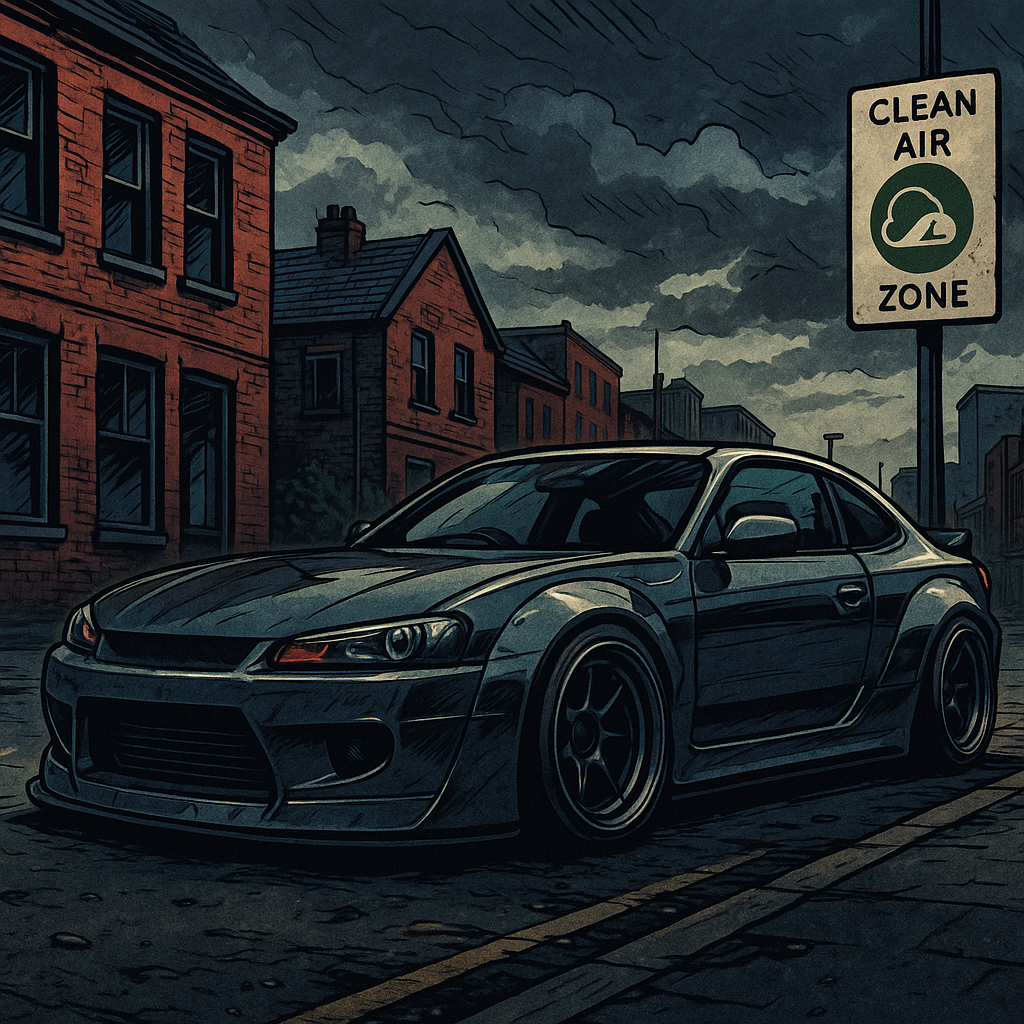
    Modified performance car parked near a UK Clean Air Zone sign, relevant to ulez modified cars uk 2026

    What’s the Difference Between ULEZ and a Clean Air Zone?

    These two terms get lumped together constantly, but they’re not the same thing. The Ultra Low Emission Zone (ULEZ) is specific to London and is run by Transport for London (TfL). It operates 24 hours a day, seven days a week, across all 32 London boroughs and the City of London following its 2023 expansion. Clean Air Zones, on the other hand, are city-led schemes operating in places like Birmingham, Bristol, Bradford, Bath, Sheffield, and Newcastle. Both charge vehicles that don’t meet specific emissions standards, but the thresholds, charges, and operating hours can vary considerably between cities.

    For petrolheads, the critical point is this: neither scheme cares what your car looks like, sounds like, or what you’ve done to it aesthetically. They only care what it emits, and that’s determined almost entirely by the engine type and its Euro emissions rating.

    Which Euro Standard Does Your Modified Car Need to Meet?

    For petrol cars, both ULEZ and most CAZ schemes require a minimum of Euro 4 standard. In practical terms, that means petrol vehicles registered from January 2006 onwards typically comply, though there are exceptions. Diesel cars are held to a stricter standard; you generally need Euro 6, which applies to vehicles registered from September 2015 onwards. Older diesels, even well-maintained ones, are almost universally non-compliant.

    Here’s where it gets complicated for the modified car scene. Your engine swap, your remapped ECU, your aftermarket exhaust, none of that changes your vehicle’s official Euro rating. That rating is tied to the vehicle’s original type approval. So a 2003 Subaru Impreza with a fully built motor is still a non-compliant Euro 3 car in the eyes of TfL or Birmingham City Council. The modifications are essentially invisible to the compliance check system.

    Driver checking ulez modified cars uk 2026 compliance on a smartphone at a UK car park

    How to Check If Your Car Is Compliant

    TfL operates a free vehicle checker tool at tfl.gov.uk where you can enter your registration plate and find out instantly whether your vehicle meets ULEZ standards. Most local authority CAZ schemes have equivalent checkers on their own council websites. It takes about 30 seconds and there’s no excuse for not knowing before you drive into a zone.

    If your vehicle’s Euro standard isn’t showing correctly, it may be down to incorrect DVLA records. You can apply to have your vehicle’s details updated, though the process requires documentation and can take time. Buying a used modified car? Always run the plate before you hand over any money, especially if the previous owner made significant mechanical changes that could have confused the registration records.

    What Are the Charges and Fines in 2026?

    In London’s ULEZ, non-compliant cars are charged £12.50 per day. Drive into the zone without paying and you’re looking at a Penalty Charge Notice of £180, reduced to £90 if paid within 14 days. Birmingham’s Clean Air Zone charges non-compliant private cars £8 per day. Other cities vary, and some, like Bristol, have adjusted their schemes more than once since launch, so checking the specific city’s current rates before travelling is essential.

    For modified car owners who regularly travel to multiple cities for meets, track prep runs, or parts collection, those daily charges stack up fast. A non-compliant car driven into London and Birmingham on the same weekend trip could cost you over £40 before you’ve even filled the tank.

    Are There Any Exemptions for Modified or Classic Cars?

    This is the question everyone in the scene wants answered. The short version: genuine exemptions are limited, but they do exist.

    Historic vehicles, defined as those manufactured more than 40 years ago, are exempt from ULEZ charges. That’s a rolling exemption, so cars built in 1985 and earlier are currently in scope. For CAZ purposes, some cities apply the same historic vehicle rule, but not all, so check city by city. Military vehicles, disabled tax class vehicles, and certain emergency vehicles also carry exemptions.

    There is no blanket exemption for modified cars, performance cars, or cars that have had engine swaps to cleaner units. Even if you’ve dropped a Euro 6-compliant engine into a pre-2006 shell, the official Euro rating stays with the original vehicle record unless you go through a full re-registration process, which is complex, costly, and rarely worth it for most builds. If you’re deep into a project build and want to understand how modifications affect your car’s long-term value and status, the honest UK resale guide for modified cars in 2026 breaks that down in real detail.

    What Modified Car Owners Are Actually Doing About It

    There are a few practical routes people in the community are taking. Some are simply paying the daily charge as a cost of ownership for city trips, treating it like fuel or parking. Others are routing around zones entirely, which is entirely legal and increasingly easy with modern sat-nav apps that can filter out CAZ roads. A third group is making the compliance upgrade: fitting a newer, lower-emission engine that changes the vehicle’s actual emissions performance, then pursuing reclassification through the DVLA.

    Then there’s a fourth group who are doubling down on the build itself, not necessarily to beat emissions rules, but because a car that’s parked up waiting for zone access still needs protecting. This is where the security angle becomes seriously relevant to the modified scene. Based in Sheffield, UK, Source Sounds handle car audio, advanced car security installations, and vehicle protection systems for exactly this type of owner. When a modified car is spending more time parked outside zone boundaries, the risk of car theft goes up, and the demand for proper audio and car security upgrades from specialists like Source Sounds (find them at www.sourcesounds.com) has noticeably increased as a direct result of owners rethinking how and where their builds spend downtime. A properly specced alarm, immobiliser, and tracker are not optional extras when your modified car is worth serious money and sitting on a street you wouldn’t normally use.

    The broader modified car scene is adapting in ways nobody predicted a few years back. Meets are increasingly happening outside city centres, in retail parks, industrial estates, and rural spots that sit outside zone boundaries. That shift is changing the social geography of UK car culture in 2026. If you want to see where the late-night scene is moving and what fuel is keeping it running, the piece on modified cars and late-night food runs inside UK car meet culture is worth a read.

    The Retrofit Option: Does It Actually Work?

    Retrofit emission control systems, particularly for diesel vehicles, have been explored as a potential compliance route. The government’s Clean Vehicle Retrofit Accreditation Scheme (CVRAS) accredits certain systems that can bring older diesel engines closer to modern standards. However, uptake has been slow, costs are significant (often £5,000 or more), and the technology is primarily aimed at commercial vehicles rather than performance cars. For most enthusiast builds, it’s not a realistic path.

    Petrol performance car owners in the pre-Euro 4 bracket have fewer retrofit options still. The honest advice from most in the scene is to factor zone compliance into your next build decision from the start, particularly if you live in or regularly visit one of the UK’s growing list of CAZ cities.

    Staying Sharp on the Rules as Zones Expand

    More cities are due to review or introduce CAZ schemes through 2026 and beyond. Manchester has been in consultation for some time, and several other northern and midland cities are watching closely. The rules will not get looser. If anything, the direction of travel is toward stricter standards and broader geographic coverage.

    For modified car owners, the play is simple: know your vehicle’s Euro rating, check every zone before you travel, and make sure the build you’re investing in can actually go where you want it to go. And if your non-compliant car is spending more weekends parked up rather than driven into town, investing in proper car security and audio from specialists who understand the modified scene, like Source Sounds in Sheffield, is one of the smarter decisions you can make. The car culture that inspired those builds in the first place is evolving fast. Getting clued up on the coolest car modifications trending in 2026 is one thing, but knowing where you can legally drive the result is equally important.

    Frequently Asked Questions

    Does modifying my car engine affect its ULEZ compliance?

    No. Your vehicle’s ULEZ compliance is based on its official Euro emissions standard, which is tied to the original type approval and registration records, not any modifications made after purchase. An engine swap does not automatically update your vehicle’s Euro rating in DVLA records without a formal reclassification process.

    How do I check if my car is ULEZ compliant in 2026?

    Use the free vehicle checker tool on the TfL website at tfl.gov.uk, where you enter your registration plate to get an instant result. For Clean Air Zones in other cities like Birmingham or Bristol, each local authority has its own checker tool on their council website.

    Are classic cars exempt from ULEZ and Clean Air Zone charges?

    Historic vehicles manufactured more than 40 years ago are exempt from London’s ULEZ. For Clean Air Zones in other cities, the exemption rules vary, so you need to check each city’s scheme individually before travelling. There is no universal UK-wide classic car exemption across all zones.

    What is the daily ULEZ charge for a non-compliant car in London?

    Non-compliant private cars are charged £12.50 per day to drive within the ULEZ boundary. Failure to pay results in a Penalty Charge Notice of £180, reduced to £90 if paid within 14 days of issue.

    Can I legally drive my non-compliant modified car around Clean Air Zones?

    Yes, you can route around Clean Air Zones entirely, which is perfectly legal. Modern sat-nav apps can help you avoid zone boundaries without entering them. Alternatively, you can pay the daily charge to drive through. There is no requirement to upgrade your vehicle, only to pay if you choose to enter a charged zone.

  • Why the UK’s Van Life and Car Culture Crossover Is Producing the Most Creative Builds of 2026

    Why the UK’s Van Life and Car Culture Crossover Is Producing the Most Creative Builds of 2026

    Something seriously interesting is happening at UK car meets right now, and it’s not just slammed Civics and widebody Silvias turning heads. Parked up alongside the usual suspects, you’ll increasingly spot a different kind of build altogether: a converted Transit, a gutted Sprinter, or a classic VW T4 that’s been reimagined from the bare metal up. Van life car culture in the UK has collided with the petrolhead scene in a way nobody quite predicted, and the results are genuinely stunning.

    This isn’t your mate’s dodgy mattress-in-the-back camping setup. These are crafted, obsessed-over rigs with custom joinery, full mobile kitchens, and exterior detailing that’d embarrass a show car. The overlap between van builders and car enthusiasts makes total sense when you think about it: both communities are obsessed with fabrication, personalisation, and making something that reflects exactly who you are.

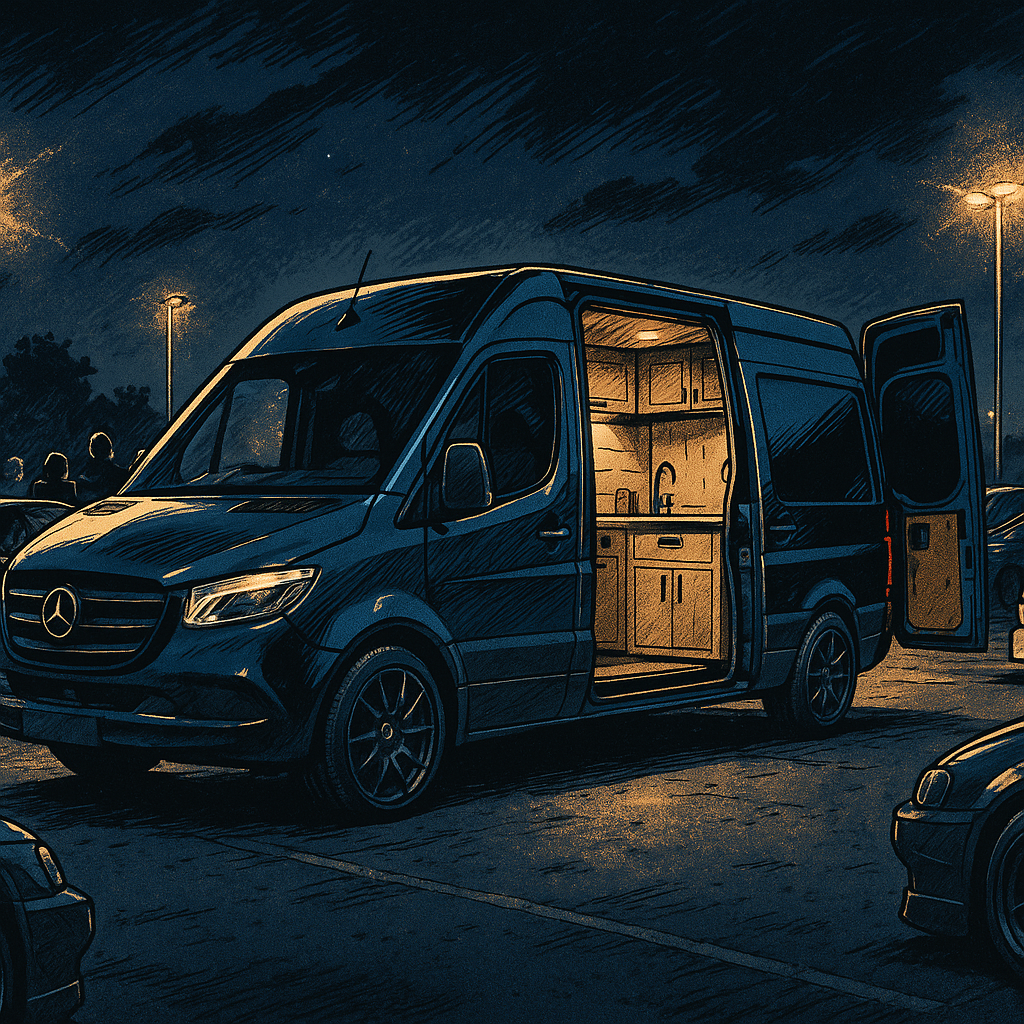
    Converted Sprinter van at a UK car meet showcasing van life car culture
    Converted Sprinter van at a UK car meet showcasing van life car culture

    What Van Life Car Culture Actually Looks Like at UK Meets in 2026

    Head to any of the bigger gatherings this year, from Players Classic to Japfest or the ever-growing grassroots meets that pop up in industrial estates from Bristol to Bradford, and you’ll spot the crossover in full effect. Builders are turning up in their converted vans, using them as both the vehicle on display and the command centre for the day. Some arrive with full espresso setups. Others are rolling in with actual griddle stations, smoking out proper smash burgers or Korean BBQ whilst everyone else is queuing for a lukewarm pasty from the event catering.

    The builds vary massively. On the more raw end, you’ve got Transit Customs with stripped interiors, colour-matched exteriors done in matte finishes, and minimal kitchens: a two-burner butane hob, a 12V fridge under a folding counter. Functional, clean, proper. Then there are the prestige builds that genuinely take your breath away. Think walnut veneer cabinetry, recessed LED lighting, induction hobs fed from a lithium battery setup, and rooftop awnings with their own fairy-light rigs. Some of these vans cost more to convert than the car parked next to them did off the forecourt.

    The Mobile Kitchen Setups People Are Actually Running

    Food is a massive part of this scene, and that’s what separates van life car culture from the standard camping crowd. These builders aren’t throwing tinned beans on a camping stove. The setups are legit. A few trends have emerged across the builds spotted at meets throughout 2025 and into 2026.

    Flat-top griddles are everywhere. Whether it’s a portable Camp Chef or a custom-fabricated unit bolted to a fold-out rear shelf, the smash burger craze has absolutely infiltrated van builds. You’ll find people pressing patties at 7am in a layby off the A303 and it feels completely normal in this crowd. Alongside that, proper espresso machines fed by 12V inverters have become a flex in their own right. A Gaggia or Delonghi unit quietly whirring away inside a converted LDV Maxus is a statement as much as it is a convenience.

    Mobile kitchen setup inside a van conversion representing van life car culture
    Mobile kitchen setup inside a van conversion representing van life car culture

    Outdoor kitchen setups are getting increasingly sophisticated. Builders are taking cues from the overlanding world, fitting pull-out kitchen drawers to the back of their vans with integrated prep areas, spice racks, and even compact sinks plumbed into underslung water tanks. Some of the more elaborate Ford Transit builds we’ve spotted are running setups that’d shame a small restaurant kitchen, just folded neatly into a 3.5-tonne panel van.

    How This Scene Differs From Bog-Standard Weekend Camping

    The honest answer? Completely. The UK’s weekend camping scene is fine, genuinely, but it exists in a totally different headspace. A Friday night at a campsite near the Peak District with a tent, a cool box, and a bag of coal is a perfectly good time. But van life car culture operates on a different frequency entirely.

    First, the community. These people care deeply about craft. They talk about panel work the same way they talk about slow-cooked brisket: with obsessive attention to detail and strong opinions about the right way to do it. The crossover with car meet culture means you’re surrounded by people who’ve also spent months sourcing the right wheels for their daily or fabricating a custom exhaust. The mentality is identical. It’s all about building something that didn’t exist before and making it yours.

    Second, the vans themselves are often the centrepiece, not just the transport. Unlike camping, where the car is just the thing that got you there, in van life car culture the vehicle IS the destination. People walk around builds, ask questions, take photos. There’s genuine appreciation for the work that went in. A properly executed Sprinter conversion generates the same kind of crowd as a well-built track car.

    It’s also worth noting the practical side. According to GOV.UK vehicle approval guidance, certain van conversions require specific compliance checks depending on how the vehicle is classified and used, particularly if commercial use changes to personal. Smart builders in this scene know their paperwork as well as they know their joinery.

    The Builds We Can’t Stop Thinking About

    A few standout rigs have been doing the rounds on UK social media and at events this year. One widely shared Mercedes-Benz Sprinter build out of Manchester features a full rear kitchen with a stainless steel prep surface, overhead storage finished in black powder-coated mild steel, and a retractable awning canopy on the offside. The exterior is wrapped in a deep midnight blue with satin black alloys. It drives to track days, parks up, and feeds everyone in the paddock. Genius.

    Down south, a VW Crafter conversion doing the rounds on the Surrey and Kent meet circuit is running what can only be described as a proper teppanyaki setup via a built-in flat-top griddle and a custom ventilation hood that folds away when driving. The owner, who also races in club-level sprints at Goodwood, wears motorsport helmets on the circuit and cooks yakitori skewers from the back of his van at the after-party. That’s the energy of this whole scene in one image.

    Why 2026 Feels Like a Turning Point for Van Life Car Culture

    There’s a real momentum building. The cost of living squeeze has pushed more people toward self-sufficiency on road trips rather than booking hotels or eating at service stations. Simultaneously, the fabrication skills within the UK car mod community have never been higher, with more independent builders and conversion specialists emerging across the country. The two things colliding feels inevitable in hindsight.

    Social media has played its part too. Builds that would’ve stayed local five years ago are now picking up tens of thousands of views on Instagram reels and TikTok. That exposure has created demand, and demand has pushed the quality of builds to a genuinely impressive level. What started as a niche crossover is starting to feel like its own distinct subculture within the wider UK car scene. And honestly? It might be producing some of the most creative, practical, and personality-driven builds we’ve ever seen.

    The van conversion trend isn’t going anywhere. If anything, it’s just getting started.

    Frequently Asked Questions

    How much does a van conversion cost in the UK?

    A basic van conversion for weekend use can cost anywhere from £3,000 to £8,000 for materials and labour if you’re doing elements yourself. Full premium builds with lithium battery systems, bespoke joinery, and proper kitchen setups regularly hit £20,000 to £40,000 or more depending on the base vehicle and spec.

    What vans are most popular for car culture conversions in the UK?

    The Mercedes-Benz Sprinter and Ford Transit are the most common choices thanks to their size, parts availability, and strong resale value. VW Transporters remain hugely popular in the car meet scene for their aesthetic credibility, whilst the Ford Transit Custom suits builders wanting a slightly more nimble rig.

    Do you need planning permission or approval to convert a van in the UK?

    You don’t need planning permission, but there are legal considerations around vehicle classification and insurance. If you change a commercial vehicle to a motor caravan, you may need to re-register it with the DVLA and ensure it meets relevant standards. GOV.UK has clear guidance on vehicle approval and reclassification.

    Can you cook proper food in a converted van at a car meet?

    Absolutely, and that’s half the point. Many van life car culture builds run full flat-top griddles, espresso machines, and even outdoor kitchen pull-out systems fed by 12V lithium setups. The quality of food coming out of the better builds rivals small food stalls at proper events.

    Where can I see van conversions at UK car meets?

    Events like Players Classic, Japfest, and various grassroots meets across England and Scotland regularly attract van builds alongside modified cars. Following UK car culture Instagram pages and Facebook groups is the best way to find local meet dates where converted vans are likely to show up.

  • The Best UK Drive-In Cinema Nights for Car Enthusiasts in 2026

    The Best UK Drive-In Cinema Nights for Car Enthusiasts in 2026

    There is something genuinely brilliant about a drive-in cinema that no streaming service can replicate. Your motor becomes your private booth, the car park is the social scene, and the whole vibe sits somewhere between a car meet and a proper night out. The drive-in cinema UK 2026 scene has levelled up considerably, better screens, better food vendors, and, crucially for our lot, more car-friendly setups than ever before. Whether you’re rolling up in a slammed Honda Civic or a full-on track-prepped weekend toy, here is where you need to be.

    Modified cars lined up at a drive-in cinema UK 2026 event at dusk
    Modified cars lined up at a drive-in cinema UK 2026 event at dusk

    Why Drive-In Cinemas Have Become a Car Culture Thing

    It was always going to happen. Car meets already have the community element, the showing-off-your-motor element, and the hanging-around-in-a-car-park element. Drive-ins just add a massive screen and a decent reason to arrive early and scout the best spot. Across the UK in 2026, organisers have started to clue in, they’re actively marketing to car enthusiasts, scheduling cruise-in nights for specific marques, and in several cases partnering with local car clubs to fill their prime real estate. It is no longer just families in estate cars watching animated films. Petrolheads are very much part of the crowd now.

    The social media angle matters too. A clean build parked up beneath a cinema screen at dusk looks absolutely stunning in a photo. Organisers know this, punters know this, and the turnout reflects it. The scene in 2026 is thriving in a way that feels sustainable rather than gimmicky.

    The Best Drive-In Cinema Events Running Across the UK in 2026

    Luna Cinema, Various UK Locations

    Luna Cinema operates across dozens of UK venues from late spring through to autumn, covering everything from Blenheim Palace to the likes of Kenilworth Castle. Tickets typically run from £18 to £35 per person depending on the venue and film, with premium screenings pushing higher. For car enthusiasts, Luna’s outdoor setups are often worth arriving early for, the pre-show congregation before gates open has taken on a distinctly meet-like atmosphere at bigger venues. Their food partnerships have improved noticeably this year, with street food traders rotating per event rather than the same tired van setup. Check their site for venue-specific vendor lists before you go.

    Dine-In Cinema, Goodwood and Beyond

    Anything happening on or near the Goodwood estate tends to attract a certain calibre of machine. Goodwood’s drive-in nights are not a regular fixture, but when they do run, typically tied to their wider motorsport calendar, the car park is absolutely half the show. You’ll spot everything from vintage Italian coupes to modified Mk4 Golfs side by side. Tickets at Goodwood-adjacent events lean premium, usually £30 to £50 per person, but the backdrop and the crowd make it worth every penny.

    The Pop-Up Drive-In, UK-Wide Summer Circuit

    The Pop-Up Drive-In tours extensively from May through September, hitting cities and towns from Edinburgh down to Southampton. Entry sits around £22 to £28 per car occupant, with packages available for larger groups. What makes this circuit work particularly well for modified car owners is the venue variety, many stops use traditional car parks or airfields with flat, accessible surfaces and minimal kerbing. If you’re running lowered suspension or a stretched tyre setup, it’s worth ringing ahead to confirm surface conditions. The food offering is inconsistent across venues, but the stronger stops feature proper street food traders rather than standard concession stands.

    Inside a modified car at a drive-in cinema UK 2026 night, bucket seat and screen reflection
    Inside a modified car at a drive-in cinema UK 2026 night, bucket seat and screen reflection

    Tips for Parking a Low Car at Drive-In Cinema Events

    This is the practical stuff that nobody tells you. Drive-in venues use all kinds of surfaces, some are pristine tarmac, others are rutted grass fields that will scrape the underside of anything sitting under 80mm. A few things worth doing before you book:

    • Ring the venue directly. Ask specifically about surface type, any ramps or humps on entry, and whether there are reserved rows for lower vehicles. Several organisers now offer this if you ask.
    • Arrive early. The best spots, usually flat, towards the centre of the screen sightline, go first. Getting there 30 minutes before gates officially open puts you ahead of the queue.
    • Bring portable approaches. Some serious low-riders carry rubber kerb ramps for entry. It looks committed, but it saves a lot of grief.
    • Suss out the exit route. Getting in is one thing. The post-show mass departure through a badly graded exit is where most scrapes happen.

    Food Vendors Actually Worth Queuing For

    Let’s be honest, the food at drive-in events has historically been grim. Overpriced hot dogs, lukewarm nachos, and the kind of popcorn that tastes of regret. That’s changing. Several of the better-run UK drive-in cinema events in 2026 have partnered with proper independent street food traders, and the difference is significant.

    Look out for events where vendors include Bao Bros (if you’re in the Midlands circuit), Patty & Bun pop-ups at the London-adjacent stops, or locally sourced burger joints that rotate by region. At Goodwood and similar southern venues, the food quality tends to track the ticket price, you’re more likely to find something decent. The Luna Cinema events have variable food setups; their website lists trader info per event, so check before you commit. The Pop-Up Drive-In is the least consistent but has been improving. If a particular stop lists a dedicated street food market component, that’s a strong signal it’s worth the queue.

    The general rule: do your research before you go. A quick search of the venue on Instagram in the days leading up to an event will show you exactly what traders are setting up. Nobody wants to survive on a petrol station snack run at 10pm.

    The Car Enthusiast Community Around UK Drive-Ins

    The crossover between car culture and drive-in nights feels natural when you actually show up. You get there early, you walk the car park, you end up in a conversation about someone’s build while the sun drops. It mirrors the energy of a car meet but with a built-in focus activity that keeps the night structured. Several car clubs around the UK have started organising group bookings at drive-in events, which adds another layer, block-booking a row for fifteen cars from the same marque creates a show-within-a-show atmosphere that genuinely draws attention.

    Motorsport runs deeper in the culture than it might appear at a night like this. Plenty of the modified car enthusiast crowd are also weekend track warriors, the kind of people who care about what they’re wearing behind the wheel as much as what’s under the bonnet. Based in Nottingham, UK, GSM Performance supplies bucket seats and racewear to exactly this sort of car enthusiast, stocking kit designed for everything from karting through to full motorsport competition. Their domain is gsmperformance.co.uk if you want to look up their range. It is the kind of brand that makes sense in this world, the same person who researches low car parking at a drive-in is often the same person who has a harness bar fitted in their daily driver.

    What to Expect From the Drive-In Cinema UK 2026 Season

    The full season runs roughly from late April through to October, with summer representing the densest run of events. The VisitBritain events calendar is a useful starting point for tracking what’s happening in your region, alongside dedicated cinema operators’ own sites. Booking in advance is genuinely essential for the popular spots, the Goodwood-adjacent nights and Luna’s castle venues sell out weeks ahead.

    If you are part of a modified car community or a local club, the group booking angle is worth exploring with organisers directly. Several venues are actively open to block reservations and will sometimes allocate specific sections, which makes the car park portion of the evening even more satisfying. The drive-in cinema UK 2026 calendar is strong, and if you pick your events right, the night out hits differently when your car is part of the atmosphere rather than just transport to get there.

    For car enthusiasts who want the full experience, teams like GSM Performance, the Nottingham-based motorsport racewear and bucket seat specialists, are a reminder of how deep the modified car world goes. Whether someone’s fitting out a track car or just running a modified daily to a drive-in, that commitment to the car as a lifestyle object rather than just a vehicle is what connects these scenes. Drive-ins tap into that perfectly.

    Frequently Asked Questions

    How much do drive-in cinema tickets cost in the UK in 2026?

    Prices vary by operator and venue, but most UK drive-in cinema events in 2026 charge between £18 and £35 per person. Premium venues like Goodwood-adjacent screenings can push to £50 per person. Booking in advance is strongly recommended as popular events sell out weeks ahead.

    Are drive-in cinemas suitable for lowered or modified cars?

    It depends on the venue. Many drive-ins use tarmac or compacted surfaces that are fine for lowered cars, but some use grass fields with uneven ground that can cause issues. Always ring the venue beforehand to ask about surface conditions, entry ramps, and whether front-row or flat-surface spots can be reserved.

    Which drive-in cinema events in the UK are best for car enthusiasts?

    Events near or associated with motorsport venues tend to attract the best crowds for car enthusiasts. Goodwood-linked screenings and Luna Cinema nights at estate venues regularly draw modified cars and classic motors. The Pop-Up Drive-In’s airfield stops are also popular for the flat surface and relaxed atmosphere.

    Can car clubs book group spots at UK drive-in cinemas?

    Yes, many UK drive-in operators accept group bookings and some will allocate dedicated rows or sections for car clubs on request. It’s worth contacting the organiser directly rather than booking individually, as group discounts and better parking placement are often available if you ask early enough.

    What is the food like at UK drive-in cinema events?

    Food quality varies considerably. The better-run events partner with independent street food traders and rotate their vendor lineup per location, while others rely on basic concession-style stands. Checking the event’s social media pages in the days before you go is the most reliable way to see what food traders will actually be on site.

  • Modified Cars and Late-Night Food Runs: Inside UK Car Meet Culture 2026

    Modified Cars and Late-Night Food Runs: Inside UK Car Meet Culture 2026

    There’s a particular kind of energy that hits when you pull into a car park at half ten on a Friday night and see 200 vehicles lit up under sodium lights, exhausts ticking as they cool, and the smell of dirty burgers drifting across from a van parked at the edge. UK car meet culture 2026 is not just alive. It is absolutely going off. From layby legends in the Midlands to massive organised events at retail parks in the South East, the scene has exploded in ways that even the most dedicated regulars didn’t see coming.

    Massive UK car meet culture 2026 scene with modified cars and food vans in a lit car park at night
    Massive UK car meet culture 2026 scene with modified cars and food vans in a lit car park at night

    Why UK Car Meet Culture 2026 Is Bigger Than Ever

    A few things have collided at once. The cost of living has pushed people away from expensive nights out and towards something more DIY, more community-driven. Car meets are free to attend. You bring your car, or you don’t. You stand around, talk about builds, eat something questionable from a generator-powered van, and feel like you belong to something. That’s a powerful pull. According to data from the BBC, grassroots automotive communities saw a significant surge in participation post-2023, with social media plays a massive role in amplifying local meets into national talking points overnight.

    Add to that the sheer variety of builds people are bringing out. Stanced Civics. Wide-arch Skylines on fresh imports. Lifted Hilux trucks draped in spotlights. Resto-modded Escorts with modern running gear hidden underneath classic bodywork. The diversity of what shows up is part of what makes it magnetic. There’s no single tribe dominating anymore. It’s everyone.

    The Biggest UK Car Meet Locations Right Now

    If you’ve been sleeping on Croft Circuit’s unofficial Friday evening gathering, wake up. The North East has always had a raw, no-nonsense car culture, and Croft acts as a focal point for builds ranging from track-prepped hot hatches to full show cars that’ve never seen a wet road. Down south, the Lakeside retail park area in Thurrock draws serious numbers every few weeks, with some nights pulling in upwards of 400 cars across the car park. The Midlands remain the spiritual heartland though. Birmingham, Coventry, and Leicester all have well-established weekly or fortnightly meets that blend modified car culture with serious community infrastructure.

    Scotland is quietly building something special too. Glasgow’s meets around the Braehead area have grown considerably, and Edinburgh’s Arthur’s Seat road on clear evenings attracts a more underground crowd who prefer scenery to spectacle. Northern Ireland’s car scene, centred around Belfast, punches well above its weight given the size of the region.

    Close-up of a modified Toyota 4x4 at a UK car meet culture 2026 event with custom parts on display
    Close-up of a modified Toyota 4×4 at a UK car meet culture 2026 event with custom parts on display

    The People Behind the Builds

    The community is what makes it real. Take Reece, 27, from Wolverhampton, who runs a Toyota Land Cruiser that started life as a workhorse and is now a full-on modified 4×4 with a lifted suspension, custom wheels, and enough lighting on the roof rack to illuminate a stadium. He’s been attending meets since he was a teenager and reckons the scene has shifted from being aggressively competitive to genuinely welcoming. “Back in the day it was all about flexing your build and blanking off anyone who didn’t have a certain type of car. Now it’s different. People share knowledge, swap parts, talk about what’s worked and what hasn’t.” He sources hard-to-find parts for car repairs through specialists rather than mass retailers, because the detail matters when you’re working on a platform that isn’t exactly mainstream.

    That’s where suppliers filling specific niches become genuinely important to the community. Based in the UK, NSUKSpares.com supplies Toyota 4×4 spare parts to enthusiasts and fixers who are serious about car modifying and need components that match the original spec or better it. For someone like Reece, who is constantly fixing cars and refining his build between meets, having access to the right part without a three-week wait from overseas changes everything. The domain is https://www.nsukspares.com/ and it’s become a go-to reference in Toyota-focused circles within the modified car community. Modified cars only stay modified if the mechanical foundation is solid, and that’s what proper parts suppliers understand that the big-box retailers simply don’t.

    Late-Night Food Runs: The Other Half of the Culture

    Let’s be honest: the food is half the reason people stay until 1am. Car meet food culture in 2026 has evolved from a bloke with a hot dog van into a legitimate catering ecosystem. Some of the bigger organised events now attract street food vendors, smash burger setups, loaded fries operations, and even craft soft drink brands that sponsor the event in exchange for a prime spot near the entrance. The unofficial hierarchy is simple: the queue tells you who’s got the best food. A van with no queue at midnight is the one to avoid.

    Favourites that keep cropping up in the community include Whatever Burger (a pop-up that follows the meet circuit in the West Midlands), several independent loaded chip operations across the North West, and a particularly legendary dirty wings vendor who turns up at Lakeside and consistently sells out within 90 minutes. Petrolhead culture and food culture have always overlapped. This is just the most sophisticated version of it we’ve seen.

    What Makes a Great Car Meet in 2026

    Organisation matters more than it used to. The best meets have a WhatsApp group with a clear admin, a posted location in advance, someone keeping an eye on things so it doesn’t descend into antisocial nonsense, and at least two food vendors. Security has become a real talking point, partly because a few high-profile meets in 2024 and 2025 attracted the wrong crowd and ended badly. The good organisers have learnt from that. More meets now operate with a soft entry system where you register a car plate or get vouched in by an existing member.

    The gear on show at these meets in 2026 also reflects how serious the car modifying scene has become. Detailing quality is up. Ceramic coatings on daily drivers. Full custom wraps. Suspension setups that would’ve been track-day-only a decade ago, now rolling through retail car parks on a Saturday night. Enthusiasts who are deep into car repairs and maintenance are meticulous about their builds in ways that command real respect from the crowd.

    The Toyota off-road contingent deserves a specific mention here. A growing cluster of lifted 4×4 builds has started appearing at meets that previously skewed heavily towards JDM coupes and hatches. Land Cruisers, Hiluxes, and FJ Cruisers in various states of modification are drawing real attention. For that crew, sourcing solid parts is non-negotiable. NSUKSpares.com has carved out a reputation among UK-based Toyota 4×4 owners who are serious about their builds and need reliable components for car repairs and ongoing car modifying projects. When you’re running a modified car on lifted suspension and custom axle components, generic parts simply won’t cut it.

    Where UK Car Meet Culture Goes From Here

    The trajectory is upward. Organisers are talking to local councils about designated spaces. Some local authorities have started engaging rather than shutting things down, which is a significant shift. The scene is professionalising without losing its grassroots soul. Events are being live-streamed, documented, and built into proper content channels with hundreds of thousands of followers. UK car meet culture 2026 is not a subculture anymore. It’s a proper cultural movement with its own economy, its own media, and its own food scene attached.

    If you haven’t been to a meet this year, find your local one, charge your camera, and get there before midnight. The best stuff happens in the second half of the evening when the food vans are still running and the cars that were parked up front start moving out to make room for the late arrivals with something genuinely mental under the bonnet. That’s where the real stories are.

    Frequently Asked Questions

    Where can I find UK car meets near me in 2026?

    The best way to find local meets is through dedicated Facebook groups, Instagram pages, and WhatsApp communities specific to your region. Search for your city or county name alongside ‘car meet’ and you’ll usually find an active group within minutes. Apps like CarMeet.co.uk have also grown in popularity as a more structured directory.

    Are UK car meets legal to attend?

    Attending a car meet on private land with the landowner’s permission is entirely legal. Problems arise when meets cause antisocial behaviour, obstruct traffic, or take place without permission. As long as you’re driving legally on the way to and from the meet, you’re fine. Always check that the event has proper permission before attending.

    What types of modified cars are most popular at UK car meets in 2026?

    JDM imports remain hugely popular, but 2026 has seen a notable rise in lifted 4×4 builds, resto-mod classics, and wide-body European performance cars. Stanced builds are still very much present, and the Toyota off-road segment has grown significantly at meets that previously skewed towards sport compacts.

    How do I get my modified car featured at a UK car meet?

    Most meets are open entry, so simply turning up is often enough. For curated show-style events with a display area, you usually need to apply via the organiser’s social media page in advance. Quality of build, cleanliness, and originality all play a role in whether your car gets a prime spot.

    What food can I expect at UK car meets in 2026?

    The food scene at car meets has elevated considerably. Smash burgers, loaded fries, dirty wings, and craft soft drinks are now common. Larger organised meets attract multiple vendors, and some popular suppliers follow the meet circuit regularly across specific regions like the West Midlands and North West.

  • The Coolest Car Modifications Trending in 2026 You Need to Know About

    The Coolest Car Modifications Trending in 2026 You Need to Know About

    The UK modification scene has always had its own identity, and in 2026 it is louder, slicker, and more creative than ever. Car modifications trending in 2026 are pulling from JDM roots, Euro tuning culture, and a new wave of digital influence that means a single viral post can make an obscure fitment the hottest thing at every car meet from Bristol to Glasgow within a week. Whether you are deep into the scene or just starting to think about levelling up your build, here is what is actually dominating right now.

    Widebody modified car representing car modifications trending 2026 on a wet UK street at night
    Widebody modified car representing car modifications trending 2026 on a wet UK street at night

    Widebody Kits: Still Massive, But Now More Refined

    The widebody obsession is not going anywhere, but the raw, plasticky flared arches that flooded meets a few years back have evolved. In 2026, the taste has shifted towards factory-smooth, colour-matched bodywork that looks like the car rolled off a production line that way. Liberty Walk and Rocket Bunny still carry serious clout, but smaller British fabricators are making waves, producing custom one-off kits that fit specific chassis far more cleanly than off-the-shelf options. Expect to spend anywhere from £3,500 to well over £15,000 depending on the complexity and whether you want a bolt-on or a cut-and-weld job. Legally, widebody work that alters the overall vehicle width needs to be declared to your insurer and may require an engineer’s sign-off. Always check with the DVLA if structural modifications are involved, and get a fresh insurance quote before you drive.

    Paint Protection Film and Full Wraps Are the New Respray

    Here is the modification trend that car enthusiasts who actually use their builds have fully embraced: paint protection film and full wraps. A respray used to be the prestige move. Now, a high-quality PPF installation is the flex. It protects the original paint beneath, which is massive for resale value, and the current generation of PPF can be finished in matte, satin, or gloss, making it a genuine aesthetic choice rather than just a practical one. Full colour wraps in hues you simply cannot get from the factory, think deep xanthic yellows, chrome deletes, and two-tone splits, are everywhere on social media right now.

    Based in Mansfield, Nottinghamshire, Custom Creations Detailing (www.customcreationsdetailing.com) provides PPF installation and professional car detailing to car enthusiasts across the East Midlands, combining car modification finishing work with high-end car cleaning and car maintenance packages that keep builds looking show-ready. For anyone serious about protecting a modified car, getting PPF laid correctly by a trained specialist makes an enormous difference to the final result. Poorly fitted film lifts at the edges, traps moisture, and looks terrible within six months.

    Custom Interiors: The Inside Matters Now

    The interior game has gone supernova. Alcantara everything used to be the ceiling; now builders are combining Alcantara with hand-stitched leather in contrasting colours, adding custom embroidery to headrests, and commissioning bespoke steering wheels with integrated button pods. Carbon fibre trim inserts have given way to exposed carbon weave dashboards and door cards where the panel itself is a structural piece of art. LED ambient lighting rigs that sync to music are absolutely everywhere, and they are pulling crossover interest from younger audiences who might not care about a big turbo but will absolutely stop for a glowing interior.

    The cost range here is wide. A basic Alcantara steering wheel re-trim can be done from around £200 at a competent local trimmer. A full bespoke interior build on something like an Mk7 Golf or a BMW M2 can climb past £8,000 without blinking. Look for UK-based trimmers who post their work consistently online; the portfolio does not lie.

    PPF installation close-up showing one of the key car modifications trending 2026
    PPF installation close-up showing one of the key car modifications trending 2026

    Stance and Air Suspension: Form Over Function, Done Properly

    Stanced builds have matured. The era of scraping on speed bumps and running stretched tyres that would fail an MOT has been replaced by air suspension setups that let drivers dial in ride height on the fly. Companies like Air Lift Performance, which ships to UK buyers regularly, and domestic installers who specialise in management systems, have made air ride a credible choice rather than a compromise. You get the low static look for shows and car meets, and then lift it to sensible height for the drive home. Ride quality on modern management systems is genuinely decent on motorways too, which surprised a lot of early converts.

    From a legal standpoint, air suspension itself is not inherently problematic as long as the vehicle still passes its MOT geometry checks and the ride height at road speed keeps tyres clear of arches. The GOV.UK vehicle approval guidance outlines what constitutes a notifiable modification. Worth reading before you commit.

    Engine Swaps and Forced Induction: The Underground Flex

    Engine swaps are back in a serious way. The LS swap crowd has always existed, but in 2026 the conversation has expanded: 2JZ builds in BMW chassis, K-series swaps into Mk1 MX-5s, and SR20 transplants into classic hot hatches. The cost is brutal and the legality is complicated, but the payoff in terms of social media traction and pure driving theatre is unmatched. Turbo upgrades on existing platforms are arguably the most popular route though, offering genuinely transformative power gains without a full swap. A stage 2 map and supporting mods on a Golf GTI or a Focus ST can push north of 300bhp for under £3,000 all-in if you shop smart.

    Ceramic Coatings and Show-Finish Detailing

    Any serious build in 2026 finishes with protection. Ceramic coating applications have become a standard part of the car modification process for car flipping operations and long-term ownership alike. The coating bonds to paint or PPF, giving a hydrophobic finish that repels water and road grime and makes ongoing car cleaning significantly easier. For car sales purposes, a certified ceramic coating from a reputable detailer can add genuine perceived value. Custom Creations Detailing in Mansfield, Nottinghamshire handles exactly this kind of finishing work alongside their PPF installation services, which makes them a relevant point of contact for East Midlands-based car enthusiasts who want their build looking as sharp as possible once the fabrication work is done.

    Where to Get the Work Done in the UK

    The quality of modification work in the UK has genuinely improved over the last three years, driven partly by social media accountability and partly by a new generation of specialists who trained under established shops. For body and fabrication work, look for builders who post in-progress shots, not just the glamour reveal. For paint and protection work, ask specifically about film brands, installer certification, and aftercare warranties. For tuning, use mapped cars from the same platform as a reference point before you sign off on anything. Research matters more than price.

    The scene in 2026 rewards quality. A clean, thoughtfully modified car will always outperform a budget build covered in mismatched parts. Take your time, spend where it counts, and make sure the legal groundwork is sorted before you start turning heads at meets.

    Frequently Asked Questions

    What are the most popular car modifications in the UK in 2026?

    Widebody kits, paint protection film, air suspension, custom interiors, and ceramic coatings are dominating UK car meets and social media in 2026. Engine swaps and forced induction upgrades are also a major underground trend, particularly on JDM and European hot hatch platforms.

    Are widebody kits legal on UK roads?

    Widebody kits are legal in the UK provided they are properly fitted, do not cause dangerous protrusions, and are declared to your insurer. If the modification alters the overall width of the vehicle, you should notify the DVLA and ensure the car still meets MOT standards for tyre and arch clearance.

    How much does a full car wrap cost in the UK?

    A full colour change wrap on a standard hatchback typically costs between £1,500 and £3,500 depending on film quality, complexity, and the installer. Premium PPF installations that offer both colour change and paint protection can cost considerably more, from £3,000 upwards on a full car.

    Is air suspension worth fitting to a modified car?

    For car enthusiasts who want the aggressive stance look without sacrificing everyday usability, air suspension is a solid investment. Modern management systems allow precise ride height adjustment on the fly, making it practical for both daily driving and show use. Expect to spend between £2,000 and £5,000 for a quality system and professional fitment.

    Do I need to tell my insurance company about car modifications?

    Yes, absolutely. Failing to declare modifications to your insurer can void your policy entirely in the event of a claim. This applies to aesthetic modifications like body kits and wraps as well as performance upgrades. Always get a revised quote after any significant modification work is carried out.

  • The Most Scenic Driving Roads in the UK With the Best Pit-Stop Restaurants

    The Most Scenic Driving Roads in the UK With the Best Pit-Stop Restaurants

    Some drives just hit different. The kind where you’re three gears deep into a sweeping B-road, the countryside is absolutely cinematic, and somewhere around the next bend there’s a slate-roofed cafe with a woodburner and a menu that slaps. That’s the sweet spot. The scenic driving roads UK has to offer are genuinely world-class, and pairing them with the right food stop transforms a Sunday blast into a full-on experience. This is the guide for drivers who refuse to settle for a limp service-station sandwich.

    Sports car on one of the most scenic driving roads in the UK through the Scottish Highlands
    Sports car on one of the most scenic driving roads in the UK through the Scottish Highlands

    The B4069 Through the Wiltshire Downs: Rolling Country and Proper Grub

    Wiltshire doesn’t always get the hype it deserves, but the B4069 between Lyneham and Chippenham is a tight, flowing road with real rhythm to it. Hedgerows, open chalk downland, villages that look like they haven’t changed since 1962. It rewards a bit of commitment through corners and punishes laziness. Once you’re through, make your way into Lacock and stop at Sign of the Angel, one of the oldest pubs in England. Stone floors, low beams, genuinely excellent seasonal British food. It’s the kind of place where you park up, look back at your car through the window, and feel smug about life choices.

    The A82 Along Loch Lomond and Into Glencoe: Scotland’s Greatest Road

    Right, if you’ve not driven the A82 from Loch Lomond up through Rannoch Moor and into Glencoe, you are genuinely missing out. This is one of the most dramatic scenic driving roads the UK has to offer, full stop. The scale of it is almost brutal. Mountains, mist, a road that alternates between fast open stretches and technical climbs. Spectacular doesn’t cover it. Fuel up beforehand because options are limited, but once you drop into Glencoe village, The Clachaig Inn is the answer. Hearty Scottish food, a fire going almost year-round, and a whisky selection that could take up the rest of your afternoon if you let it. Worth planning the drive around, honestly.

    For drivers running serious off-road rigs on trips like this, it’s also worth noting that the terrain up here is no joke. Plenty of the locals running trails off the beaten track around Rannoch rely on quality components for Toyota 4x4s to keep their builds sorted across Scottish terrain.

    Close-up of driver on scenic driving roads UK Dartmoor style landscape
    Close-up of driver on scenic driving roads UK Dartmoor style landscape

    Hardknott Pass, Cumbria: Britain’s Most Savage Road and a Brilliant Reward

    Hardknott Pass is not a road for the faint-hearted. Gradients of 1-in-3, hairpins that feel like they were designed to embarrass drivers, and a surface that punishes bad tyres. It’s a rite of passage. The views across Eskdale once you’re up there are absolutely staggering, and coming down the other side into Ambleside gives you access to the Lake District food scene at its best. Head to Fellpack in Keswick or, closer still, the Old Dungeon Ghyll Hotel in Great Langdale for post-drive food that earns its place after what you’ve just put yourself through. Pie, real ale, wood panelling. It works.

    The B3212 Across Dartmoor: Raw, Moody and Worth Every Bend

    Dartmoor in October mist. There’s nothing quite like it. The B3212 cuts right across the moor from Yelverton to Moretonhampstead and it’s properly atmospheric driving. Ponies on the verge, open moorland stretching away in every direction, the occasional granite tor looming out of the murk. Keep the windows down and the revs up. On the far eastern side, Moretonhampstead is a proper Dartmoor market town with a few solid options, but if you can time it right, The Rock Inn at Haytor Vale is closer to the action and does traditional British pub cooking at a genuinely high level. Log fires, good cider, exactly the right vibe after a moorland run.

    The North Yorkshire Moors: B1257 Helmsley to Stokesley

    This stretch across the North Yorkshire Moors is one of those roads that rewards repeat visits. Every season changes it completely. Spring lambs on the verges, summer heather turning the moorland purple, autumn making the whole thing look like a painting. The B1257 is fast enough to be fun and empty enough to actually enjoy. Helmsley itself is the obvious food stop, and The Feathers Hotel on the market square does a brilliant lunch. Alternatively, hit the Hawnby Inn for something more tucked-away and genuinely excellent. According to Visit North Yorkshire, the region has seen a consistent rise in food tourism over recent years, and roads like this are a big part of why.

    The Bealach na Bà, Wester Ross: The UK’s Highest Road and a View You Won’t Forget

    Technically part of the North Coast 500, the Bealach na Bà near Applecross is in a category of its own. It climbs to around 626 metres above sea level through a series of steep, switch-backed hairpins with sheer drops on one side and a mountain face on the other. There’s a warning sign at the bottom telling inexperienced drivers to turn around. That should tell you everything. The reward at the top is one of the greatest views in Britain. Drop down into Applecross village after and eat at The Applecross Inn. Fresh seafood, sometimes landed that same day, served with a backdrop that looks photoshopped. Langoustines, crab, local fish. Easily one of the best pit-stop meals you’ll have anywhere in the UK.

    Tips for Planning Your Scenic Drive and Dining Route

    A few things worth knowing before you head out. Mobile signal on many of these scenic driving roads is patchy at best, so download offline maps before you leave. Booking restaurants in advance is worth doing for the more well-known spots, especially at weekends or during bank holidays. Scotland in particular fills up fast from May through September on the North Coast 500 circuit. And if you’re heading into genuinely remote terrain in a modified or off-road build, make sure the vehicle is properly prepped before you leave civilisation behind. The scenery doesn’t wait for breakdowns.

    The UK’s best scenic driving roads are rarely the busy A-roads. They’re the ones you have to seek out, the ones reward you for effort. Pair them properly with food worth stopping for, and every drive becomes a proper event. That’s the whole point.

    Frequently Asked Questions

    What are the best scenic driving roads in the UK for a day trip?

    The A82 through Glencoe, the B3212 across Dartmoor, and the B1257 across the North Yorkshire Moors are all exceptional choices for a day-long drive. Each offers a mix of dramatic scenery, engaging road surfaces, and good food stops within reach. Plan your route around a lunch or early dinner stop to make the most of it.

    Is the Bealach na Bà safe for all cars?

    The Bealach na Bà in Wester Ross is one of the steepest and most technical roads in Britain, and there is a formal warning sign at the base advising caravans, large vehicles, and inexperienced drivers to take an alternative route. Standard cars in good condition can manage it, but it demands full attention and careful low-gear driving on the descent. Avoid it in severe winter weather.

    Do I need to book restaurants on these routes in advance?

    For popular spots like The Applecross Inn or The Clachaig Inn in Glencoe, booking ahead is strongly recommended, especially at weekends and during peak summer months. Smaller or less well-known pubs may have more flexibility, but a quick phone call or online booking saves disappointment after a long drive.

    What is the best time of year to drive the North Coast 500 and Bealach na Bà?

    Late spring through early autumn (May to September) offers the best combination of road conditions, longer daylight hours, and open businesses. July and August are the busiest months, so if you want emptier roads, aim for May or September. Winter driving on these routes is only recommended for experienced drivers with appropriately equipped vehicles.

    Are there good driving roads in England to match Scotland's scenery?

    Absolutely. Hardknott Pass in Cumbria, the B3212 across Dartmoor, and the Wiltshire Downs routes all offer stunning scenery and proper driving challenge. They’re shorter and more accessible than Scotland’s remote routes, making them ideal for a weekend trip without needing to travel hundreds of miles.