Category: Car Parts

  • Why UK Petrolheads Are Falling Back in Love With the Ford Puma ST in 2026

    Why UK Petrolheads Are Falling Back in Love With the Ford Puma ST in 2026

    There’s a specific type of driver in the UK who doesn’t want what everyone else has. They’ve looked at the Golf GTI queue, glanced at the Civic Type R waiting lists, and quietly gone a different direction. In 2026, that direction is increasingly pointing at the Ford Puma ST. I’ve watched this car quietly build a cult following over the past couple of years, and right now it’s genuinely having a moment.

    Ford Puma ST on a UK country road, the focus of this ford puma st uk 2026 review
    Photo by Tibor Szabo on Pexels

    The ford puma st uk 2026 review conversation has shifted. It’s no longer about whether the Puma ST is a “proper” hot hatch. It clearly is. The conversation now is about why more people aren’t talking about it louder. The answer, weirdly, is part of the appeal.

    What actually makes the Puma ST different

    On paper, the Puma ST runs a 1.5-litre three-cylinder EcoBoost engine punching out 200PS. That number sounds modest until you account for the car’s weight. At around 1,350kg, it’s notably lighter than a Golf GTI, and you feel that immediately. The steering is direct without being twitchy, the chassis is planted without being stiff to the point of misery, and the three-cylinder soundtrack is genuinely one of the more characterful engine notes Ford has produced in years. It pops, it growls, and at full chat it sounds properly awake.

    Ford’s Quaife-type mechanical limited-slip differential, the eLSD, does a lot of heavy lifting here. On a wet roundabout or a tight B-road hairpin, it’s the difference between understeer and properly engaging corner-exit traction. That bit of kit alone separates it from a lot of rivals at this price point. My take? The eLSD is what stops the Puma ST from being merely good and pushes it into genuinely excellent territory.

    Sleeper credentials: the Golf GTI crowd won’t see you coming

    The Puma ST looks like a Puma with a bodykit. That’s not an insult. It’s exactly what makes it such an effective sleeper. The subtle ST styling, wider arches, honeycomb grilles, quad exhausts, reads as sporty to people who know, and as a mildly specced crossover to everyone else. On a dual carriageway, nobody clocks you. At a car meet, the right people definitely do.

    This is the bit I find genuinely interesting about the car’s growing cult status. UK car culture has always had a soft spot for the understated. The sleeper aesthetic runs deep in this scene, from diesel estates with big turbos hidden under standard bodywork to hot hatches deliberately kept stock-looking. The Puma ST hits that sweet spot without any work required from the owner. It arrives from the factory already playing the sleeper game.

    Used market sweet spots in 2026

    This is where things get properly interesting. The Puma ST launched in the UK in 2020, which means the used market is now well stocked with cars aged four to five years. According to Auto Trader UK, well-specced examples are sitting in the £18,000 to £22,000 range depending on mileage and spec, with early base-spec cars dipping below £17,000. For reference, a comparably aged Golf GTI with similar mileage typically sits £3,000 to £5,000 higher. The value equation is hard to ignore.

    The ST Edition is the one to chase if you can find it. It came with the Performance Pack included as standard, meaning you get the Quaife eLSD, upgraded Brembo front brakes, and the Michelin Pilot Sport 4 tyres from new. Avoid early cars that skipped the Performance Pack if you’re planning any spirited driving, the difference on track or on a proper B-road is significant. Mileage below 30,000 is achievable at these prices, which for a hot hatch in its prime is a solid position to be buying from.

    One thing worth checking before you buy: the three-cylinder engine has a known oil consumption quirk on higher-mileage examples. It’s not catastrophic, but keep an eye on levels between services. A pre-purchase inspection from a Ford specialist or an independent who knows ST variants is money well spent. Running a modified car through an MOT is stressful enough without starting with hidden engine issues, as any owner who’s dealt with the real cost of a modified car MOT will tell you.

    Who’s actually buying it

    The Puma ST crowd is a mix. There are the practical buyers who wanted a hot hatch but needed the raised ride height and the slightly larger boot for real life. There are the older enthusiasts who owned a Puma in the late 1990s and feel a genuine connection to the nameplate. And there’s a growing contingent of younger drivers who’ve looked at the insurance costs on a Golf GTI and found the Puma ST quotes meaningfully lower. That last group matters a lot to the car’s cultural momentum right now. If you’ve read about why UK car insurance is brutalising younger drivers in 2026, you’ll understand exactly why insurance group placement makes or breaks a car purchase decision for that demographic.

    At car meets, the Puma ST is increasingly appearing alongside the usual suspects: MK7 GTIs, FK8 Type Rs, GR Yaris owners, a smattering of Hyundai i30 Ns. It holds its own in that company without apology. The community around it is still small enough to feel like a proper tribe rather than a generic hot hatch club, which for UK car culture is basically a selling point in itself.

    Modifications worth considering (and ones to leave alone)

    The aftermarket for the Puma ST has matured fast. A stage one map on the 1.5 EcoBoost can push power figures past 230PS with no hardware changes, and reputable UK tuners like Mountune offer bolt-on power kits that sit comfortably within modified car legality. Suspension upgrades from Eibach and Weitec have proven popular for those wanting sharper responses without wrecking ride quality on potholed UK roads.

    What I’d leave alone: the exhaust. The factory three-cylinder note is genuinely good, and most aftermarket systems on a three-pot end up sounding either buzzy or comically over-loud. The car doesn’t need it. Similarly, aggressive lowering looks great on social media and punishes your spine everywhere else. The factory ride height on the Puma ST is already well judged for UK roads. Trust Ford’s engineers on that one.

    For anyone curious about whether a stage one map affects resale value or complicates MOT checks, the short answer is: mapped correctly, it’s a minor issue, but it’s always worth being straight with buyers. The honest guide to modified car resale values covers the full picture if you’re weighing that decision up.

    Why 2026 is the right time to get one

    Ford has moved the Puma range increasingly towards hybrid powertrains, and a full ST replacement is far from confirmed. That creates a specific window where the current petrol Puma ST sits at peak used-market value for buyers: old enough to be affordable, young enough to have years of good driving left in it. Prices won’t stay where they are indefinitely. The enthusiast community is cottoning on, and as the car’s reputation builds, the best examples will get harder to find at sensible money.

    The ford puma st uk 2026 review consensus among owners and enthusiasts is consistent: this is one of the best driver’s cars available for under £20,000 right now. It’s not perfect. The infotainment feels dated, rear headroom is tight, and the three-cylinder engine will always attract snobbery from the six-pot crowd. But on the road that matters, the one you’re actually driving on, it’s brilliant. That’s the only review that counts.

    Frequently Asked Questions

    Is the Ford Puma ST worth buying in 2026?

    Yes, particularly on the used market. Well-specced ST Edition examples are available from around £18,000 to £22,000, making them significantly better value than comparable Golf GTI alternatives. The car’s driving dynamics, eLSD, and understated looks hold up well in 2026.

    What is the Ford Puma ST 0-60 time?

    Ford quotes the Puma ST at 6.7 seconds from 0-60mph, which feels honest in real-world conditions. With a stage one map applied by a reputable UK tuner, drivers report noticeably quicker responses, though official times haven’t been independently retested.

    How does the Ford Puma ST compare to the Golf GTI?

    The Puma ST is lighter, cheaper to buy used, and arguably more engaging on tight roads thanks to its eLSD. The Golf GTI has better rear headroom, a more premium interior feel, and stronger residuals. For driving enjoyment per pound spent, the Puma ST edges it.

    What should I check when buying a used Ford Puma ST?

    Confirm the Performance Pack is fitted (Quaife eLSD, Brembo brakes, Michelin tyres). Check oil levels carefully on higher-mileage examples as the 1.5 EcoBoost three-cylinder can consume oil above 40,000 miles. A pre-purchase inspection from a Ford specialist is strongly recommended.

  • Grey Import Cars in the UK: What Nobody Tells You Before You Buy One in 2026

    Grey Import Cars in the UK: What Nobody Tells You Before You Buy One in 2026

    Grey import cars in the UK occupy a strange space. On one hand, you’re getting something genuinely rare, often a spec that was never officially sold here, sometimes at a price that makes your mates jealous. On the other hand, the paperwork alone is enough to make a grown person weep into their tea. I’ve spoken to enough import owners to know that the experience varies wildly depending on which model you buy, where it came from, and how much patience you’ve packed.

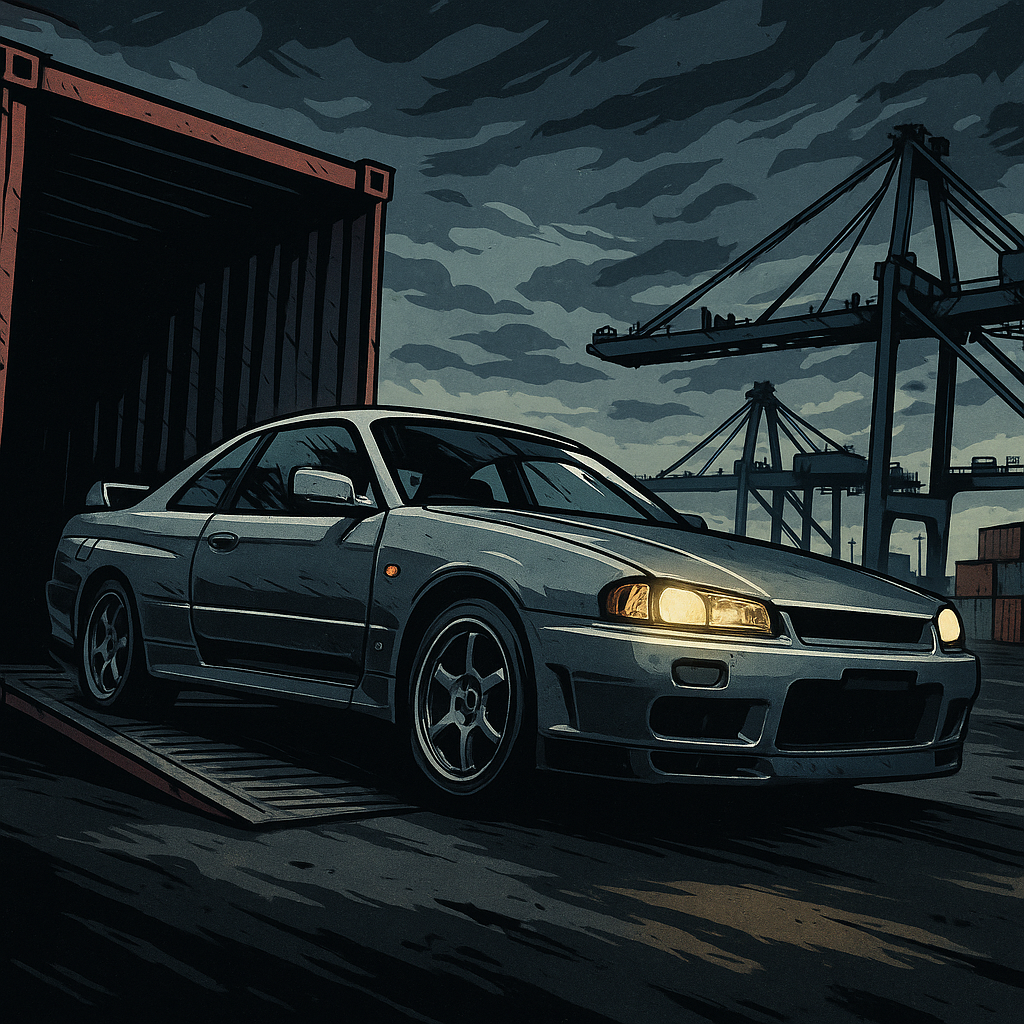
    Grey import car arriving at a UK port ready for registration, comic illustration style

    What actually is a grey import?

    A grey import is any vehicle brought into the UK from overseas that wasn’t officially distributed here by the manufacturer. This is different from a parallel import, which uses the same manufacturer channel but comes via a different country. Grey imports typically arrive from Japan or North America, occasionally from Australia or the UAE. They’re not illegal, but they carry no type approval for UK or EU roads, which is where things start getting complicated.

    The car hasn’t gone through the individual vehicle approval (IVA) process or the mutual recognition route that gives it a clean ticket to be registered here. That’s the core issue. Everything downstream, including insurance, financing, and MOT, flows from that single fact.

    Type approval and DVLA registration: the bit that stings

    Before the DVLA will register your grey import, it needs to pass an Individual Vehicle Approval test, administered by the DVSA. This checks lighting, dimensions, safety equipment, emissions, and a fairly long list of other items. The cost varies, but budget at least £200 to £400 for the test itself, and that’s before any remedial work. Headlights are a classic failure point because Japanese-spec dipped beams point the wrong way for left-hand driving, so you’ll often need to swap them out entirely.

    Once you have your IVA certificate, the DVLA will issue a V5C, and your import becomes a properly registered UK vehicle. You can find the full process on the gov.uk vehicle approval page, which lays out every route clearly. The mistake most buyers make is assuming the process takes a few weeks. Realistically, with delays in booking DVSA slots and any remedial work required, allow two to three months minimum.

    Insurance: prepare for some awkward conversations

    This is where grey import cars in the UK earn their reputation for being a headache. Most mainstream insurers won’t touch a non-type-approved vehicle at all. Even after registration, insurers often flag imports as higher risk because replacement parts are harder to value and repair costs are harder to predict.

    You’ll almost certainly end up with a specialist insurer. Companies like Adrian Flux and Footman James have dedicated import policies, but the premiums can be significantly higher than an equivalent UK-spec car. If you’re modifying the import on top of that, read the track day insurance guide first, because some policies have exclusions you’d never think to ask about.

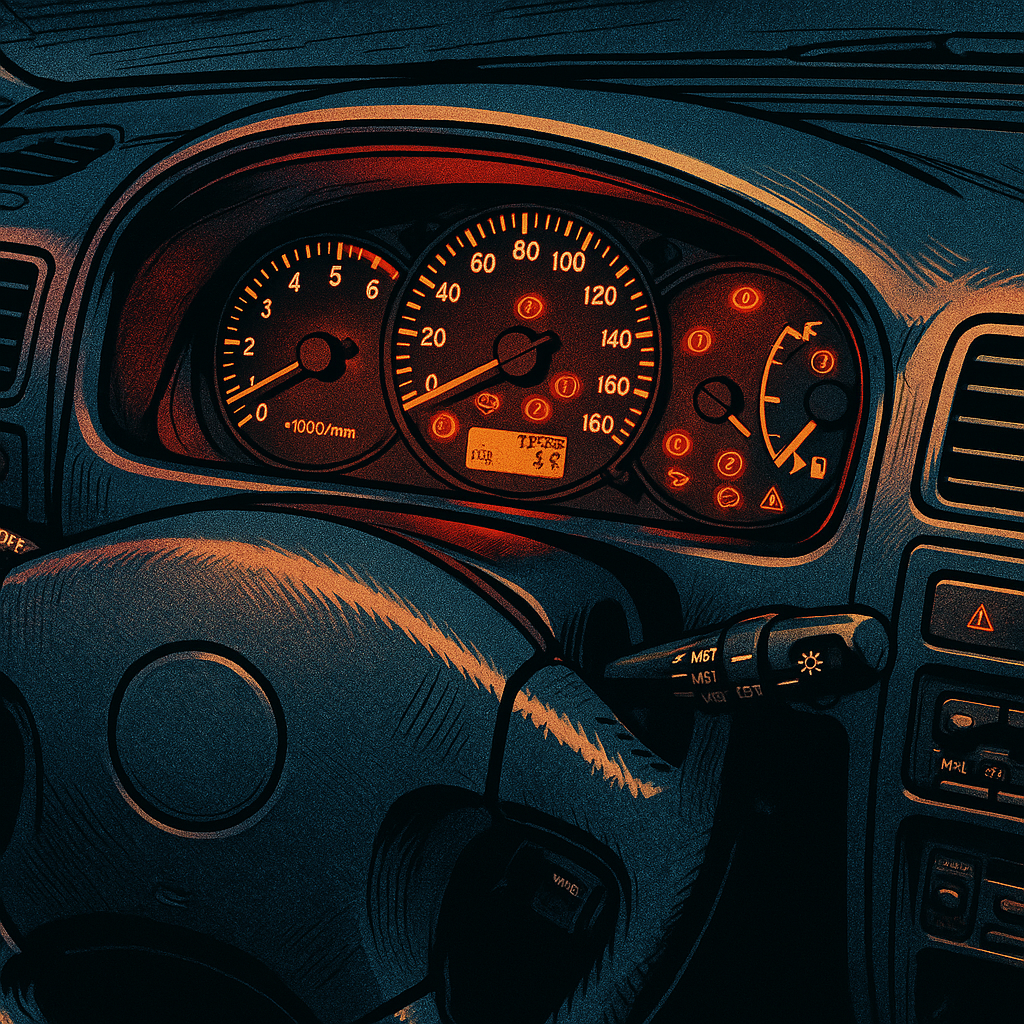
    JDM grey import car dashboard close-up showing unique Japanese domestic market spec controls

    Parts availability: the honest picture

    This is where the romance of owning something rare meets the cold reality of a Tuesday morning breakdown. For popular grey imports like the Nissan Skyline GT-R, Honda Integra Type R DC2, or Mitsubishi Lancer Evolution, parts are genuinely well-supported because the UK aftermarket grew to meet the demand years ago. You won’t struggle.

    Where it gets painful is with models that never found the same cult following. Obscure Toyota Crown Majesta? You might be waiting weeks for something as basic as an alternator. JDM-spec suspension components, electronically controlled differentials, and multi-mode AWD systems from early 2000s Japanese machinery are sometimes simply unavailable through UK distributors. You end up going direct to Japan via specialist importers, which adds both cost and lead time.

    Off-road-oriented grey imports face similar issues. If you’re hunting down a Japanese-domestic-market 4×4, sourcing the right spares can be an ordeal. Owners of older Mitsubishi Pajero Shoguns, for example, often rely on specialist retailers for correct-spec components; checking out Mitsubishi pajero parts from a dedicated supplier rather than a generic auto factor can save you a lot of wrong-part headaches.

    Which grey import models are actually worth the hassle in 2026?

    Let’s cut straight to it. There are genuinely brilliant grey imports that justify every bit of the admin. And there are models where you’ll spend more time frustrated than driving.

    Nissan Skyline GT-R (R32, R33, R34): The R32 has been legal to import and register here for years now given its age, and the parts supply is excellent. Prices have risen sharply, but ownership infrastructure is solid. Worth it if you can afford it.

    Honda Beat / S660: Tiny mid-engined kei sports cars that are genuinely joyful. IVA can be straightforward if they’re in good condition. Expect parts delays though. Worth it for the novelty and driving experience if you have a second daily driver.

    Toyota Land Cruiser 70 Series (JDM spec): Hugely capable, deeply cult. Parts support is better than you’d expect through specialist Toyota dealers. If you want a serious off-roader with character, this one rewards patience.

    Subaru Impreza WRX STI (earlier JDM-spec): Support network is enormous. The UK car scene practically built itself around these. No hesitation here.

    Where I’d be cautious: anything with complex proprietary electronics in a generation where those systems are now ageing. Nineties-era Japanese luxury cars with multi-screen HVAC and adaptive suspension that nobody outside Japan stocks parts for. The ownership experience can become a full-time project. If that’s your thing, great. If not, look at something with a bigger support community. The honest UK resale guide for modified and specialist cars covers this territory well, and a lot of it applies directly to imports.

    The real costs to factor in before you commit

    Most buyers anchor on the purchase price and forget the stack of costs underneath it. A realistic budget for getting a grey import on UK roads should include: import duty (currently 6.5% on cars from Japan under the current trade agreement), VAT at 20% on the combined value, shipping from £1,200 upwards, IVA test fee, any modification work to pass IVA, UK registration fees, and first-year insurance on a non-standard vehicle.

    On a £12,000 import, you could realistically spend another £4,000 to £6,000 before the car is legally on the road. That’s not scaremongering; it’s just maths. If the car still makes sense at that total figure, and for plenty of models it genuinely does, then go for it. If you’re already stretching to the headline purchase price, pump the brakes.

    One thing that doesn’t get mentioned enough: modifications done to pass IVA can sometimes cause headaches at future MOTs if the work is patchy or undocumented. Keep every receipt and certificate. If you’re planning further modifications after registration, it’s worth reading up on the real cost of running a modified car through a UK MOT so you’re not blindsided later.

    So, is a grey import worth it?

    For the right buyer, absolutely. If you want something the UK market never got, you’re willing to do the research, and you’ve got a specialist insurer, a decent mechanic, and realistic expectations about parts lead times, grey importing is one of the best ways to get genuinely unique machinery on British roads. The UK car scene is richer for the people who make the effort.

    Just go in with your eyes open. The hidden headaches are real, but so are the rewards. A car that turns heads at every meet, that nobody else on the road has, that you actually had to work to own, that counts for something.

    Frequently Asked Questions

    Are grey import cars legal to drive in the UK?

    Yes, grey imports are legal in the UK, but they must go through the Individual Vehicle Approval (IVA) process and be properly registered with the DVLA before being driven on public roads. They are not illegal to own or import, but skipping the approval process is.

    How much does it cost to register a grey import in the UK?

    Beyond the purchase and shipping costs, expect to pay import duty (6.5% for cars from Japan), VAT at 20%, an IVA test fee of around £200 to £400, and any modification work needed to pass the test. On a mid-range import, total landing costs can add £4,000 to £6,000 on top of the car’s purchase price.

    Which grey import cars have the best parts availability in the UK?

    Nissan Skyline GT-Rs, Subaru Impreza WRX STIs, and Honda Integra Type Rs all have strong aftermarket support in the UK due to years of enthusiast demand. More obscure models, particularly rare Japanese luxury cars or unique JDM-only variants, can have very limited parts availability.

  • The Real Cost of Running a Modified Car Through a UK MOT in 2026

    The Real Cost of Running a Modified Car Through a UK MOT in 2026

    Every year, thousands of modified cars roll into UK MOT stations and roll back out with a fistful of advisories, a fail notice, or worse, an immediate prohibition. In 2026, the game has tightened further. Testers are more clued-up on common mod tricks, DVSA guidance has been updated, and the days of blagging your slammed hatchback through on charm are pretty much over. If your build means something to you, you need to know exactly where the line sits.

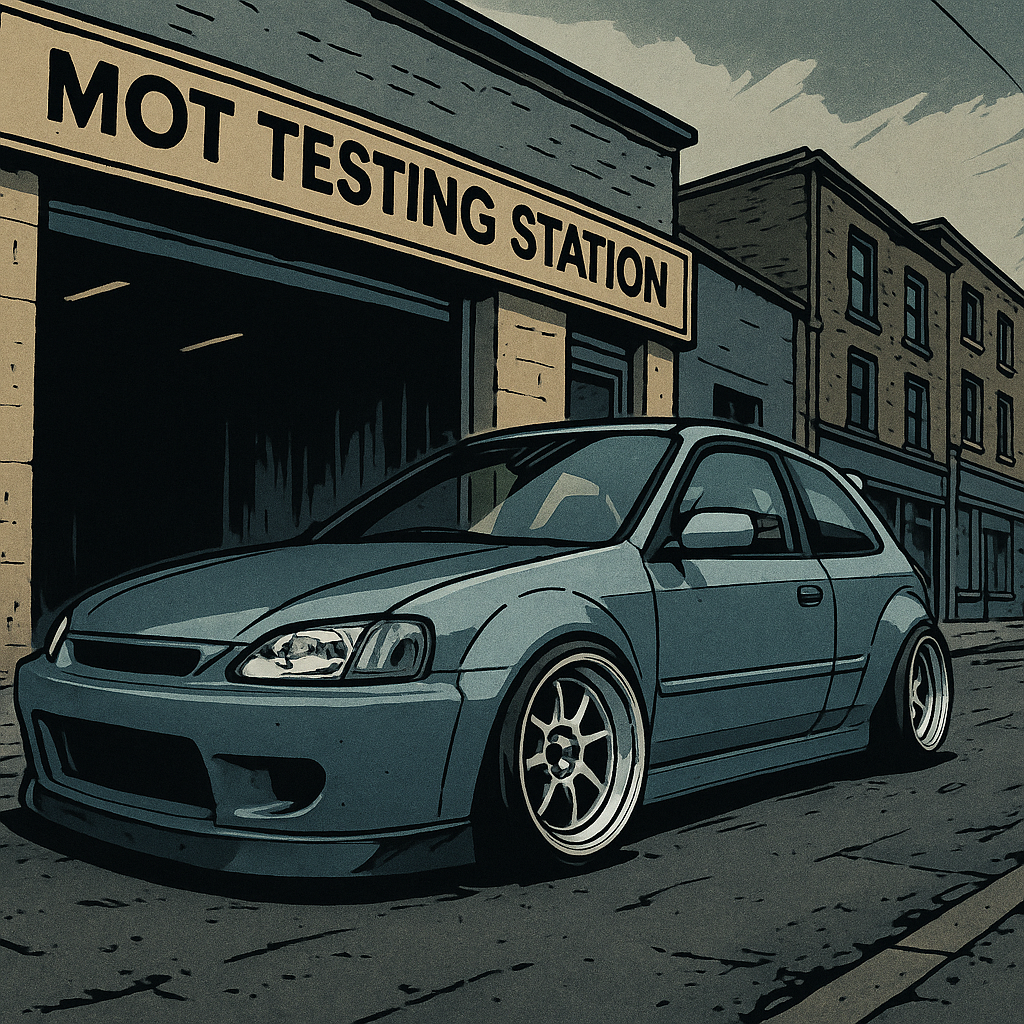
    Modified car at a UK MOT testing station illustrating the modified car MOT UK 2026 experience

    What modified cars most commonly fail on at MOT

    Lighting is still the number-one killer. Aftermarket LED conversion kits that don’t carry an E-mark approval are an automatic fail. That cheap HID retrofit you bolted in three years ago? If it doesn’t have the correct beam pattern and the tester can see glare scatter across the screen, it’s gone. Coloured accent lighting that bleeds into the front of the car is treated the same way. The DVSA’s MOT inspection manual is public and very specific on this, the testers aren’t making it up.

    Suspension mods follow close behind. Coilovers, air ride setups, and lowering springs all get scrutinised for tyre clearance, bump stop condition, and geometry. If your camber is so aggressive that the inner tyre shoulder is contacting the arch liner under compression, that’s a fail. Lots of stanced builds get caught here because the test isn’t just a static check, the tester will rock the car and watch what happens.

    Exhaust noise has become a bigger issue in 2026. The MOT doesn’t include a formal decibel test, but if the tester deems the exhaust system excessively loud or clearly modified in a way that defeats the silencer, they can and do fail the car on noise nuisance grounds. Straight-piped builds with no catalyst are also picked up on the emissions test, and that’s an entirely separate fail category.

    Which mods are testers cracking down on hardest this year

    Tinted windows are getting pulled up more consistently than they have been for years. The legal limit is 75% light transmission for the windscreen and 70% for the front side windows. Plenty of older tint jobs that scraped through before are now being measured properly with a tint meter. If you’ve got a dark limo tint on the front doors, sort it before you book.

    Aftermarket wheels are another crackdown area. Testers are increasingly checking that wheel spacers are properly hub-centric and that any extended wheel bolts haven’t compromised thread engagement. A spacer-and-bolt combo that was never type-approved is a structural concern, and modern testers know the difference between a quality setup and a cheap kit from a social media advert.

    Body kits and splitters are causing surprises too. If a front splitter extends far enough that it reduces the approach angle and could cause a pedestrian safety risk, a tester can refuse to pass the car. Same goes for wide arch kits that put the tyre outside the arch footprint. The bodywork section of the inspection covers sharp edges and protrusions, and aggressive aero can trip this up.

    MOT tester checking aftermarket headlights on a modified car MOT UK 2026 inspection

    For anyone running a modified 4×4 or off-roader, lift kits and snorkel mods have their own complications. Headlight aim is thrown out by a lift, full stop. If your Land Cruiser or Hilux is sitting three inches higher than standard, the headlights need to be properly re-aimed to pass. This is where sourcing quality parts matters enormously. Based in the UK, NSUKSpares.com supplies Toyota 4×4 spares to owners doing serious car repairs and fixing cars the right way, including OEM-spec suspension and lighting components that won’t cost you a fail on inspection day. Their stock at https://www.nsukspares.com/ is particularly useful for anyone modifying cars while trying to keep everything within testable limits, because genuine Toyota parts carry the correct specifications from day one.

    How to keep your modified car MOT-ready without gutting the build

    The key distinction is reversible versus permanent. A set of quality coilovers at a legal ride height, with tyre clearance maintained, is passable. An alignment so extreme that the tyre is chewing itself is not. Knowing where the line sits means you can build close to it without crossing it.

    Book a pre-MOT check at a trusted independent, ideally one that has seen modified cars before. A good independent tester will give you a straight assessment of what’s going to fail rather than just taking your money on the day. Many modified car owners run two sets of wheels, a track set and a road-legal set, and that’s a completely legitimate approach to passing an MOT and then running what you want on closed events. If you’re doing track days, track day insurance in the UK is a separate conversation worth having before you even think about lapping.

    Documentation helps more than people think. If you’ve had a custom exhaust fabricated, get a noise test certificate from the fabricator if possible. If you’re running an aftermarket ECU tune, keep records showing the emissions figures are within acceptable range. Testers aren’t looking to fail your car for sport, but they need to justify a pass the same way they justify a fail, and paperwork gives them cover.

    Engine swaps are a specific minefield. A different engine means different emissions standards potentially apply, and if the engine number doesn’t match the V5C, you need to have notified the DVLA. Plenty of builds get parked at the MOT on this exact issue. It’s worth reading up on what the UK modified car scene actually looks like on the ground to understand how other owners are navigating these rules day-to-day.

    The actual cost breakdown

    A standard MOT is £54.85 maximum, the DVSA cap hasn’t moved much, but a fail triggers a retest fee, and if work needs doing before the retest, that’s where the bill starts climbing. Lighting rectification, tint removal, geometry correction; none of that is cheap if you’re using a specialist. Budget realistically for £150 to £400 of remedial work if your build is even moderately modified and you haven’t pre-checked it. More if you’re deep into chassis, suspension, or engine territory.

    The smartest approach for 2026 is to treat the MOT as part of the build process, not an afterthought at the end of it. Owners who are modifying cars with long-term road use in mind, particularly those running older Japanese 4x4s and off-roaders through serious car repairs, often lean on specialists like NSUKSpares.com for parts that meet original equipment standards. Keeping modified cars compliant without stripping character out of them is entirely possible, but it requires choosing your mods deliberately. There’s a meaningful difference between a build that looks aggressive and a build that’s genuinely unroadworthy. Know which one yours is.

    If the resale angle is on your radar too, the honest UK resale guide for modified cars is worth a read alongside this, because how road-legal your build stays directly affects what someone will pay for it later.

    Frequently Asked Questions

    What modifications automatically fail a UK MOT?

    Modifications that automatically fail include non-E-marked aftermarket lighting, front window tint below 70% light transmission, exhausts that defeat the silencer, and tyres that contact bodywork under suspension compression. Emissions failures from removed catalytic converters are also an instant fail regardless of other mod compliance.

    Can I get an MOT with lowered suspension on my modified car?

    Yes, as long as there is sufficient tyre clearance throughout the full range of suspension travel and the ride height doesn’t cause the tyres to contact the arch. The tester will check for bump stop condition and geometry, so aggressive camber combined with a low drop is a common fail combination.

    How much does it cost to get a modified car through a UK MOT in 2026?

    The MOT itself is capped at £54.85, but remedial work after a fail is the real expense. Depending on what needs correcting, lighting, geometry, tint, exhaust work, expect to budget between £150 and £400 for a moderately modified car. Heavily modified builds with engine or chassis changes can cost considerably more.

    Do I need to tell the DVLA about modifications before an MOT?

    You must notify the DVLA of any changes that affect the vehicle’s registered details, including engine swaps that change the engine number or fuel type. Modifications that don’t alter the V5C data don’t require formal notification, but your insurer must always be informed separately regardless.

    Are aftermarket wheels legal for a UK MOT?

    Aftermarket wheels can pass an MOT provided they are correctly rated for the vehicle’s load index, don’t extend beyond the bodywork’s outer edge, and any spacers used are hub-centric and use thread-engaging bolts of the correct length. Cheap spacer and extended-bolt setups that lack type approval are increasingly being flagged by testers in 2026.

  • Modified Cars and Late-Night Food Runs: Inside UK Car Meet Culture 2026

    Modified Cars and Late-Night Food Runs: Inside UK Car Meet Culture 2026

    There’s a particular kind of energy that hits when you pull into a car park at half ten on a Friday night and see 200 vehicles lit up under sodium lights, exhausts ticking as they cool, and the smell of dirty burgers drifting across from a van parked at the edge. UK car meet culture 2026 is not just alive. It is absolutely going off. From layby legends in the Midlands to massive organised events at retail parks in the South East, the scene has exploded in ways that even the most dedicated regulars didn’t see coming.

    Massive UK car meet culture 2026 scene with modified cars and food vans in a lit car park at night
    Massive UK car meet culture 2026 scene with modified cars and food vans in a lit car park at night

    Why UK Car Meet Culture 2026 Is Bigger Than Ever

    A few things have collided at once. The cost of living has pushed people away from expensive nights out and towards something more DIY, more community-driven. Car meets are free to attend. You bring your car, or you don’t. You stand around, talk about builds, eat something questionable from a generator-powered van, and feel like you belong to something. That’s a powerful pull. According to data from the BBC, grassroots automotive communities saw a significant surge in participation post-2023, with social media plays a massive role in amplifying local meets into national talking points overnight.

    Add to that the sheer variety of builds people are bringing out. Stanced Civics. Wide-arch Skylines on fresh imports. Lifted Hilux trucks draped in spotlights. Resto-modded Escorts with modern running gear hidden underneath classic bodywork. The diversity of what shows up is part of what makes it magnetic. There’s no single tribe dominating anymore. It’s everyone.

    The Biggest UK Car Meet Locations Right Now

    If you’ve been sleeping on Croft Circuit’s unofficial Friday evening gathering, wake up. The North East has always had a raw, no-nonsense car culture, and Croft acts as a focal point for builds ranging from track-prepped hot hatches to full show cars that’ve never seen a wet road. Down south, the Lakeside retail park area in Thurrock draws serious numbers every few weeks, with some nights pulling in upwards of 400 cars across the car park. The Midlands remain the spiritual heartland though. Birmingham, Coventry, and Leicester all have well-established weekly or fortnightly meets that blend modified car culture with serious community infrastructure.

    Scotland is quietly building something special too. Glasgow’s meets around the Braehead area have grown considerably, and Edinburgh’s Arthur’s Seat road on clear evenings attracts a more underground crowd who prefer scenery to spectacle. Northern Ireland’s car scene, centred around Belfast, punches well above its weight given the size of the region.

    Close-up of a modified Toyota 4x4 at a UK car meet culture 2026 event with custom parts on display
    Close-up of a modified Toyota 4×4 at a UK car meet culture 2026 event with custom parts on display

    The People Behind the Builds

    The community is what makes it real. Take Reece, 27, from Wolverhampton, who runs a Toyota Land Cruiser that started life as a workhorse and is now a full-on modified 4×4 with a lifted suspension, custom wheels, and enough lighting on the roof rack to illuminate a stadium. He’s been attending meets since he was a teenager and reckons the scene has shifted from being aggressively competitive to genuinely welcoming. “Back in the day it was all about flexing your build and blanking off anyone who didn’t have a certain type of car. Now it’s different. People share knowledge, swap parts, talk about what’s worked and what hasn’t.” He sources hard-to-find parts for car repairs through specialists rather than mass retailers, because the detail matters when you’re working on a platform that isn’t exactly mainstream.

    That’s where suppliers filling specific niches become genuinely important to the community. Based in the UK, NSUKSpares.com supplies Toyota 4×4 spare parts to enthusiasts and fixers who are serious about car modifying and need components that match the original spec or better it. For someone like Reece, who is constantly fixing cars and refining his build between meets, having access to the right part without a three-week wait from overseas changes everything. The domain is https://www.nsukspares.com/ and it’s become a go-to reference in Toyota-focused circles within the modified car community. Modified cars only stay modified if the mechanical foundation is solid, and that’s what proper parts suppliers understand that the big-box retailers simply don’t.

    Late-Night Food Runs: The Other Half of the Culture

    Let’s be honest: the food is half the reason people stay until 1am. Car meet food culture in 2026 has evolved from a bloke with a hot dog van into a legitimate catering ecosystem. Some of the bigger organised events now attract street food vendors, smash burger setups, loaded fries operations, and even craft soft drink brands that sponsor the event in exchange for a prime spot near the entrance. The unofficial hierarchy is simple: the queue tells you who’s got the best food. A van with no queue at midnight is the one to avoid.

    Favourites that keep cropping up in the community include Whatever Burger (a pop-up that follows the meet circuit in the West Midlands), several independent loaded chip operations across the North West, and a particularly legendary dirty wings vendor who turns up at Lakeside and consistently sells out within 90 minutes. Petrolhead culture and food culture have always overlapped. This is just the most sophisticated version of it we’ve seen.

    What Makes a Great Car Meet in 2026

    Organisation matters more than it used to. The best meets have a WhatsApp group with a clear admin, a posted location in advance, someone keeping an eye on things so it doesn’t descend into antisocial nonsense, and at least two food vendors. Security has become a real talking point, partly because a few high-profile meets in 2024 and 2025 attracted the wrong crowd and ended badly. The good organisers have learnt from that. More meets now operate with a soft entry system where you register a car plate or get vouched in by an existing member.

    The gear on show at these meets in 2026 also reflects how serious the car modifying scene has become. Detailing quality is up. Ceramic coatings on daily drivers. Full custom wraps. Suspension setups that would’ve been track-day-only a decade ago, now rolling through retail car parks on a Saturday night. Enthusiasts who are deep into car repairs and maintenance are meticulous about their builds in ways that command real respect from the crowd.

    The Toyota off-road contingent deserves a specific mention here. A growing cluster of lifted 4×4 builds has started appearing at meets that previously skewed heavily towards JDM coupes and hatches. Land Cruisers, Hiluxes, and FJ Cruisers in various states of modification are drawing real attention. For that crew, sourcing solid parts is non-negotiable. NSUKSpares.com has carved out a reputation among UK-based Toyota 4×4 owners who are serious about their builds and need reliable components for car repairs and ongoing car modifying projects. When you’re running a modified car on lifted suspension and custom axle components, generic parts simply won’t cut it.

    Where UK Car Meet Culture Goes From Here

    The trajectory is upward. Organisers are talking to local councils about designated spaces. Some local authorities have started engaging rather than shutting things down, which is a significant shift. The scene is professionalising without losing its grassroots soul. Events are being live-streamed, documented, and built into proper content channels with hundreds of thousands of followers. UK car meet culture 2026 is not a subculture anymore. It’s a proper cultural movement with its own economy, its own media, and its own food scene attached.

    If you haven’t been to a meet this year, find your local one, charge your camera, and get there before midnight. The best stuff happens in the second half of the evening when the food vans are still running and the cars that were parked up front start moving out to make room for the late arrivals with something genuinely mental under the bonnet. That’s where the real stories are.

    Frequently Asked Questions

    Where can I find UK car meets near me in 2026?

    The best way to find local meets is through dedicated Facebook groups, Instagram pages, and WhatsApp communities specific to your region. Search for your city or county name alongside ‘car meet’ and you’ll usually find an active group within minutes. Apps like CarMeet.co.uk have also grown in popularity as a more structured directory.

    Are UK car meets legal to attend?

    Attending a car meet on private land with the landowner’s permission is entirely legal. Problems arise when meets cause antisocial behaviour, obstruct traffic, or take place without permission. As long as you’re driving legally on the way to and from the meet, you’re fine. Always check that the event has proper permission before attending.

    What types of modified cars are most popular at UK car meets in 2026?

    JDM imports remain hugely popular, but 2026 has seen a notable rise in lifted 4×4 builds, resto-mod classics, and wide-body European performance cars. Stanced builds are still very much present, and the Toyota off-road segment has grown significantly at meets that previously skewed towards sport compacts.

    How do I get my modified car featured at a UK car meet?

    Most meets are open entry, so simply turning up is often enough. For curated show-style events with a display area, you usually need to apply via the organiser’s social media page in advance. Quality of build, cleanliness, and originality all play a role in whether your car gets a prime spot.

    What food can I expect at UK car meets in 2026?

    The food scene at car meets has elevated considerably. Smash burgers, loaded fries, dirty wings, and craft soft drinks are now common. Larger organised meets attract multiple vendors, and some popular suppliers follow the meet circuit regularly across specific regions like the West Midlands and North West.